A slow day in Siem Reap follows heat, light, and appetite rather than a sightseeing checklist. It begins with an early walk or coffee, slows through the brightest hours, and returns to the streets when the river cools and the night market lights come on. You can still visit a temple, but the day should have one anchor rather than five timed stops.
How Does Siem Reap Start the Day?
Siem Reap is most pleasant before eight in the morning. The air is cooler, delivery carts are still moving through the market, monks are collecting alms, and residents use the riverside for walking and exercise. Coffee shops begin opening early, from simple local stalls to cafes with proper espresso machines. Start with something small, then decide whether the day needs a temple, a market, or no destination at all.
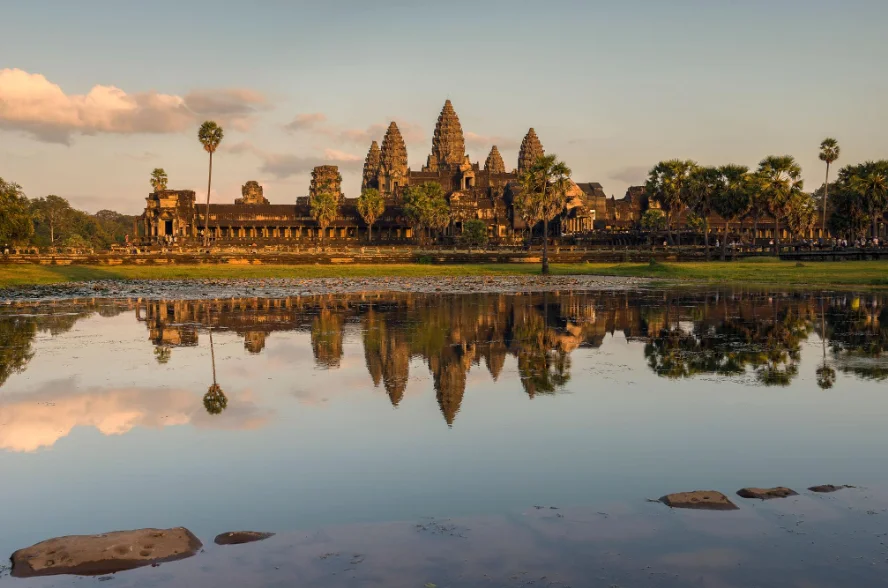
A traditional breakfast might mean rice with grilled meat, noodle soup, congee, or fresh spring rolls. Portions are often light enough for a second coffee later. If you are going to Angkor, leave soon after eating and plan to return before the strongest heat. If you are not visiting the temples, use the same early energy for a market breakfast and a slow walk through the lanes.
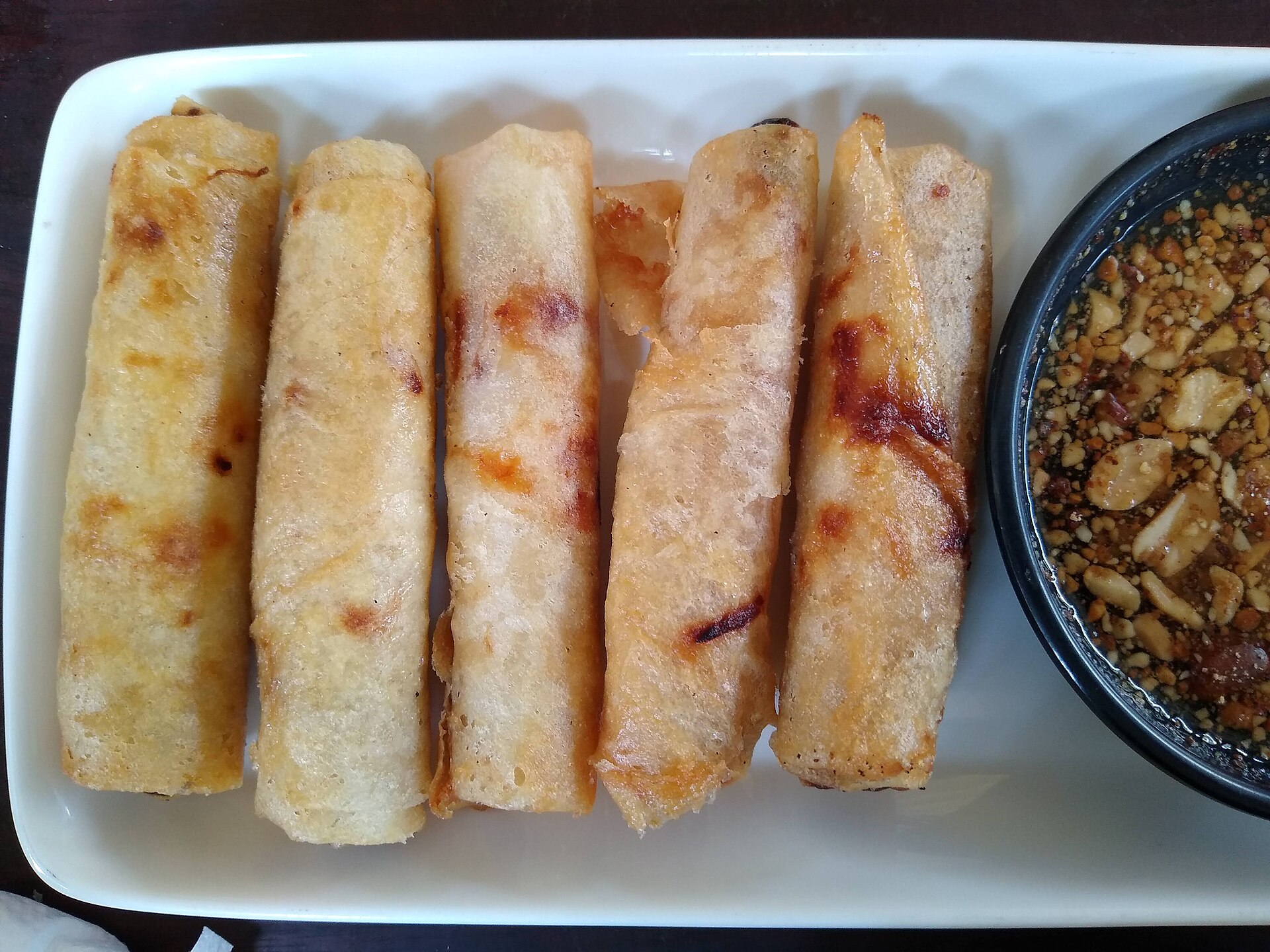
The important rule is not to overfill the morning. A slow day loses its shape when breakfast becomes a meeting, the first stop becomes a tour, and every interesting doorway turns into a photo assignment. Give yourself one useful task and let the rest of the morning remain open. Even a temple visit can feel unhurried if you choose one site and leave rather than trying to complete an entire circuit.
By mid-morning, heat and traffic are both increasing. That is the natural signal to finish the active part of the day. Buy water, return to your room, or find a shaded place where you can sit without watching the clock. The transition is not wasted time; it is how the rest of the day stays enjoyable.
Where Can You Find the Local Side of the City?
The local side of Siem Reap is less a single neighborhood than a set of daily patterns. It appears at Psa Chas early in the morning, in smaller markets where households buy meat and vegetables, around school gates, and along the river when families come out in the evening. These are ordinary parts of city life, not attractions, and they are best observed with a light footprint.
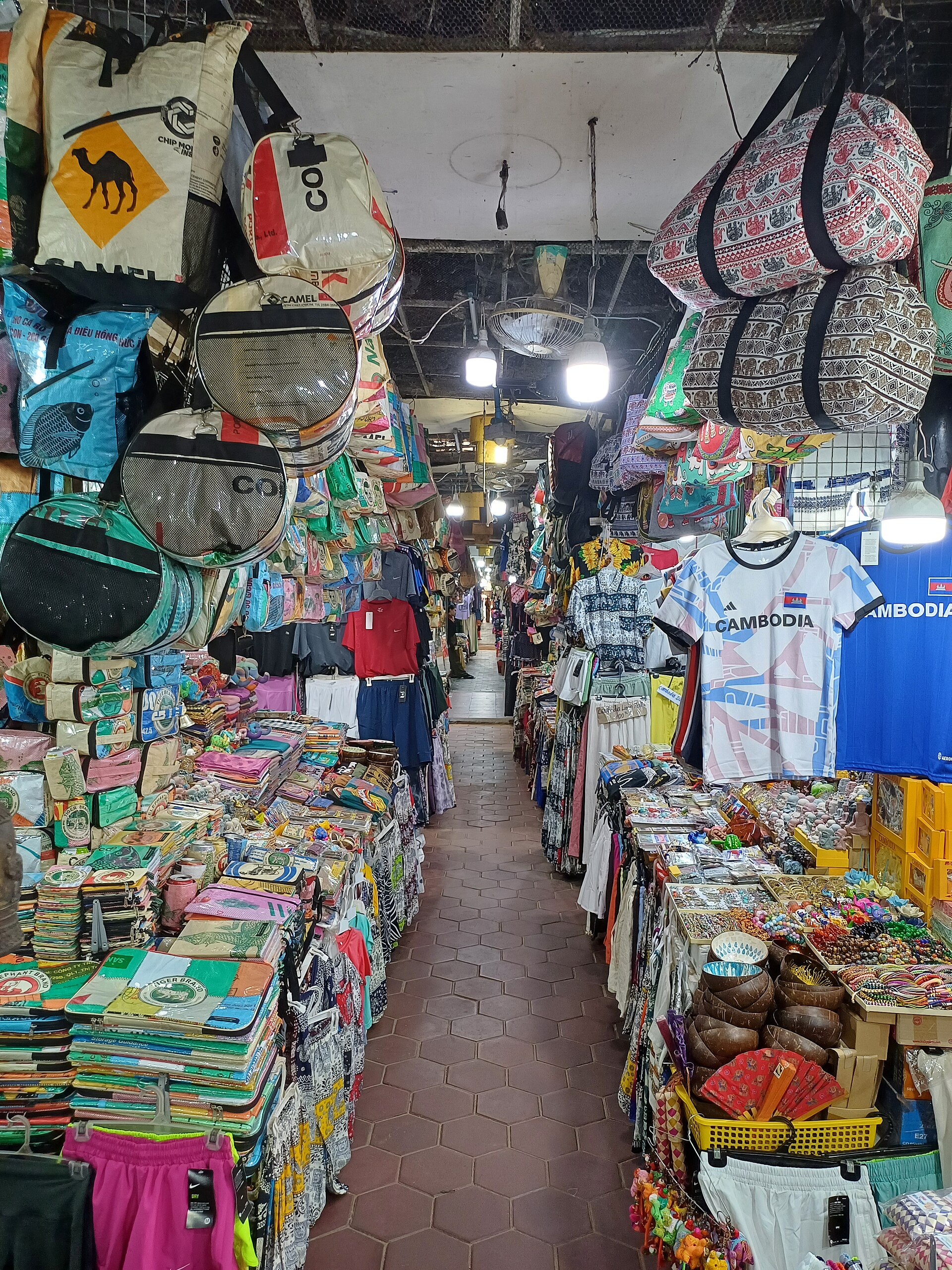
Walk through the Old Market without treating every vendor as a photo subject. Look at what is in season, notice the herbs and freshwater fish, and buy something if you are genuinely interested. Nearby streets hold repair shops, tailors, food stalls, and small businesses that serve residents. The mix becomes more visible when you step off the main tourist route and move at the speed of the people doing their shopping.
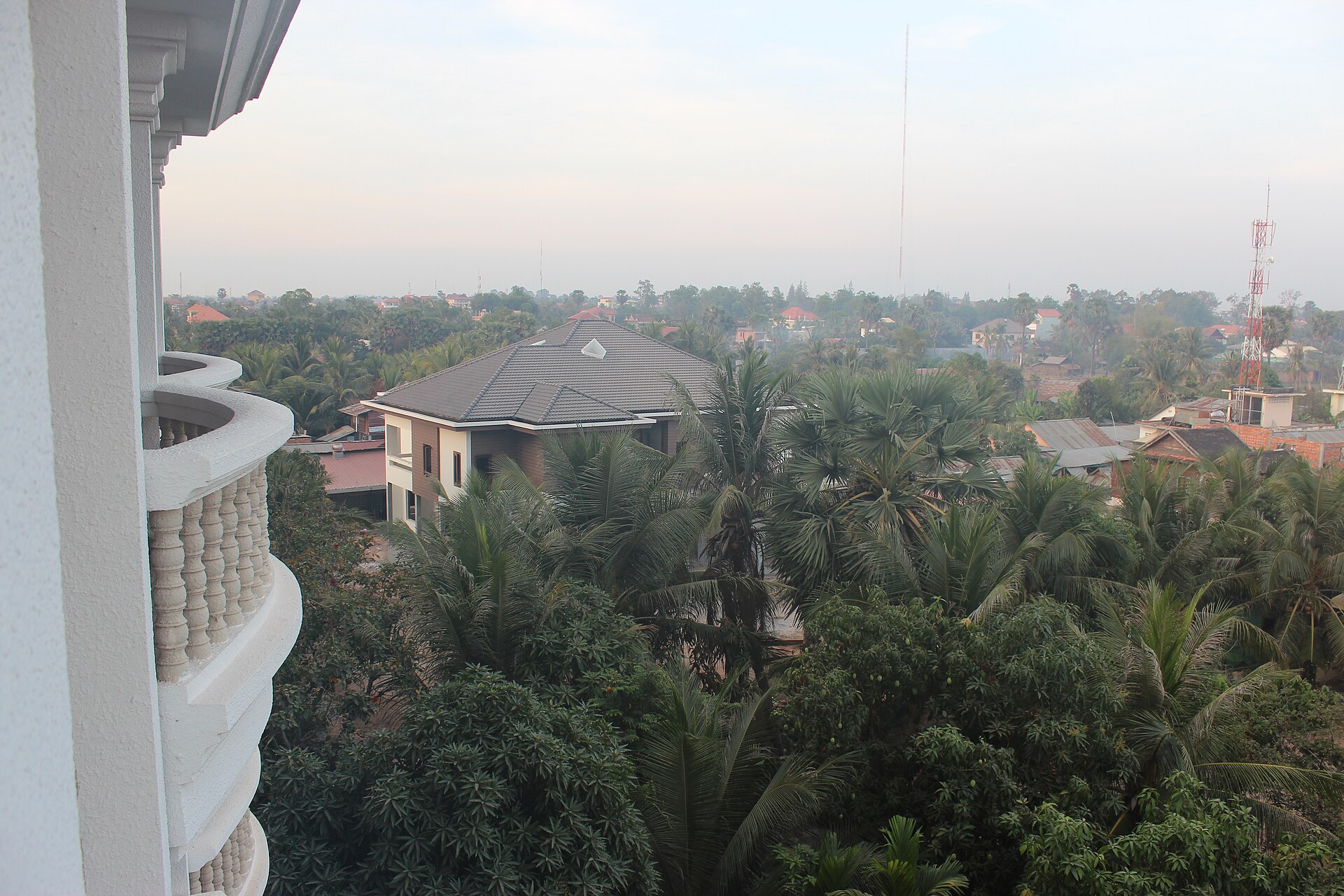
Photo: Uhooep, Wikimedia Commons, CC BY-SA 4.0.
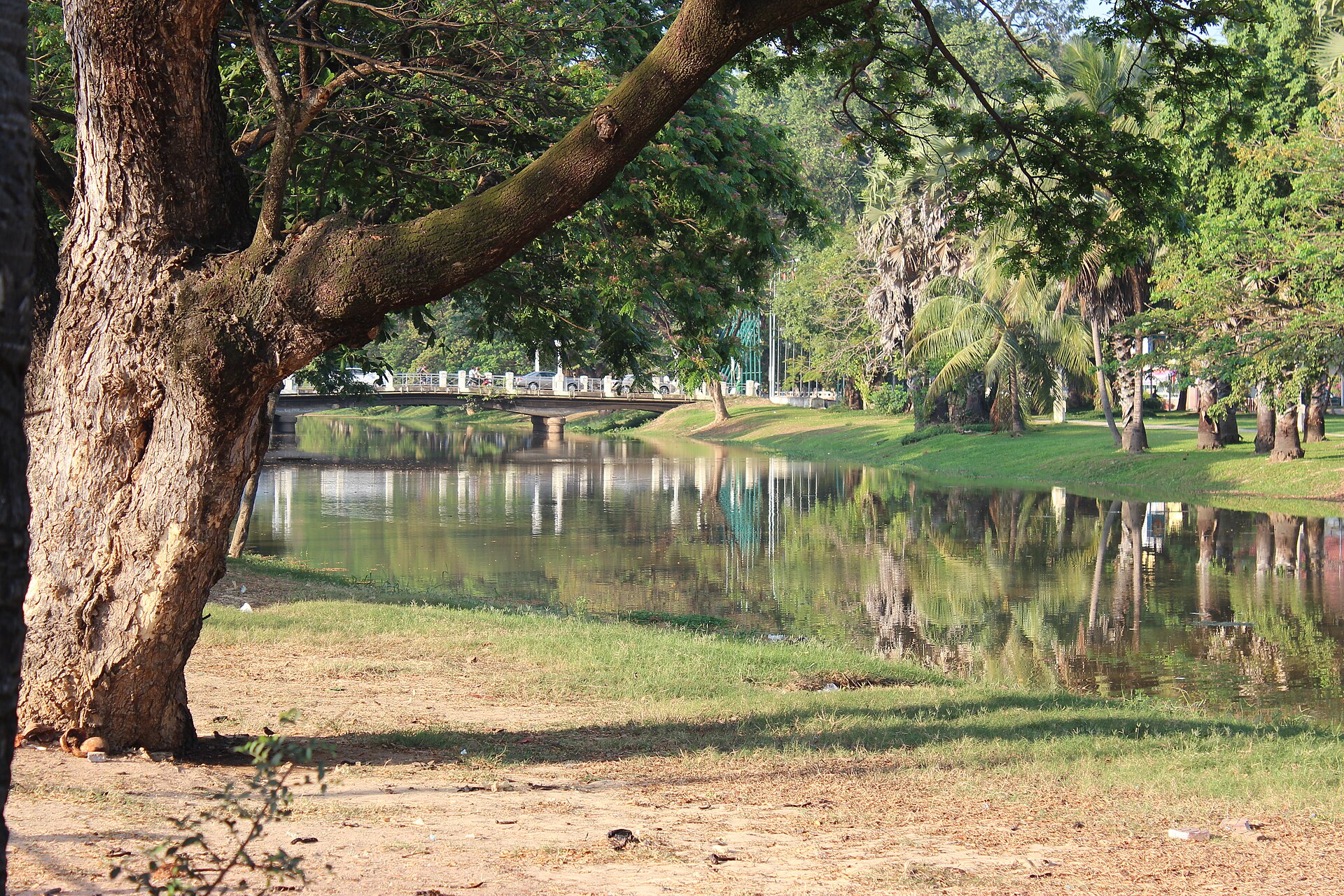
The Royal Independence Gardens and the riverfront offer an easier introduction. Locals exercise there in the early morning and gather again after work, while the temples and shaded paths create pockets of calm near the center. The Siem Reap attractions guide can help you understand the landmarks, but the local rhythm is found between them: at breakfast, on a school run, or during an ordinary evening walk.
This is not a reason to wander into private spaces or turn residential streets into a performance. Keep your voice low, ask before photographing people, and accept that some parts of daily life are simply not meant for visitors. A respectful walk often reveals more than a rushed search for an authentic experience.
What Do People Do Between Temple Visits?
The most common answer is rest, especially after an early start. Temple mornings involve heat, uneven ground, stairs, and long periods in the sun. By midday, many travelers return to town, shower, eat, and sleep for an hour. That pause is not laziness; it prevents the afternoon from becoming a struggle and leaves enough energy for the evening.
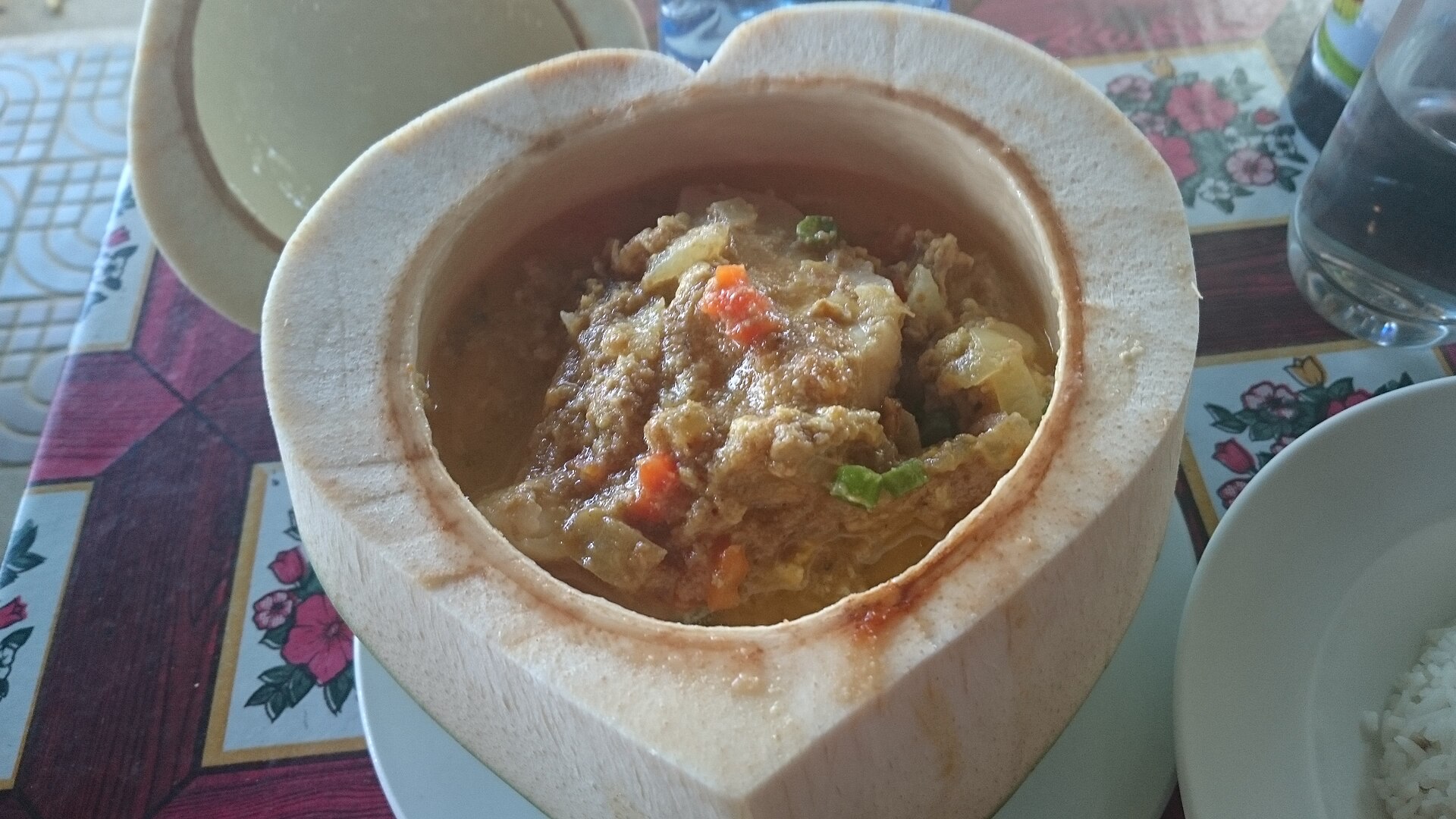
Lunch can be as simple as a bowl of noodles or as leisurely as a full Khmer meal. If you have already spent the morning walking, choose somewhere close rather than crossing the city for a specific restaurant. After eating, avoid the temptation to add another major sight. A museum, craft workshop, gallery, or cafe may be enough, while some days call for no activity beyond reading in an air-conditioned room.
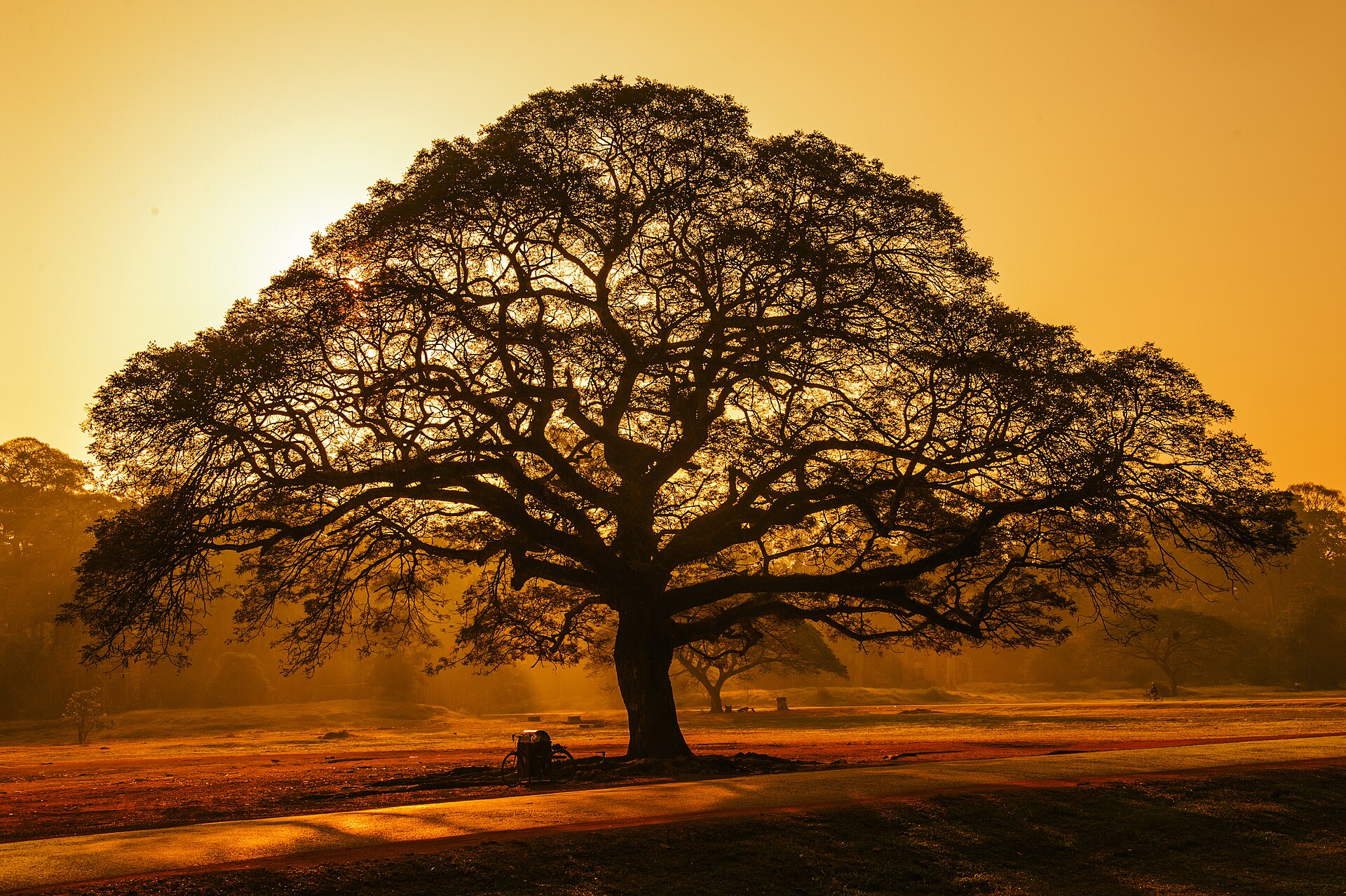
Photo: Vicente Delgado, Wikimedia Commons, CC BY-SA 4.0.
The Siem Reap temple-break guide covers more ways to fill these hours, but the best choice is usually the one nearest your room. A long lunch, a nap, and a shower can do more for a trip than squeezing in another monument. If you are traveling with children or working remotely, this middle block also becomes the practical part of the day for pool time, schoolwork, calls, or errands.
People who try to visit temples all day often remember the heat more than the carvings. Those who stop deliberately tend to return to the ruins with better attention. The quiet hour in the middle is not separate from the travel experience; it is what makes the early morning and late afternoon possible.
Where Can You Slow Down in the Afternoon?
From early afternoon until about four, shade is the best guide. Choose a cafe with fans or air conditioning, book a massage, sit by a pool, or work from a quiet guesthouse. Siem Reap has enough coffee shops to make this a pleasant routine rather than a compromise, and many provide reliable Wi-Fi if you need to answer messages or finish a few hours of work.
If you want to move, keep the distance short. Visit a small gallery, browse a craft shop, or walk through an air-conditioned supermarket for supplies. The point is to remain available to the day rather than forcing a major activity through the hottest hours. A slow afternoon can include useful tasks—laundry, planning, a haircut, or buying a bus ticket—without becoming a list of errands.
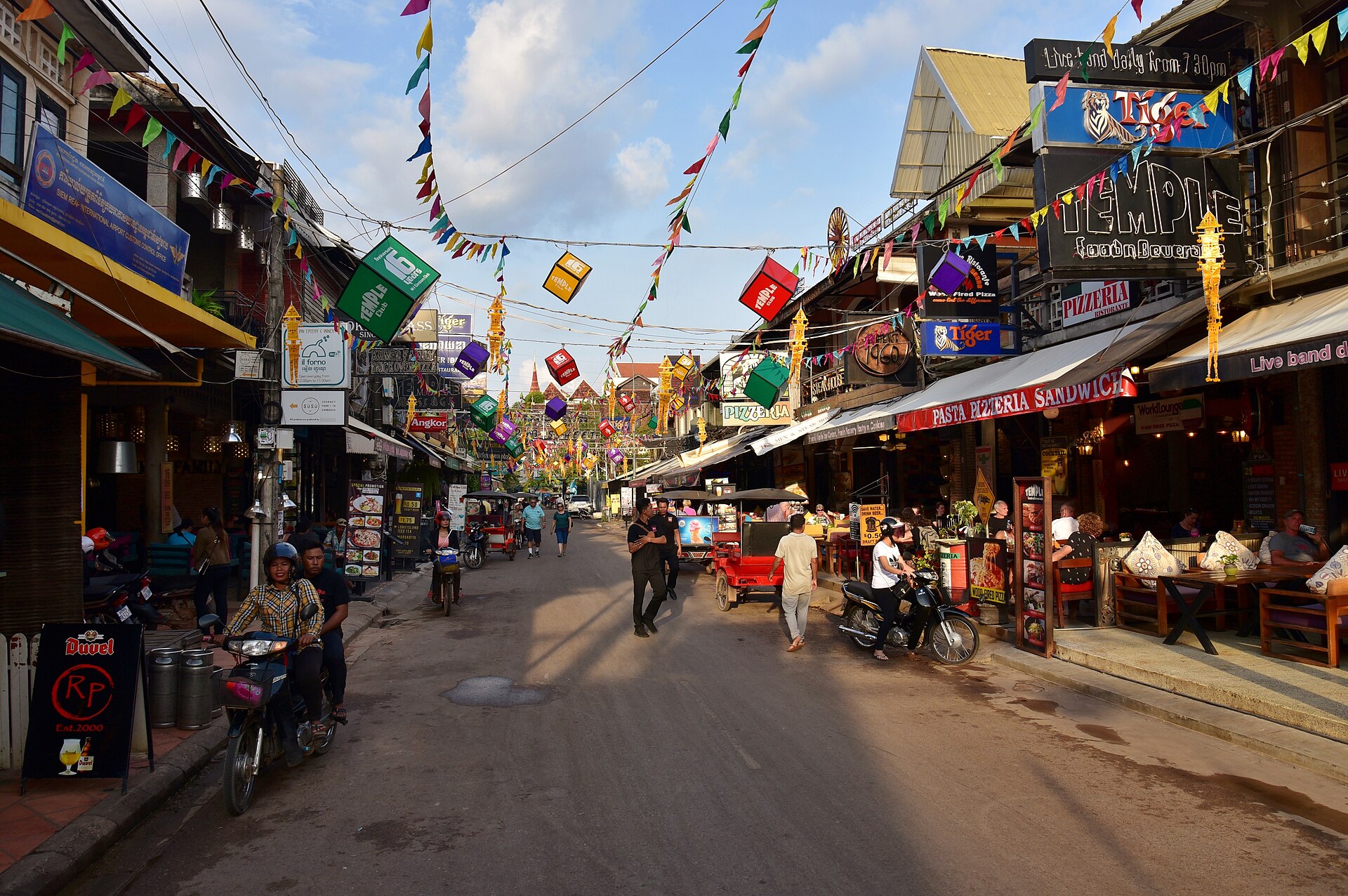
Photo: Bahnfrend, Wikimedia Commons.jpg), CC BY-SA 4.0.
By late afternoon, the light softens and the streets begin to fill again. A walk along the river or through the gardens can bridge the hot middle and the evening without demanding much energy. Watch how the city changes: exercise groups appear, children leave school, vendors set up, and cafes prepare for the dinner rush.
This is also a good time to revisit a place you passed earlier. A market that felt overwhelming at noon may be easier to read when the day cools. A temple or garden that was crowded in the morning may feel more spacious near closing. Slow travel does not require avoiding famous places; it means choosing the hour when you can actually pay attention.
What Is Siem Reap Like After Sunset?
The city becomes more social after sunset. Riverside walkways fill, food stalls begin grilling, and the night markets turn browsing into an easy evening activity. You can eat dinner at a market, try several small dishes, or choose a restaurant away from the busiest lanes.
Pub Street and the surrounding blocks provide the loudest version of the evening, but they are not the whole picture. Quieter restaurants, small bars, cafes, and riverside benches suit travelers who want atmosphere without a late night. The useful approach is to choose one area, settle in properly, and walk home before the evening becomes a forced march through every venue.
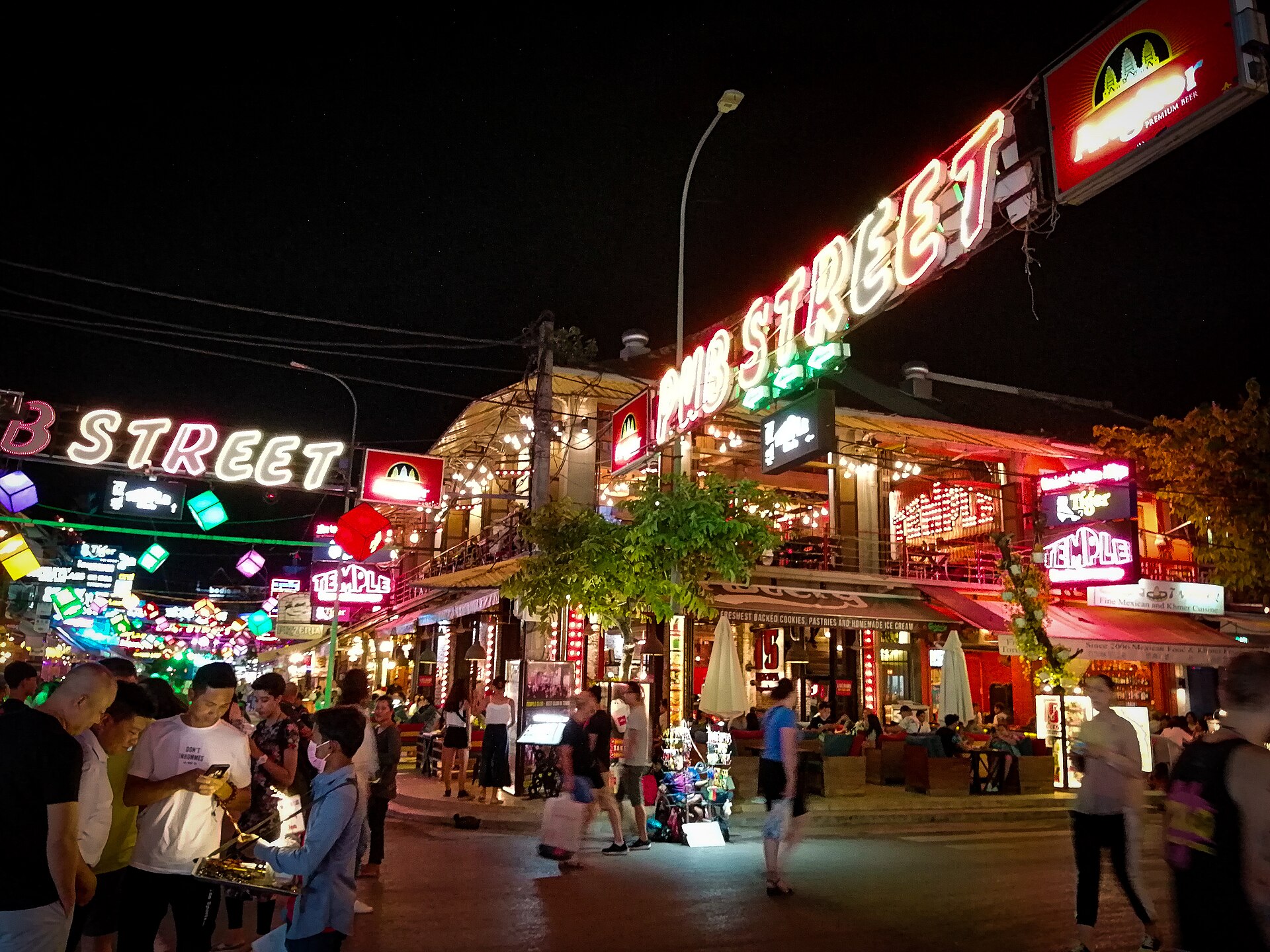
Photo: Wilsen Escandor, Wikimedia Commons, CC BY-SA 4.0.
This is often the most memorable part of a slow day because nothing needs to be accomplished. Browse without buying, order one dish you cannot identify, or sit near the river and watch the city pass. If you have an early temple start the next morning, leave before the night becomes too busy. The ability to stop early is part of what makes the following day feel generous.
After dark, Siem Reap can be as lively or as gentle as you want. A slow day simply gives you enough energy to notice which one you need.
Why Stay Longer Than a Temple Weekend?
A temple weekend can show you the major ruins, but it rarely leaves time for the city to become familiar. Staying longer changes the scale of the trip. You can give Angkor one full day, use the next for a quieter neighborhood, and keep another morning free for a site you missed. Rain, heat, or an unexpected closure no longer ruins the entire itinerary.
Longer stays also expose the useful details that short visits miss: which breakfast place opens early, where to buy water without tourist prices, how long the river walk takes, and which cafes are comfortable for work. You begin to recognize the difference between the Old Market, Wat Bo, and the quieter streets beyond them. Those details make daily life easier and turn Siem Reap into a place rather than a stopover.
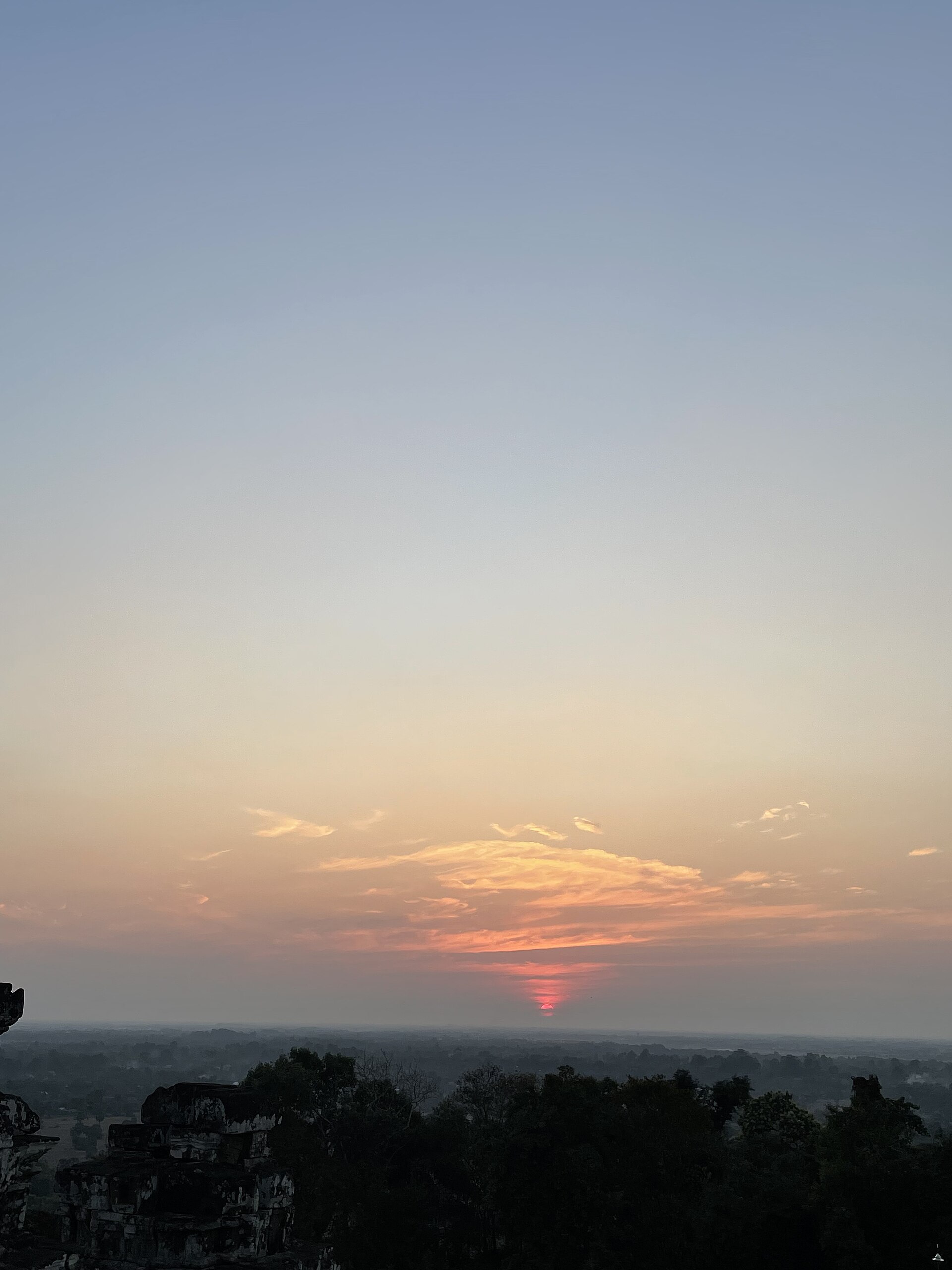
A five- to seven-night stay is enough to include temples, one slow day, a food-focused evening, and a half-day outside the center without rushing. Even without adding another major destination, the city rewards repetition. You can return to the same market at different hours, see how the river changes after rain, or spend a morning reading while everyone else leaves for sunrise.
The Siem Reap where-to-stay guide can help you choose a base that supports this slower rhythm. More time does not mean filling more days. It means allowing one good day to remain simple, then using the next to follow a different curiosity. A temple weekend proves you were there; a longer stay lets Siem Reap become part of the trip.