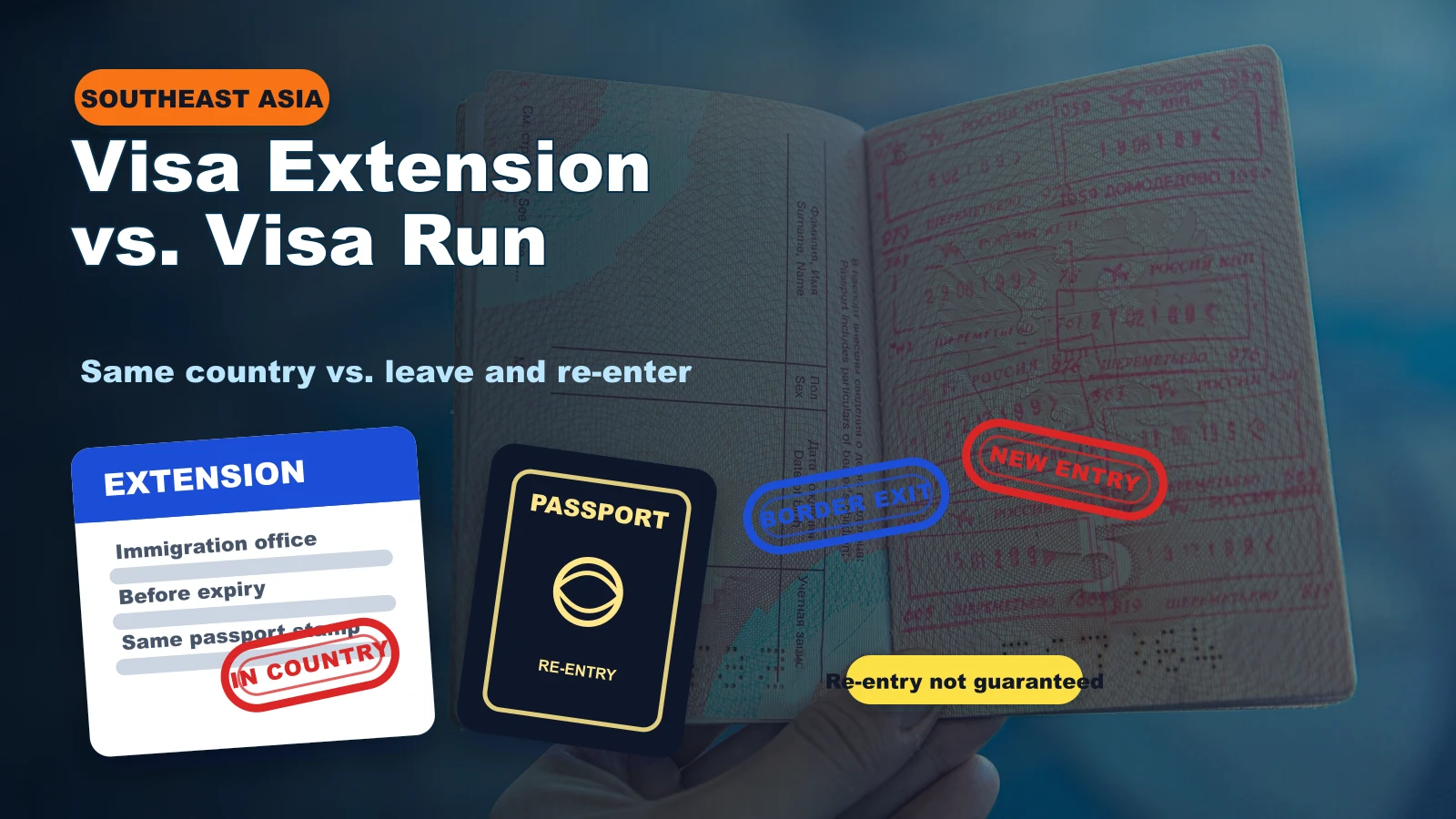
Travel forums still use “visa run” as shorthand for any trip across a border, but immigration officers think in categories: extensions change or prolong the permission you already have inside a country; visa runs (re-entry trips) end one stay and start another with a fresh decision at the border.
The difference matters for cost, time, risk, and whether your remote-work plans stay legal. Southeast Asia is not one rulebook—Thailand, Malaysia, Indonesia, and Vietnam each treat extensions and re-entries differently.
Forum posts often describe visa runs as cheap adventure. Budget for the full cost: transport, lodging, missed work hours, and the possibility that you must fly farther than planned if a land border refuses entry.
Immigration rules change. This article was last reviewed in October 2026. Always confirm requirements on the official immigration or consular website for your nationality before you apply, extend, or re-enter.
What Is a Visa Extension?
An extension keeps you in the same country without a “reset” trip—usually by visiting an immigration office or using an online system before your permitted stay ends.
How Visa Extensions Usually Work
You submit an application, pay a fee, provide photos and forms, and sometimes show onward travel or accommodation. If approved, your stay is lengthened or your visa category is adjusted according to local law—not according to traveler folklore.
Processing may take same-day or several business days. Your passport might be held during review; plan work and travel accordingly.
When You May Be Eligible for an Extension
Eligibility depends on visa type, nationality, entry stamp, and current policy. Tourist entries that already received one extension may not qualify again; some long-stay programs cannot be extended and must be converted through a different route.
Thailand’s tourist extension process is a common example where rules shift—use the official immigration bureau site and our Thailand tourist visa extension guide as orientation, then verify current fees and forms.
What Is a Visa Run?
A visa run means leaving the country—often briefly—and applying for entry again, hoping for a new permission to stay.
How Leaving and Re-Entering a Country Works
You exit through immigration, possibly visit a neighboring country, then return with a valid visa or eligible visa-free entry. The new stay length comes from the officer’s stamp or electronic record, not from how short your trip abroad was.
Land borders and airports may enforce different scrutiny levels. Same-day returns sometimes attract questions.
Why Re-Entry Is Not Guaranteed
Officers assess purpose of visit, funds, accommodation, travel history, and prior compliance. Frequent re-entries, minimal time abroad, or mismatched answers can lead to denial, shorter stays, or interviews.
Remote workers should remember: a new tourist entry is not a work permit. Working locally or abusing tourist entries can have serious consequences regardless of re-entry success yesterday.
Some travelers combine a short holiday in a neighboring country with a re-entry attempt. That can be legitimate tourism—but immigration officers may still ask why you return quickly. Have honest, concise answers about remote work for foreign employers and length of intended stay.
Visa Extension vs. Visa Run: Costs, Time, and Risks
Extensions often cost less in transport but may require office queues and strict timing. Visa runs add flights, buses, lodging, and border fees—but may be the only option when extensions are unavailable.
Risk sits mainly on re-entry: an extension denial usually leaves you in-country with time to adjust plans; a re-entry denial can strand you at a border or require costly rerouting.
Which Option Is Better for Your Travel Plans?
Choose extensions when you are eligible, time is short before expiry, and policy clearly allows another month on the same route. Consider re-entry only when law permits, your history is clean, and you can absorb denial risk.
Long-stay remote workers often outgrow both patterns and need proper long-stay or digital nomad routes—compare categories in our Thailand visa-free stay overview before assuming repeats will work all year.
What to Check Before Your Current Stay Expires
Mark passport stamps, I-94 equivalents, and online “last day to stay” calculators from official sources. Set reminders two weeks before the latest safe extension window.
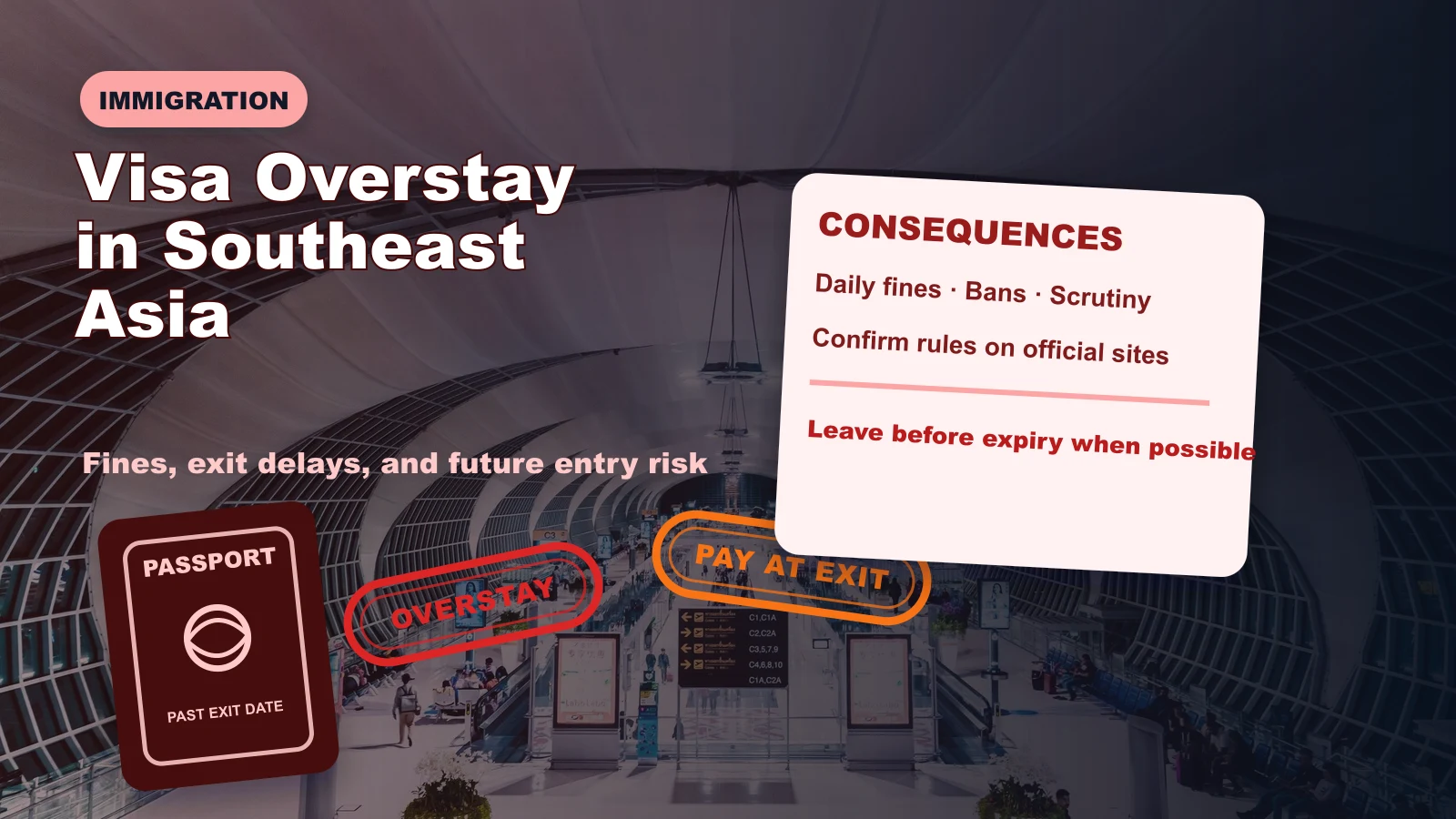
Confirm whether overstay fines accrue daily and whether exit ports require payment before boarding.
Common Mistakes When Extending a Stay
Waiting until the final day, using fake onward tickets, trusting outdated forum posts, and confusing “visa validity” with “permitted length of stay” cause most preventable crises.
Another mistake is doing repeated visa runs while treating them as a permanent residency strategy—immigration systems increasingly flag that pattern.
Document What Happened at the Border
After each entry, photograph your stamp or save the eGate receipt. After each extension, keep the receipt stapled near the relevant passport page in your folder.
If an officer gives verbal instructions, write them down immediately with date and location. Disputes months later often come down to paperwork—not memory.
When comparing options, write two columns—extension versus re-entry—and list official fees, transport, time off work, and worst-case denial outcomes. The clearer column usually matches your risk tolerance.
Frequently Asked Questions
See FAQs on legality, denial risk, and extension timing above. Extensions and visa runs are tools with different failure modes; pick the one that matches official eligibility for your passport and visa type, not the one that saved someone else a bus fare in 2019.
If friends recommend a border agent or “easy” airport, treat that as anecdote until the immigration website confirms the same category and stay length for your passport today.
When in doubt, choose the path that keeps you inside the country legally while you research—not the path that bets everything on a same-day re-entry stamp.
Extension offices sometimes close on local holidays you forgot existed. Check public holiday calendars when you set reminders, not only when your stay is already expiring.
Carry photocopies of passport data pages and entry stamps when visiting immigration—some offices request them even when originals are in hand.