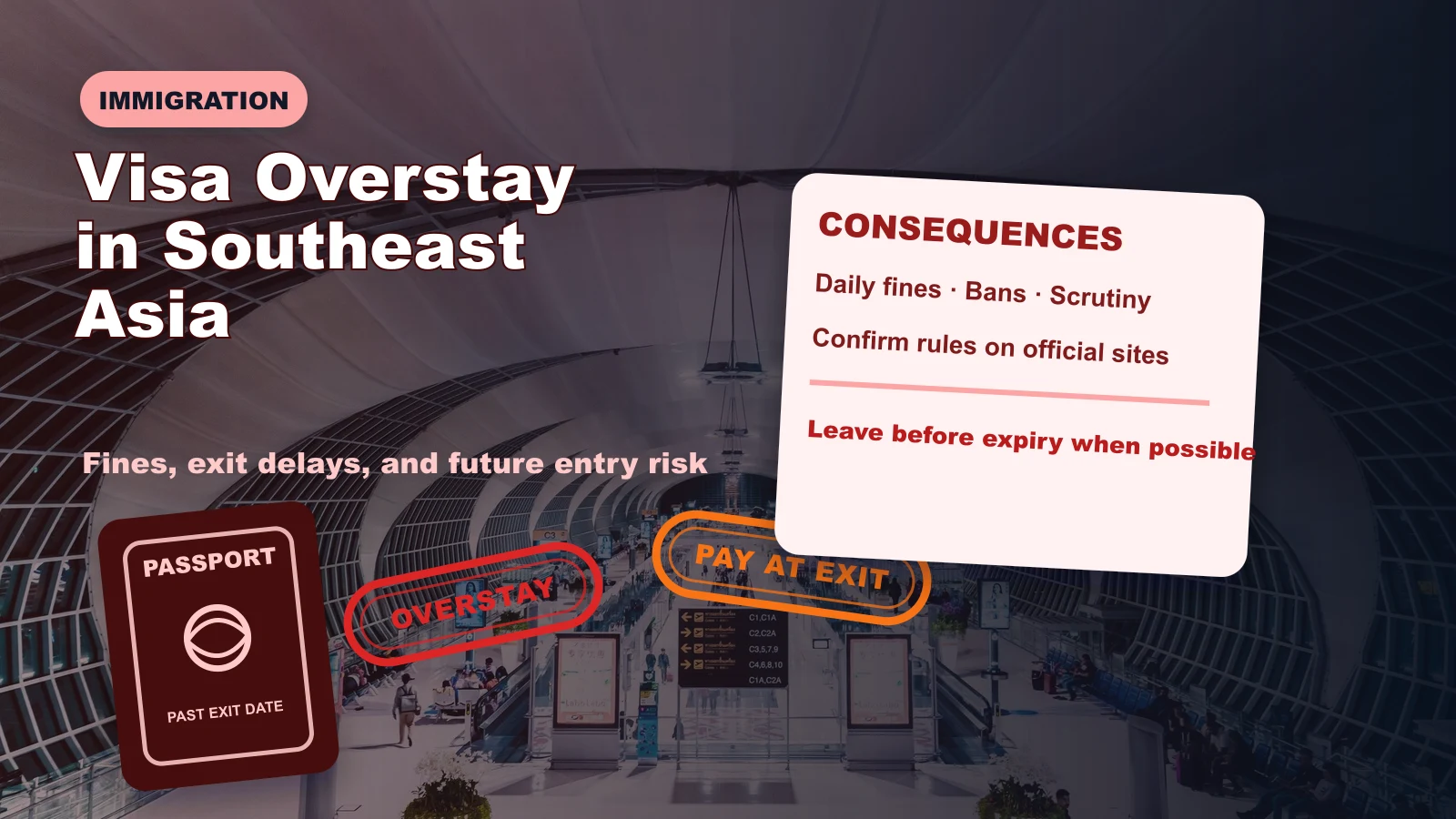
An overstay begins the day after your permitted stay ends—not the day you “feel ready” to fly out. In Southeast Asia, consequences range from paying a fine at departure to being barred from re-entry, depending on country, length of overstay, and whether the overstay was voluntary or due to genuine emergency.
Do not rely on a single fine amount or day count copied from an old blog post. Penalties and procedures change. This article explains general patterns; confirm current rules on official immigration sites and seek qualified legal help for complex cases.
Overstays sometimes happen from honest mistakes—misread stamps, cancelled flights, hospital stays—not only from deliberate rule-breaking. How you respond once you notice the error still matters for the outcome.
Immigration rules change. This article was last reviewed in October 2026. Always confirm requirements on the official immigration or consular website for your nationality before you apply, extend, or re-enter.
What Does It Mean to Overstay a Visa?
Your permitted stay is the date immigration gives you at entry or after an approved extension—not necessarily the expiry date printed on a visa sticker in your passport. Electronic systems in some countries track stay length separately from visa validity.
Working, studying, or volunteering beyond what your category allows can be a different violation from a day-count overstay, but both can affect future travel.
Possible Consequences of an Immigration Overstay
Outcomes depend on how long you stayed illegally, whether you self-report, and local law.
Overstay Fines and Administrative Penalties
Many countries impose daily or banded fines payable at departure. Payment may be required before airlines check you in. Keep receipts and boarding passes if you dispute records later.
Amounts and calculation methods differ; officers apply the schedule in force on departure day.
Detention or Restrictions on Departure
Long overstays or repeated violations can lead to holding facilities, interviews, or mandatory appearances before you may leave. These situations need professional assistance—not guesses from chat groups.
Entry Bans and Future Visa Applications
Some systems publish ban lengths tied to overstay duration. Future eVisa or visa-free entries may be refused even after fines are paid.
How Overstay Rules Differ Across Southeast Asia
Summaries below are high-level orientation only. Verify on official immigration portals before making decisions.
Thailand
Thailand has published overstay fine structures and possible entry bans for longer violations. Airport immigration may calculate fines during exit processing. For extension options before expiry, see official immigration announcements rather than overstaying intentionally.
Malaysia
Malaysia enforces stay limits tied to entry type and may impose fines, detention, or re-entry restrictions for overstayers. Special passes during emergencies do not always apply—check whether any program was active for your exact dates.
Planning lawful extensions beats guessing grace periods. Start with Malaysia entry requirements for your passport, then read the immigration department’s latest notices.
Indonesia
Indonesia calculates overstay penalties for many visit categories and may escalate consequences for long periods without status. Visa-on-arrival and eVOA users should track the stamped or electronic “must leave by” date carefully.
Vietnam
Vietnam tracks stay length on visas and temporary residence where applicable. Overstay fines and exit procedures are handled under Vietnamese immigration law; eVisa users should confirm whether extensions are possible instead of remaining past the authorized exit date.
Our Vietnam eVisa guide for remote workers focuses on lawful entry—not on fixing an overstay after the fact.
Penalties you read online may refer to old penalty bands or special amnesty periods. Always open the immigration authority’s current notice in the language it publishes officially, then consider a certified translation if you do not read that language fluently.
What to Do If You Have Overstayed Your Visa
Stop accumulating days immediately. Contact immigration or a qualified immigration lawyer in-country if you are already weeks past expiry. Do not attempt to hide at borders or buy fake stamps.
Gather passport stamps, boarding passes, extension receipts, and medical records if illness delayed departure. Honest documentation helps in some administrative processes but does not guarantee leniency.
If you are only one or two days over because of a cancelled flight, keep airline proof and ask airline or immigration staff about official procedures—policies for genuine travel disruptions differ by country and era.
How to Avoid Overstaying During Long-Term Travel
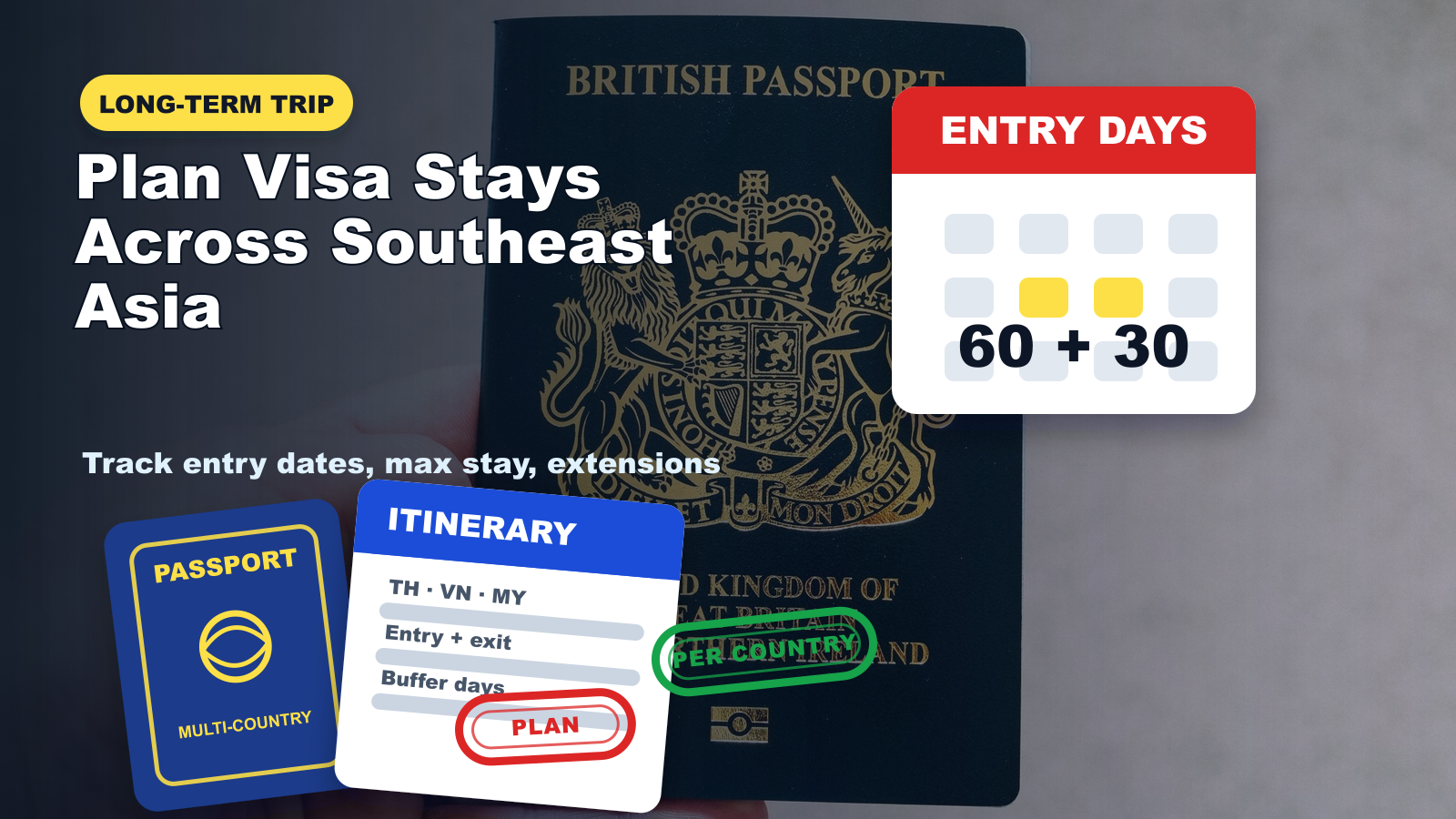
Use a visa calendar with entry dates, maximum stay, and extension deadlines. Set phone reminders two weeks before each cutoff.
Build buffer days before flights, especially during monsoon or holiday seasons when transport delays cluster. If work demands threaten your exit date, prioritize immigration compliance over a client call—overstay costs exceed one rescheduled meeting.
Records to Keep After You Leave
Save boarding passes, exit stamps, fine receipts, and email confirmations from airlines. If a database later shows an anomaly, you may need proof of lawful departure.
When applying for future visas, answer overstay questions honestly. Misrepresentation can carry heavier penalties than the original overstay in many systems.
Teach travel partners the same countdown habit if you share plans—one person’s overstay should not surprise the group at the airport.
Frequently Asked Questions
Refer to the FAQ entries on short overstays, departure after overstay, and future applications. Treat every day past your authorized stay as legal risk, not a negotiable travel flex—and when in doubt, confirm with official immigration channels before you miss a hard deadline.
For complex situations—long overstays, missing stamps, or simultaneous passport renewals—qualified immigration lawyers in the country where the overstay occurred are the appropriate next step, not social media threads.
Prevention remains cheaper than remediation: a calendar alert costs nothing compared to emergency legal fees or last-minute flights bought under stress.
Treat passport stamps like contract signatures: read them at the counter, confirm the exit date aloud if needed, and photograph them before you leave immigration. Five seconds at the desk prevents five days of anxiety later.
If children travel with you, track their stamp dates separately—parents juggling work email sometimes monitor only their own passport page until a family exit deadline surprises everyone.