A long Southeast Asia route falls apart when it is built backward—flights first, visa limits later. Immigration rules are the spine of the itinerary: they decide how long you can stay, whether you can return, and whether remote work fits the category you actually hold.
Planning visa stays means separating visa validity (how long the document is usable) from permitted length of stay (how long each entry allows), then tracking both on a calendar you update when plans shift.
A beautiful multi-country loop can be lawful and slow—or stressful and risky—depending almost entirely on whether you built the route from immigration limits outward. Flip that order and you will spend your trip watching stamp dates instead of neighborhoods.
Immigration rules change. This article was last reviewed in October 2026. Always confirm requirements on the official immigration or consular website for your nationality before you apply, extend, or re-enter.
Check Entry Requirements Before Choosing Your Route
Start with your passport’s visa-free lists, eVisa options, and visas-on-arrival for each candidate country. Political and health announcements can add temporary restrictions—check foreign ministry or immigration sites close to departure.
Visa-Free Entry, eVisas, and Visas on Arrival
Visa-free entry often caps each stay at 30, 45, or 90 days depending on nationality and country. eVisas may allow single or multiple entries with their own stay clocks. Visas on arrival may require exact cash, photos, and proof of onward travel.
Do not assume ASEAN proximity means shared rules—crossing from Vietnam to Thailand resets compliance obligations entirely.
Passport Validity and Entry Conditions
Many countries require six months’ passport validity beyond arrival or departure. Blank pages, onward tickets, proof of funds, and vaccination records may be checked even when you hold an eVisa approval letter.
Understand Visa Validity vs. Permitted Length of Stay
A six-month tourist visa might still only grant 30 days per entry. A 30-day stamp might be extendable once while a 60-day program is not. Mixing these concepts causes accidental overstays.
When an officer stamps a date in your passport, that date is your primary countdown unless an online system shows a different legal limit—verify both if they differ.
Build a Visa Calendar for Multiple Countries
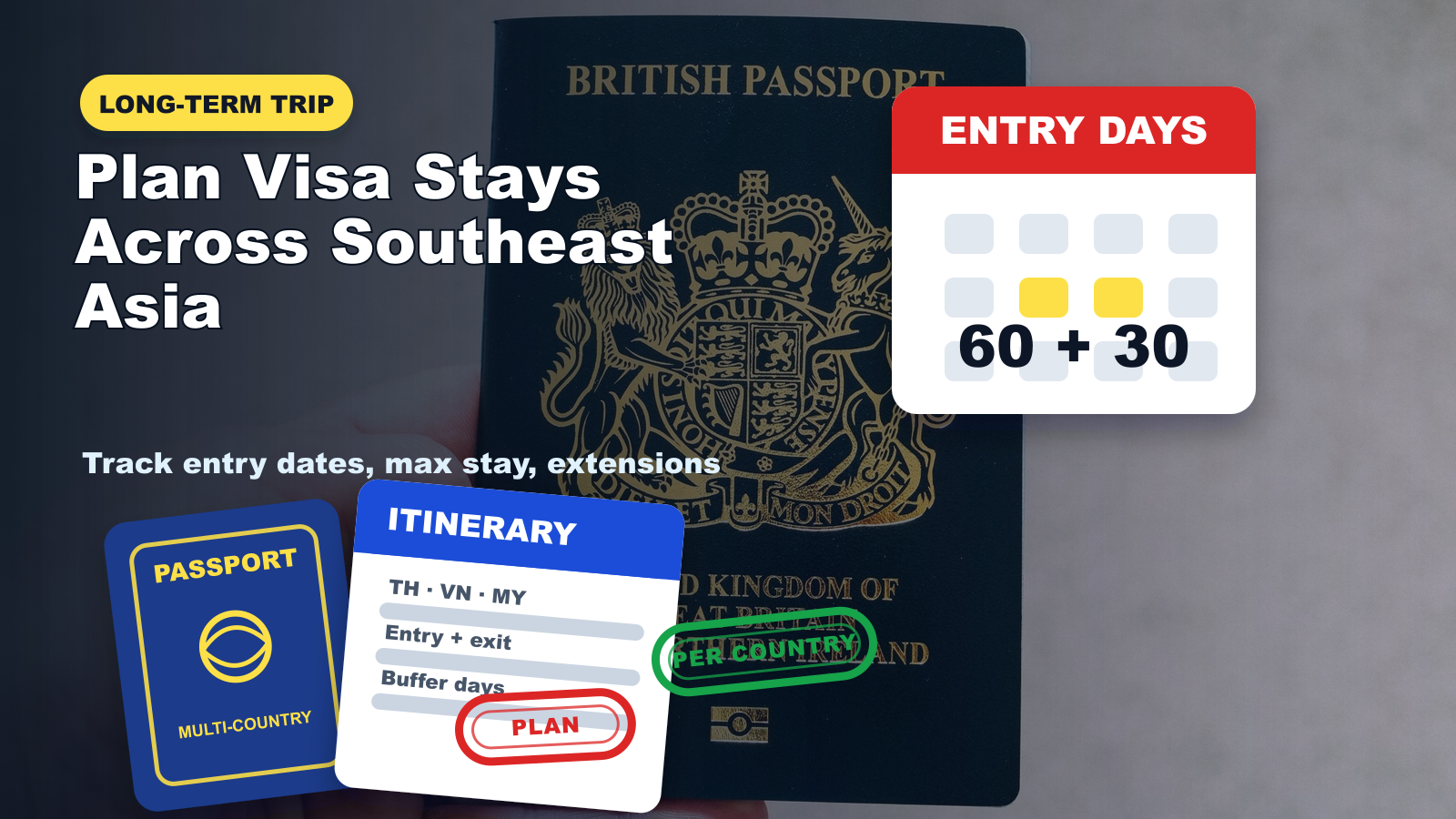
Use a spreadsheet or calendar app with one row per country visit: entry date, latest legal exit date, extension deadline, and notes on remote-work restrictions for that category.
Track Entry Dates and Departure Deadlines
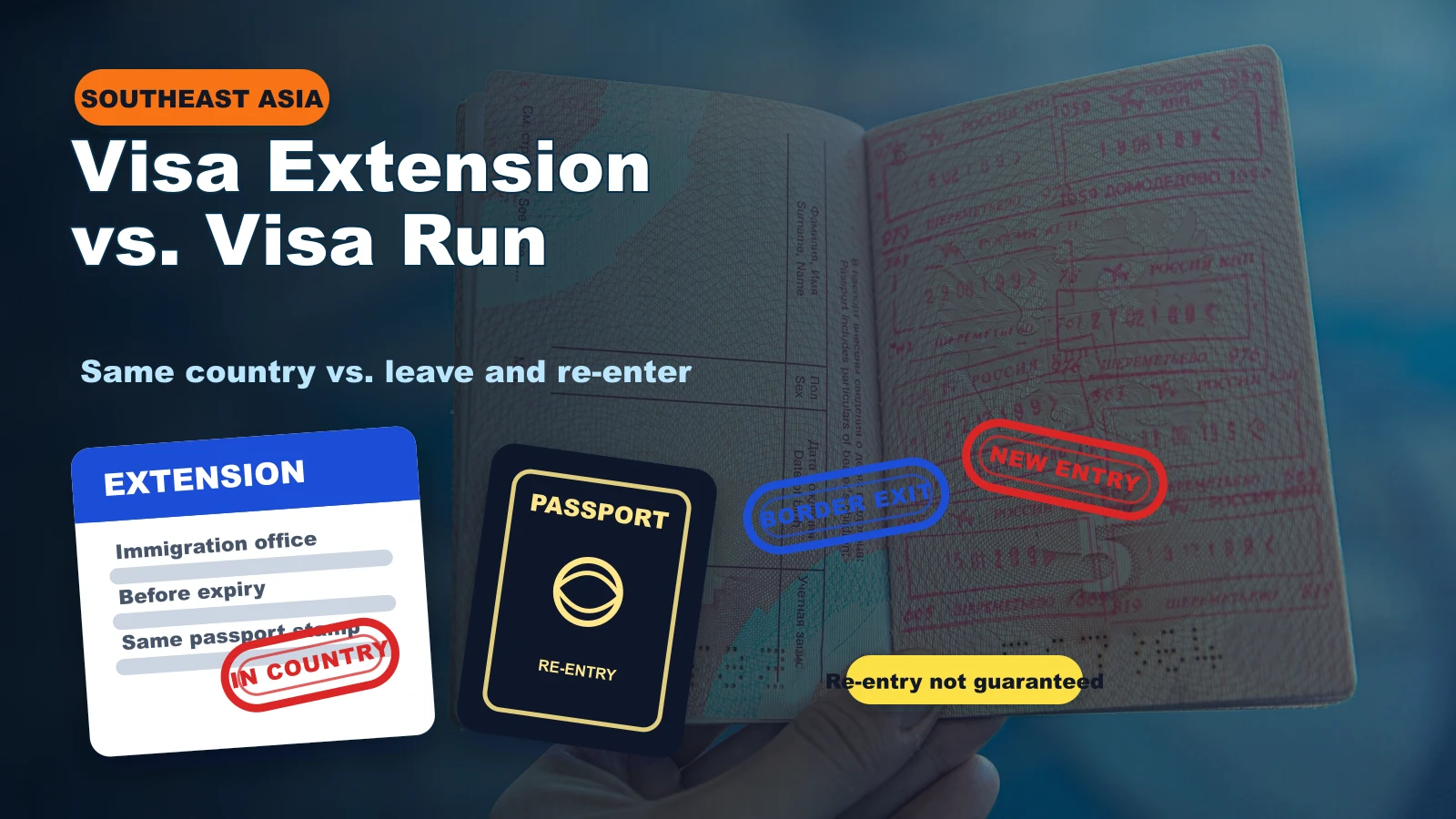
Include buffer days before international flights. If you plan a visa run, mark it as a high-risk contingency, not a guaranteed renewal—see our comparison of visa extensions and visa runs before relying on border resets.
Set Reminders for Applications and Extensions
Reminder triggers: two weeks before earliest extension window, one week before latest safe exit, and the day eVisa applications open for your next country if quotas exist.
Plan Your Route Around Visa and Border Requirements
Order countries by stay length and complexity. Place heavier work months where internet and visa stability align; place sightseeing-heavy segments where stays are shorter and rules are simpler.
If you need long remote-work clarity, prioritize countries with explicit digital nomad or long-stay routes instead of chaining tourist entries.
Allow Extra Time for Visa Applications and Travel Changes
Embassy processing, public holidays, and rainy-season transport delays eat margins fast. Carry PDF copies of approvals offline and email them to yourself.
When a country denies an extension, your calendar—not your mood—should decide the next flight.
Remote workers should note which countries explicitly address remote work on tourist or business visitor categories—and which remain silent. Silence is not permission; it is uncertainty that belongs in your risk column.
Common Visa Planning Mistakes on Long Trips
Booking round-the-region tickets before checking stay totals, assuming “digital nomad lifestyle” replaces visa category, ignoring passport expiry mid-trip, and forgetting that exit from one country does not automatically fix overstay in another are classic errors.
Another mistake is treating forum anecdotes as law. Use official pages first; use guides like our how to apply for a visa for any country for process framing, not as a substitute for embassy text.
Sample Calendar Logic (Illustrative Only)
Imagine a three-country loop: you enter Country A on visa-free rules, apply for an extension before the posted window closes, then fly to Country B with an eVisa that allows thirty days, then overland to Country C where your nationality needs a visa obtained in advance.
Your calendar should show three independent countdowns—not one “Southeast Asia trip” timer. Remote work fits only where your visa category allows the activities you perform.
Adjust the loop when any single country changes policy mid-trip. Flexibility in sightseeing is easy; flexibility in immigration is not.
Share Plans With Someone Not on the Trip
Give a trusted contact copies of passport ID page, visa approvals, and exit dates. If you miss a check-in, they can help you think clearly about extensions or flights.
This is especially useful for solo travelers juggling full-time work who might hyperfocus on a deadline and forget a stamp date.
Frequently Asked Questions
See FAQs on total stay length, multi-country visas, and booking order above. A flexible slow trip through Southeast Asia still needs a rigid visa spine—update it whenever you change cities, and you avoid turning a dream itinerary into an immigration interview.
Revisit the calendar after every border crossing—even if the officer said “sixty days” verbally. What landed in your passport or online profile is the record that matters.
Good visa planning feels boring on paper. That boredom is the point: you notice temples more when you are not counting stamp days in the back of a taxi.
Print or save offline copies of embassy pages for each country on your route. Portals go down, phones die, and immigration offices may ask you to show rules you referenced when you planned the trip.
Add your airline’s change-policy summary to the same folder so visa-driven date shifts do not turn into non-refundable ticket losses.