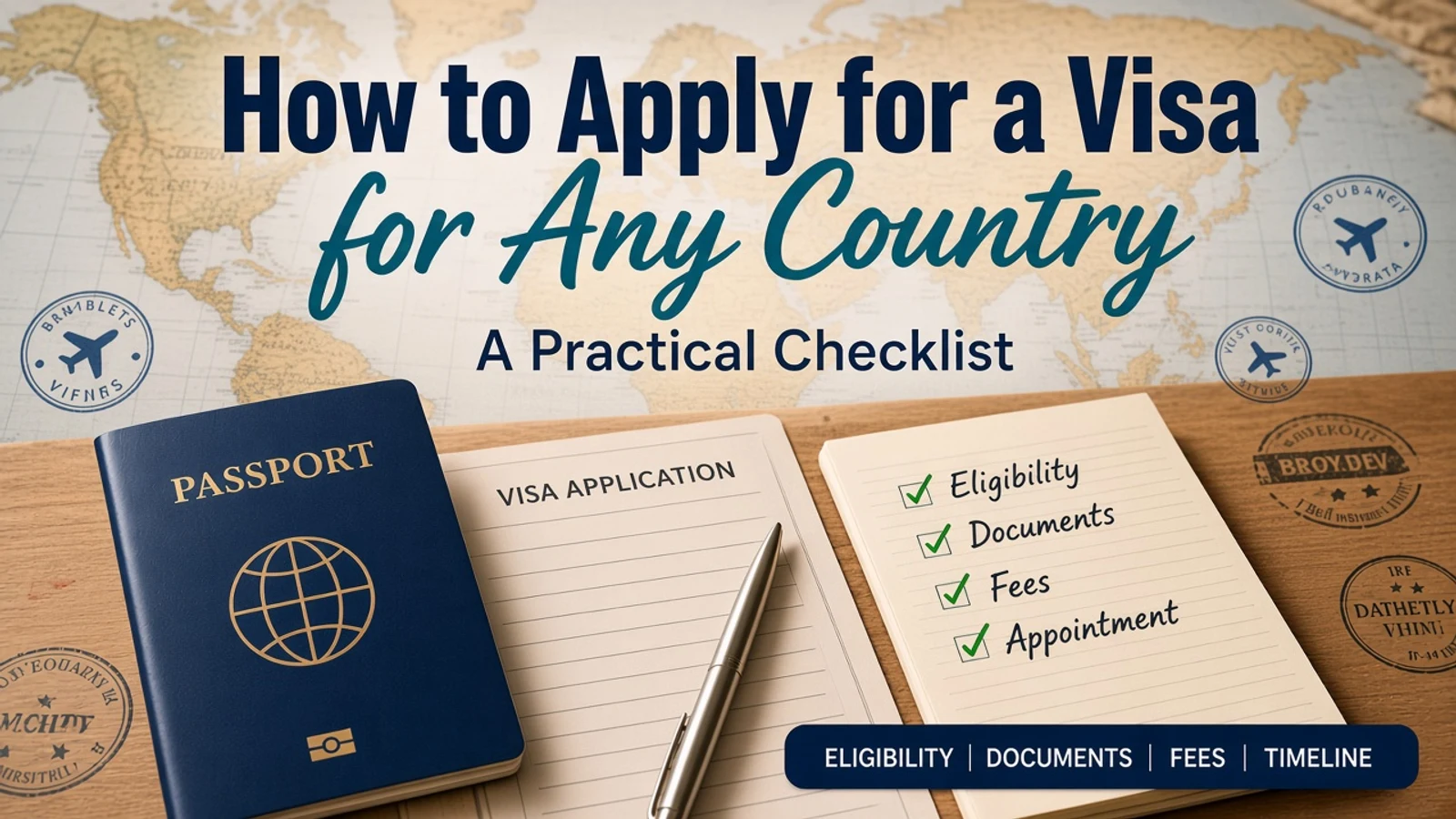
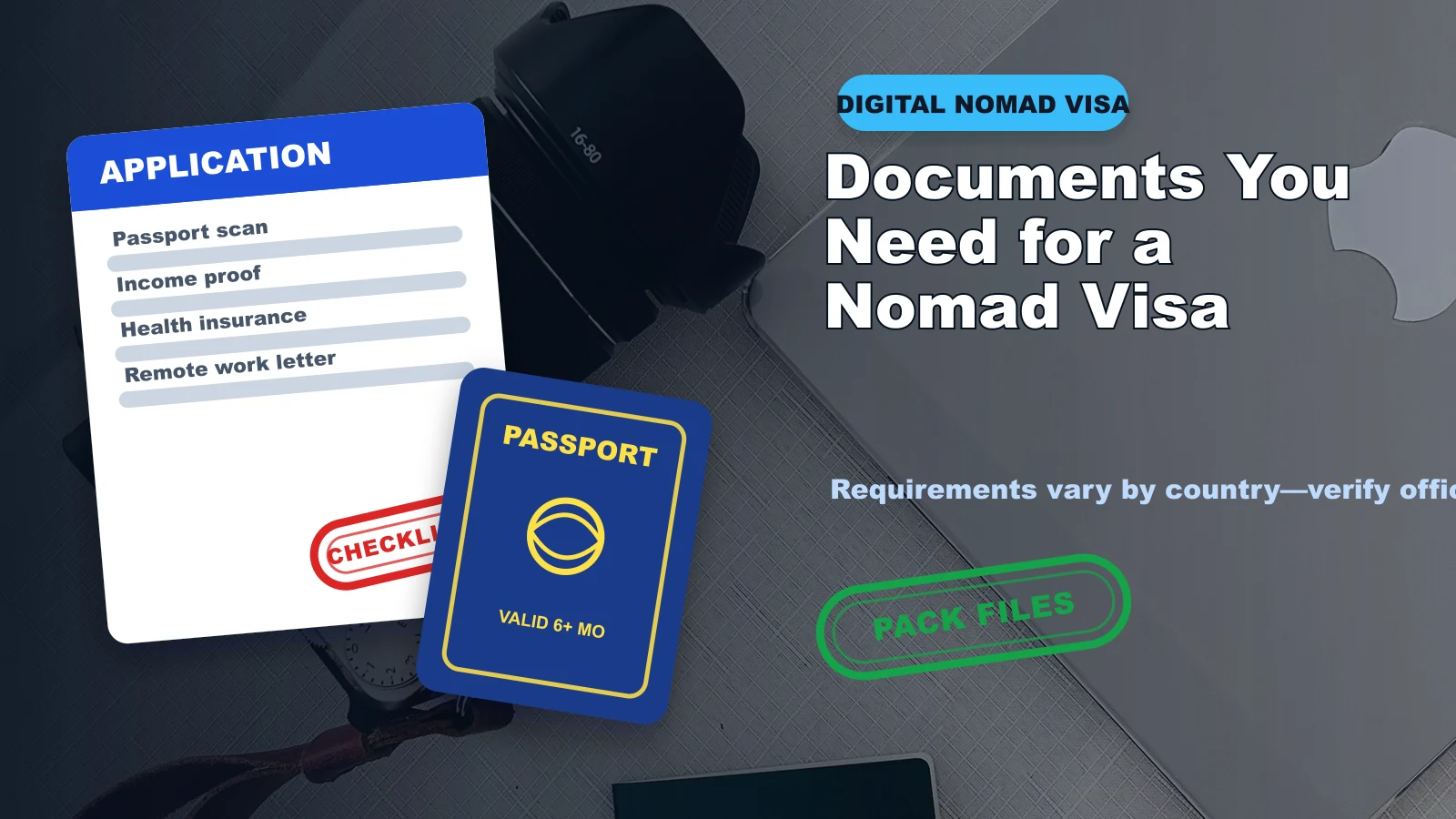
Digital nomad visa applications look intimidating because every country names documents slightly differently. One portal asks for “proof of remote employment”; another wants “evidence of foreign-sourced income.” The underlying idea is similar: show who you are, that you can support yourself, that your work stays outside the local labor market, and that you meet health and security requirements.
This checklist is a practical starting point. Income thresholds, insurance minimums, certification rules, and employer letters must follow the official program for the country you choose—not a generic blog list.
Start gathering documents before you pick a city to rent in. Many applicants lose weeks because they chose housing first, then discovered their income proof did not match the program’s currency threshold or date range.
Immigration rules change. This article was last reviewed in October 2026. Always confirm requirements on the official immigration or consular website for your nationality before you apply, extend, or re-enter.
Common Documents Required for a Digital Nomad Visa
Programs differ, but these categories appear often enough to prepare early.
Passport and Visa Application Form
Your passport usually needs blank pages and validity beyond your intended stay—often six months or more beyond the planned departure date. Scan the photo page and any previous visas you may need to reference.
Complete the official application form exactly as instructed: mismatched names, wrong passport numbers, or unsigned forms are common rejection reasons.
Proof of Remote Employment or Self-Employment
Employees may need an employer letter stating role, remote status, salary, and that the company permits work from abroad. Freelancers may submit client contracts, invoices, or business registration papers.
The letter should match what the immigration site describes. Generic HR templates that never mention remote work abroad may not suffice.
Income Statements and Bank Records
Many programs set minimum monthly or annual income. Acceptable proof can include payslips, tax assessments, bank statements for three to six months, or pension statements.
Use documents in the currency and format the authority lists. If a minimum is quoted in local currency, convert using the method they specify—not an approximate exchange rate from a random app.
Health Insurance and Medical Documents
Travel insurance alone may not qualify. Some countries require coverage for the full stay with minimum limits, local provider networks, or COVID-era clauses removed but other medical coverage retained.
Read whether insurance must be purchased from approved vendors before you buy a year-long nomad policy elsewhere.
Accommodation and Travel Details
Proof can include rental agreements, hotel bookings for initial nights, invitation letters, or declared local addresses after arrival. Some programs ask for outbound flight reservations even when you plan slow travel—check whether a flexible ticket satisfies the rule.
How to Prepare Proof of Income
Start three to six months before applying if you need clean bank statements without large unexplained transfers. Align payslip dates with the application window the portal states.
Self-employed applicants should organize invoices and tax filings that show consistent foreign income rather than one lucky month.
Employers sometimes hesitate to write remote-abroad letters. Ask early and provide a bullet list of what the immigration site requires—HR departments move faster with a template than with vague “nomad visa support” requests.
If you are comparing programs, our digital nomad visa requirements by country overview helps you see how strict each route tends to be before you gather papers.
How to Show That You Work Remotely
Immigration officers want clarity that you are not taking a local job. Employment contracts, client agreements, company registration, and employer letters should state that work is performed remotely for entities outside the country.
Screenshots of freelance platforms rarely replace formal contracts unless the official checklist explicitly allows them.
Document Translation, Certification, and Validity
Apostilles, notarized copies, sworn translations, and “issued within 90 days” rules vary widely. A bank statement that worked for Country A may fail for Country B because of date or language requirements.
Keep originals and certified copies separate in your folder so you do not mail the only passport copy you have.
Common Digital Nomad Visa Application Mistakes
Submitting tourist-style documents for a remote-work visa, using insurance below the stated minimum, listing income in the wrong currency, and forgetting criminal-record certificates where required are frequent errors.
Another mistake is assuming one employer letter works for every country. Tailor each letter to the program’s wording.
How to Organize Your Application Checklist
Build a spreadsheet: document name, source, issue date, expiry, translation status, and upload slot in the portal. Tick items only when they match the official PDF guide version dated for your application season.
When you are ready to file, follow the sequence in our step-by-step digital nomad visa application guide so submission, fees, and biometrics are not scrambled at the last hour.
Special Cases: Families, Dependents, and Criminal Records
Some programs allow spouses or children with extra birth certificates, marriage certificates, and insurance per person. Dependent rules may require higher income totals.
Criminal-record certificates or sworn statements appear on many long-stay routes. Order them early—police checks can take weeks and expire quickly.
If you have prior immigration violations, consult a qualified adviser before investing in application fees. A past overstay in one country may not block every program, but it can trigger extra scrutiny.
Frequently Asked Questions
See the FAQ section on income proof, translations, and freelancers above. Treat this article as a packing list for paperwork—final weights and sizes are always defined by the government site handling your case.
Store scans in a cloud folder labeled by country and application year. When a program asks for a re-upload, you will not rebuild the bundle from memory at midnight before a portal closes.
Double-check name spelling across passport, bank accounts, and employer letters. A middle initial mismatch is a classic delay that no amount of income can fast-track.
If a program requires health insurance, verify that the policy number format matches the upload field—some portals reject PDFs when metadata does not parse cleanly, even if the coverage itself is valid.
Label each PDF with the country name and document type before upload—Spain_Nomad_Income_March2026.pdf beats scan004.pdf when an officer requests a quick resend.