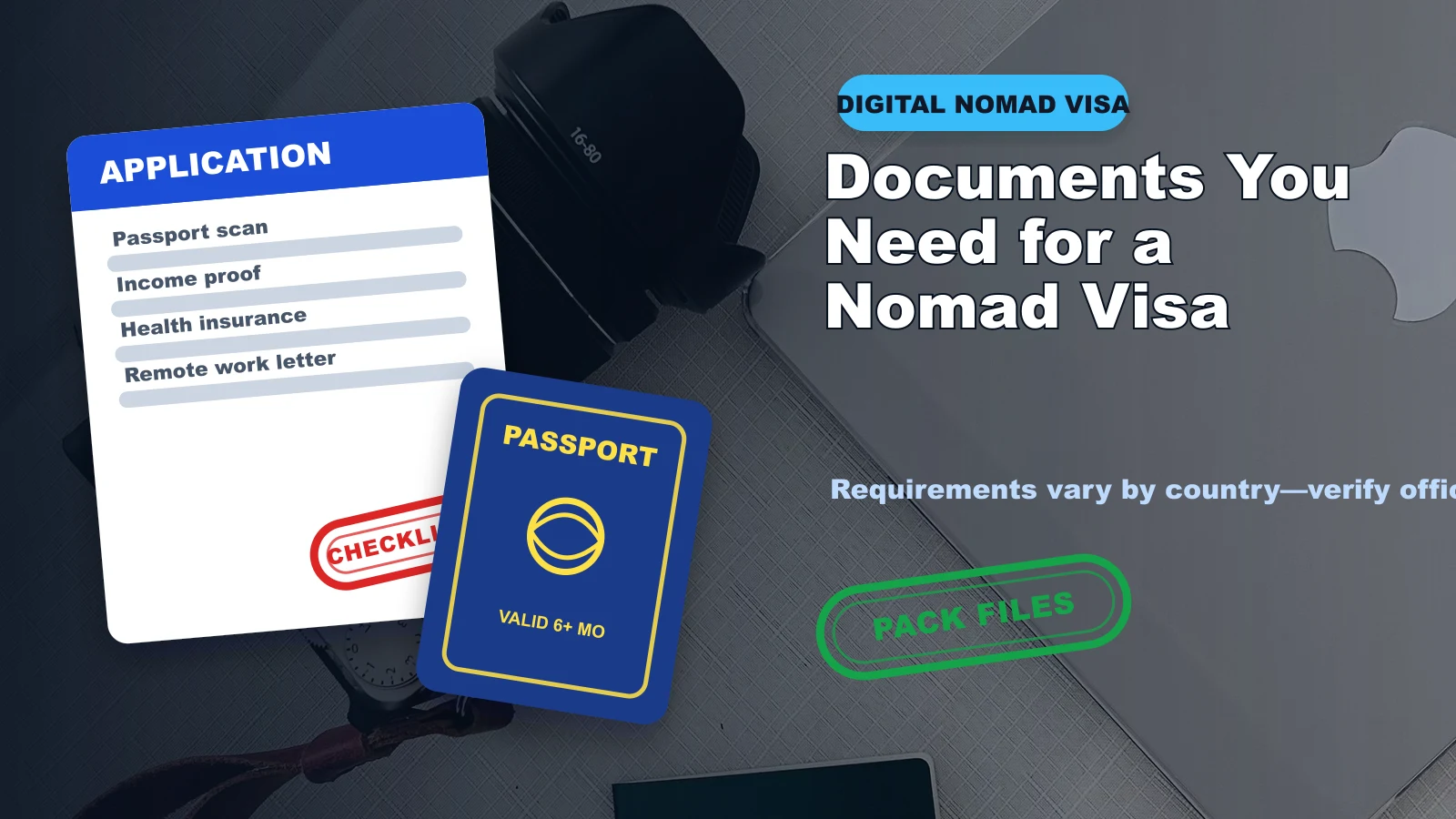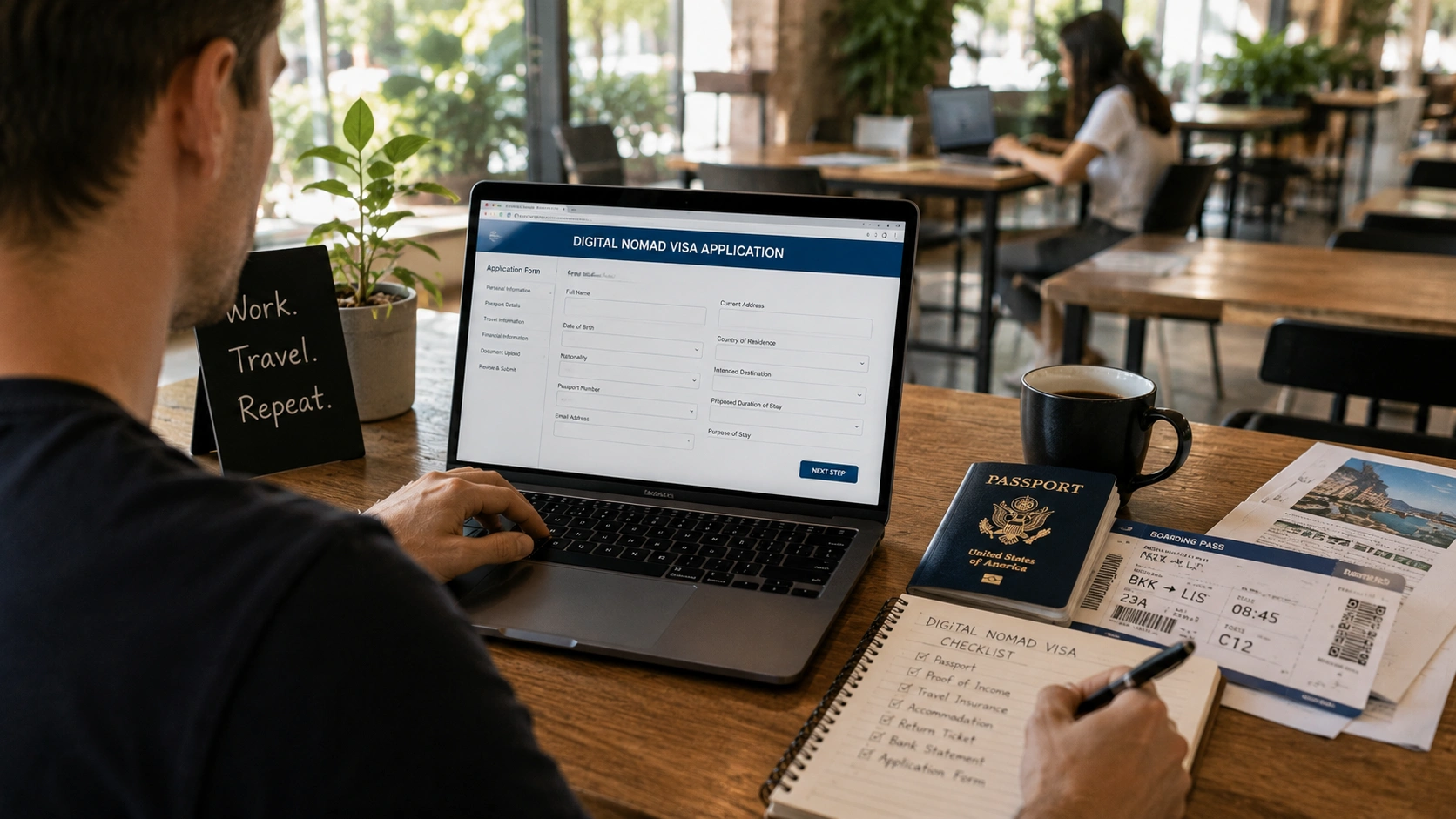
Digital nomad visa requirements look similar from a distance, but the details change a lot from country to country.
One country may care most about monthly income. Another wants a clean criminal record that has been apostilled. Another may ask for private health insurance with specific coverage. Some want proof that your clients are outside the country. Others focus on whether your work is truly remote.
That is why it helps to compare the requirements before you fall in love with a destination.
This 2026 guide explains what digital nomad visas usually require, how popular countries differ, and how to prepare an application that looks clear instead of chaotic.
What Is Required for a Digital Nomad Visa?
Most digital nomad visas are built around one idea: you can live in the country if your money comes from outside it.
That protects the local labor market while letting remote workers spend money in the local economy.
Common requirements include:
- valid passport
- proof of remote work
- minimum income
- bank statements
- health insurance
- clean criminal record
- application form
- passport photos
- application fee
- accommodation or address details
The exact rules matter. A document that is fine for Malaysia may not be accepted in Spain. A health insurance policy that works for a short trip may not satisfy a residence-style visa.
Documents You'll Usually Need
Start with the basic document folder.
For remote employees, prepare:
- employment contract
- employer letter confirming remote work
- recent payslips
- bank statements showing salary deposits
- tax return if available
- client contracts
- invoices
- bank statements
- business registration if you have one
- portfolio or website if relevant
- tax returns or accounting summaries
- company registration
- ownership proof
- business bank statements
- income statements
- client or revenue proof
Country-by-Country Requirements
Spain
Spain is attractive for remote workers who want Europe, but the paperwork can be serious.
Expect income proof, remote work evidence, health insurance, background checks, and legalized or translated documents. Tax planning is especially important because longer stays can create obligations.
Best for: organized remote workers who want a European base.
Portugal
Portugal's digital nomad route usually focuses on income proof, accommodation, insurance, and a clear remote-work setup.
It can be a strong option for freelancers and remote employees, but housing costs in Lisbon and other popular areas can change the budget quickly.
Best for: remote workers who want Europe with a softer lifestyle.
Thailand
Thailand's long-stay options for remote workers became more interesting with the Destination Thailand Visa.
Requirements can include proof of financial stability and documents showing the activity that qualifies you. Because Thailand's categories can be specific, read the instructions carefully before applying.
Best for: remote workers who already love Southeast Asia and want more time than a normal tourist stay.
Malaysia
Malaysia's DE Rantau Pass is one of the clearer Southeast Asian digital nomad routes.
Applicants usually need remote work proof, income evidence, insurance, and passport documents. The process is structured, but processing timelines can vary.
Best for: remote workers who want a practical, English-friendly base.
Estonia
Estonia looks simple because the country is so digitally organized, but the visa still requires clear proof of remote work and income.
It suits tech workers, founders, and remote employees who like efficient systems and do not mind colder weather.
Best for: digital workers who value structure and safety.
Croatia
Croatia's digital nomad residence route is popular with travelers who want Mediterranean life without committing to the most expensive parts of Western Europe.
Expect proof of income, insurance, accommodation, and background documents.
Best for: remote workers who want coastal Europe and a slower rhythm.
Greece
Greece is attractive for climate, islands, food, and culture, but applicants should expect bureaucracy.
Income proof, insurance, and clean records are usually central. Island living may require extra planning around internet and winter services.
Best for: warm-weather Europe lovers who can handle paperwork.
Malta
Malta is useful because English is widely used in daily life.
The program usually focuses on remote work income, insurance, accommodation, and background checks. It is practical but not always cheap.
Best for: remote workers who want English-speaking Europe.
Costa Rica
Costa Rica appeals to nature-first nomads.
Applicants usually need proof of income, insurance, and documents showing they can support themselves. The lifestyle is excellent for the right person, but costs in popular beach towns can surprise newcomers.
Best for: remote workers who want surf, nature, and slower living.
Mexico
Mexico's temporary residence route is not always described as a digital nomad visa, but it is widely used by remote workers.
Requirements can vary by consulate, especially around income or savings proof. That means two applicants can have different experiences depending on where they apply.
Best for: remote workers who want North American time zones and cultural depth.
Income Requirements Compared
Income requirements change often, so treat any number online as a starting point.
Instead of memorizing exact thresholds, compare programs by income band:
| Income band | Countries that may fit | Notes |
|---|---|---|
| Lower to mid | Some Latin America and Southeast Asia options | Still requires clean proof |
| Mid to high | Portugal, Croatia, Greece, Malaysia | Good for stable freelancers and employees |
| Higher | Spain, Malta, some Europe routes | Tax and document planning matter |
Application Processing Times
Processing times vary by country, consulate, season, and application quality.
Some digital nomad visas may be processed in weeks. Others can take months, especially if appointments are scarce or documents need legalization.
The best thing you can do is remove avoidable friction:
- use clear scans
- translate documents if required
- legalize or apostille documents early
- show income in an easy-to-read format
- make sure insurance matches the rules
- apply before your current visa runs out
Common Reasons for Rejection
Applications usually fail for practical reasons, not dramatic ones.
Common problems include:
- income below the threshold
- unclear freelance income
- local clients instead of foreign income
- missing background check
- insurance that does not meet requirements
- expired passport
- untranslated documents
- inconsistent names across documents
- applying under the wrong category
Final Thoughts
Digital nomad visa requirements are not impossible. They are just specific.
The applicants who do best are not always the highest earners. They are the ones who make their situation easy to understand.
Before choosing a country, build a document folder, check your income proof, confirm insurance, and read the official requirements slowly. A clean application saves more time than any shortcut.