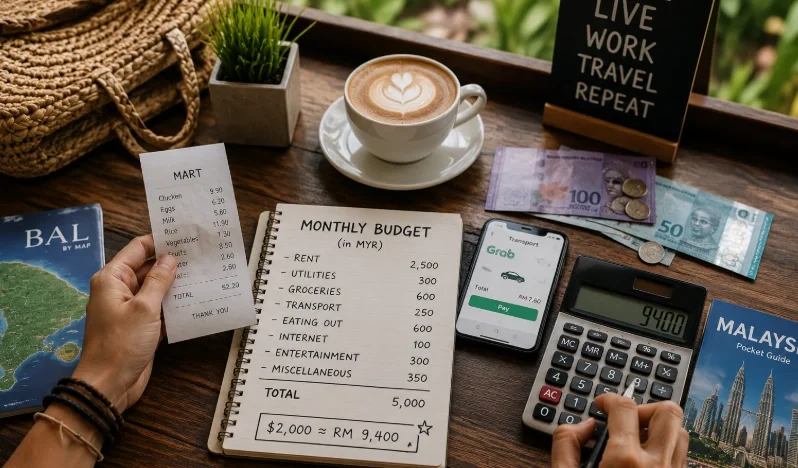
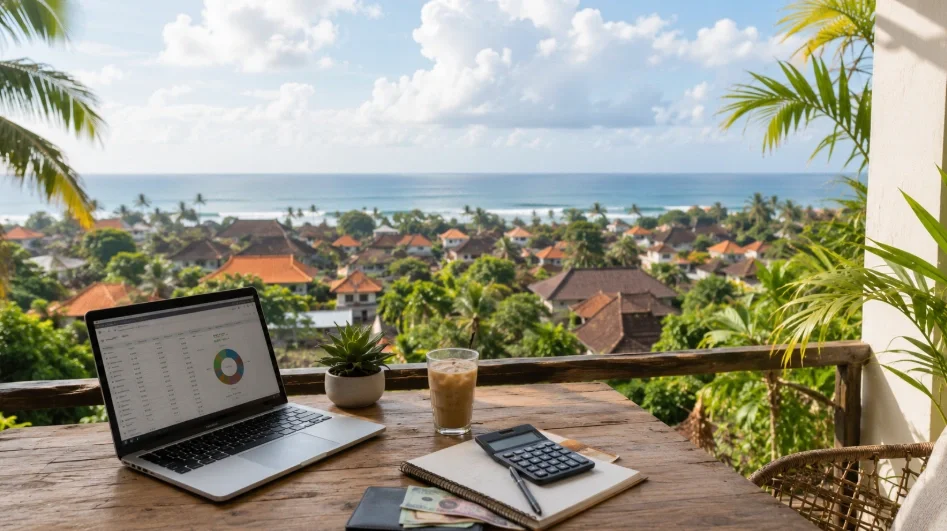
Most digital nomads should budget around $1,500-$2,500 per month to live comfortably in Bali, with cheaper setups possible if you choose a simple room, eat local food, and avoid the most expensive beach neighborhoods. A villa lifestyle, daily western cafes, coworking memberships, and weekend trips can push the monthly cost much higher. The real answer depends less on Bali itself and more on whether you live like a local, a long-stay traveler, or a short-term holiday visitor.
My Monthly Budget in Bali
A practical mid-range monthly budget in Bali often looks like this: $600-$1,200 for accommodation, $300-$600 for food, $60-$150 for scooter and fuel, $20-$40 for mobile data, $100-$250 for coworking, $80-$200 for insurance, and $200-$500 for entertainment, fitness, and weekend plans.
That gives a total of roughly $1,500-$2,900. Budget travelers can spend less by living inland, sharing accommodation, and keeping restaurant habits simple. Comfort-focused nomads can spend more without feeling extravagant because Bali makes lifestyle spending very easy.
Accommodation Costs
Rent is the line item that changes everything. A basic room in a guesthouse may cost far less than a private villa with a pool. Canggu, Seminyak, Pererenan, and Uluwatu often command higher prices because demand is strong and short-term rentals are common.
Ubud can be better value, especially if you do not need to be near the beach. Sanur is quieter and can suit long stays, couples, or remote workers who prefer a slower rhythm. Always check whether electricity, cleaning, water, and internet are included before comparing prices.
Area choice also affects small daily costs. If you live far from the places where you work, eat, exercise, or meet friends, the savings on rent can disappear into transport and time. A cheaper villa outside the main areas may still be a good deal, but only if you are comfortable riding a scooter or staying in a quieter routine.
For a first month, many nomads choose a flexible guesthouse or serviced room before committing to a longer rental. That usually costs more per night, but it gives you time to test traffic, noise, internet, and the neighborhood after dark.

Food and Grocery Costs
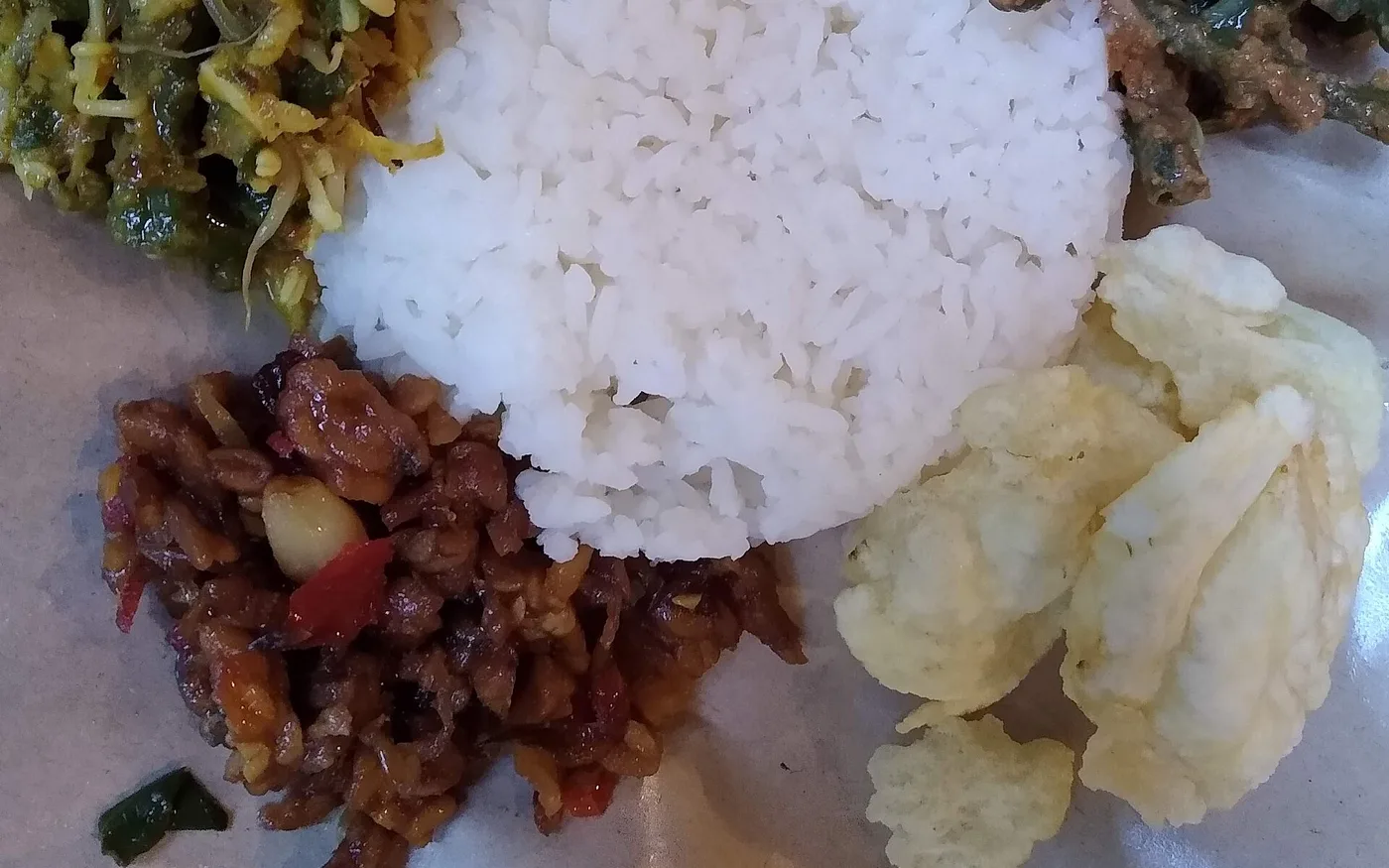
Eating local food keeps Bali affordable. Warungs can still be excellent value, while smoothie bowls, specialty coffee, imported groceries, and western dinners add up quickly. Many nomads do not notice the creep because each purchase feels small.
Groceries are not always cheaper than eating local meals. Imported cheese, wine, cereal, and health-food items can cost more than expected. A balanced approach works well: local meals most days, a few cafe work sessions, and occasional nicer dinners.
Transportation Costs
Most long-stay visitors use scooters because public transport is limited in many tourist areas. Monthly scooter rental varies by model, season, and location, with fuel remaining relatively inexpensive. Ride-hailing is useful, but relying on cars every day can become slow and costly in traffic.
Not everyone should ride a scooter. Bali roads can be chaotic, and accidents are common enough that insurance and caution matter. If you are not confident, choose accommodation within walking distance of your daily needs and use ride-hailing when necessary.
Internet and SIM Card Costs
Mobile data in Indonesia is usually affordable, and many remote workers keep a local SIM as a backup even if their accommodation has Wi-Fi. The bigger issue is consistency. A beautiful villa is not useful for work if the connection drops during calls.
Before booking a long stay, ask for a speed test screenshot from the property. If video calls matter, stay near coworking spaces or cafes with reliable backup options. Internet should be treated as part of your work infrastructure, not a small detail.
Coworking Spaces
Coworking spaces are one reason Bali remains popular with remote workers. They offer stable internet, meeting rooms, community events, and a work routine that cafes cannot always provide. Monthly memberships are not cheap, but they can be worth it if your income depends on focus.
Cafe working is fine for light tasks. For calls, deadlines, or team meetings, a proper coworking space usually reduces stress. Budget for it if you know you work better with structure.

Healthcare and Insurance
Basic clinics are widely available in popular areas, and many minor issues can be handled locally. For anything serious, insurance matters. Scooter accidents, dengue, dental emergencies, and hospital transfers are not things to treat casually.
International health insurance can be one of the most important monthly costs for digital nomads. It is tempting to skip it when trying to reduce expenses, but Bali is not a place where the cheapest plan is always the smartest plan.
Entertainment and Weekend Trips
Bali can be inexpensive if your favorite activities are beaches, rice fields, and simple meals. It becomes expensive when your routine includes beach clubs, boutique gyms, imported alcohol, surf lessons, spa days, and trips to Nusa Penida or Lombok.
None of those are wrong. They are part of why people love Bali. The key is naming them in the budget instead of pretending they are occasional extras.
Sample Monthly Budgets
Budget lifestyle: $1,000-$1,400. Simple room, local food, scooter, limited coworking, low nightlife.
Comfortable nomad lifestyle: $1,800-$2,800. Private room or small villa, coworking, mixed local and western food, insurance, and regular social plans.
Higher-end lifestyle: $3,000+. Villa, premium gym or wellness classes, frequent restaurants, drivers, weekend trips, and beach clubs.
Can You Live Comfortably in Bali?
Yes, Bali can still be comfortable for remote workers, but it is no longer a secret low-cost island. The best value comes from staying longer, choosing the right area, and avoiding holiday-mode spending every day.
For many nomads, Bali is worth the premium because it offers community, nature, food, wellness, and remote-work infrastructure in one place. For others, Malaysia or Thailand may offer better value with less traffic and fewer lifestyle temptations.
Money-Saving Tips
Stay at least one month if you can, because nightly rates are expensive. Compare neighborhoods before committing. Eat local food often. Ask about electricity before booking. Keep a separate weekend-trip budget. Choose a coworking plan based on actual use, not aspiration.
Most importantly, decide what kind of Bali life you want before you arrive. The island can support a simple, peaceful routine or a very expensive social calendar.
Final Thoughts
The cost to live in Bali per month depends on choices that are easy to underestimate. Rent, food style, transport confidence, and social habits matter more than any generic average. A realistic budget gives Bali room to be enjoyable without turning every sunset into a financial surprise.