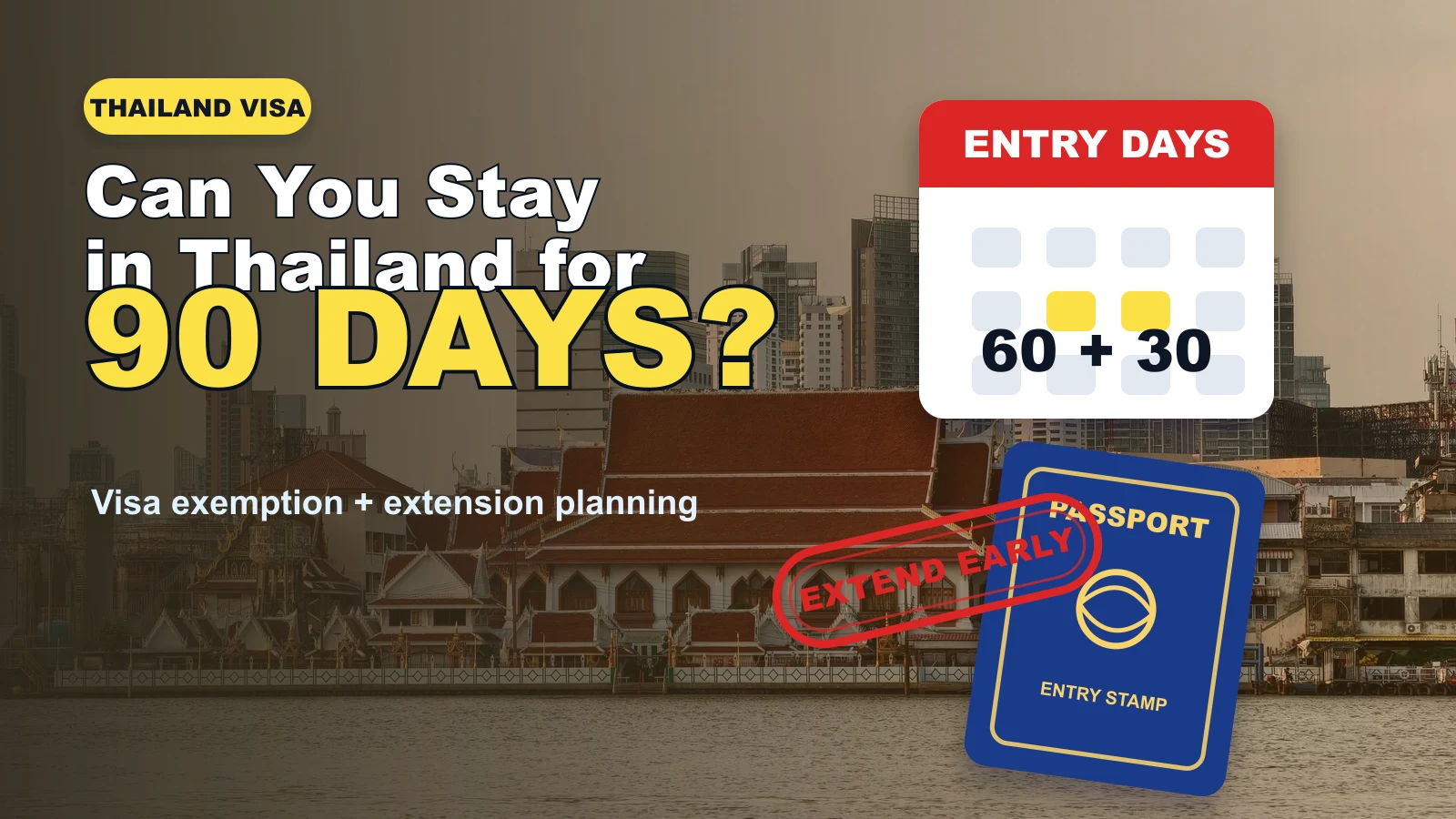
Extending a tourist stay in Thailand is one of those travel tasks that sounds intimidating the first time, then feels very manageable once you understand the rhythm.
The basic idea is simple: before your current permission to stay expires, you visit a Thai immigration office, submit the required documents, pay the fee, and wait for the officer to approve the extension.
The part that catches travelers is not usually the rule itself. It is the small admin details: the right office, the right copies, the right timing, the right photo, and enough patience for a queue.
This guide explains how to extend a tourist visa in Thailand in a practical way, without turning the process into legal fog.
Who Can Extend a Tourist Visa in Thailand?
Many travelers in Thailand can apply for a tourist stay extension, but your exact eligibility depends on how you entered.
You may be able to apply if you entered on:
- a tourist visa
- a visa-exempt entry
- certain short-stay tourist permissions
If you entered under a special visa category, long-stay visa, work visa, education visa, or medical arrangement, the rules may be different. In that case, check with immigration or the visa provider that handled your paperwork.
For normal tourists, the extension is useful when:
- you want more beach time
- your travel route is moving slower than planned
- you need time before a flight out
- you want to stay longer in Bangkok, Chiang Mai, Phuket, or Koh Samui
- you are waiting for another visa or travel plan
When Should You Apply for an Extension?
Apply before your current permission expires. That is the rule that matters most.
Many travelers go about 7 days before expiry. That gives you enough breathing room if the office is crowded, a public holiday appears, or you forget a document.
Going too early may not always be accepted at every office, and going too late is stressful. The worst plan is showing up on the final afternoon before a weekend or holiday.
Check your passport stamp carefully. Do not rely only on what you thought you were granted. The stamp or digital record is what immigration will use.
If your permission ends on July 20, do not plan to visit immigration on July 20 at 3:30 pm. Go earlier. Thailand is relaxed in many ways, but immigration deadlines are not a good place to improvise.
Documents Required
Document requirements can vary slightly by office, but tourists are commonly asked for:
- passport
- departure card or digital arrival record if applicable
- photocopy of passport photo page
- photocopy of current entry stamp
- photocopy of visa page if you entered with a visa
- completed extension application form
- recent passport-style photo
- proof of address in Thailand
- extension fee in cash
The TM30 is one of the details travelers often learn about only when something goes wrong. It is an address notification usually handled by your hotel, landlord, or accommodation provider. If immigration asks for it and your accommodation has not filed correctly, you may need help from the hotel or landlord before the extension can move forward.
Practical tip: make copies before you arrive. Many immigration offices have copy shops nearby, but the queue is easier when you arrive prepared.
Step-by-Step Application Process
The process varies a little by city, but the flow usually looks like this.
1. Check your expiry date
Open your passport and confirm the date you must leave Thailand. Count from the actual stamp, not from memory.
2. Find the correct immigration office
Use the office for the province where you are staying. Bangkok, Chiang Mai, Phuket, Pattaya, Krabi, and Koh Samui all have offices used by tourists, but addresses and procedures can change.
3. Prepare copies and photo
Bring passport copies, one photo, your address details, and the completed form if you downloaded it in advance.
4. Arrive early
Morning is usually better. Some offices use queue numbers, and busy tourist areas can fill up quickly.
5. Submit your documents
An officer or counter staff will check the papers. If anything is missing, you may be sent to make copies or get additional proof.
6. Pay the fee
The standard tourist extension fee is commonly 1,900 baht. Bring cash in Thai baht.
7. Wait for processing
You may be asked to sit until your passport is returned. In busy offices, this can take a while.
8. Check the new stamp
Before leaving, check the new permitted stay date. If something looks wrong, ask immediately.
Visa Extension Fees
The tourist extension fee is commonly 1,900 baht.
Bring cash. Do not assume card payment will be available. It is also smart to bring a little extra for photocopies, photos, transport, or a coffee while waiting.
The fee is normally charged for the application, not for a guaranteed result. In a normal tourist case with correct documents, approval is common, but immigration discretion still applies.
Where to Apply
You apply at a Thai immigration office, not at an airport check-in counter and not through your hotel lobby unless your hotel is only helping with documents.
Popular immigration offices for tourists include:
- Bangkok
- Chiang Mai
- Phuket
- Koh Samui
- Krabi
- Pattaya / Chonburi
Dress neatly. You do not need formal clothing, but immigration offices are government spaces. A clean shirt, covered shoulders, and normal shoes make the experience feel smoother.
Common Problems and Solutions
Missing passport copies
Solution: use the copy shop near the office, but expect a queue. Better to copy everything in advance.
No passport photo
Solution: many offices have photo services nearby. Bring one anyway.
TM30 not filed
Solution: ask your hotel or landlord to help. If you are in an Airbnb or private rental, handle this before extension day.
Arriving too late
Solution: go early in the morning and avoid the last day before expiry.
Wrong office
Solution: confirm the province and service location before leaving your accommodation.
Overstay already started
Solution: go to immigration immediately and be honest. Do not wait longer.
Tips for a Smooth Extension
Thailand rewards travelers who keep things simple.
Bring a pen. Bring cash. Bring copies. Bring your accommodation address written clearly. Keep your phone charged, because you may need to show a booking or contact your hotel.
Do not argue with officers about what someone online said. Immigration offices can interpret edge cases differently. If you are polite, prepared, and early, you are much more likely to have a calm morning.
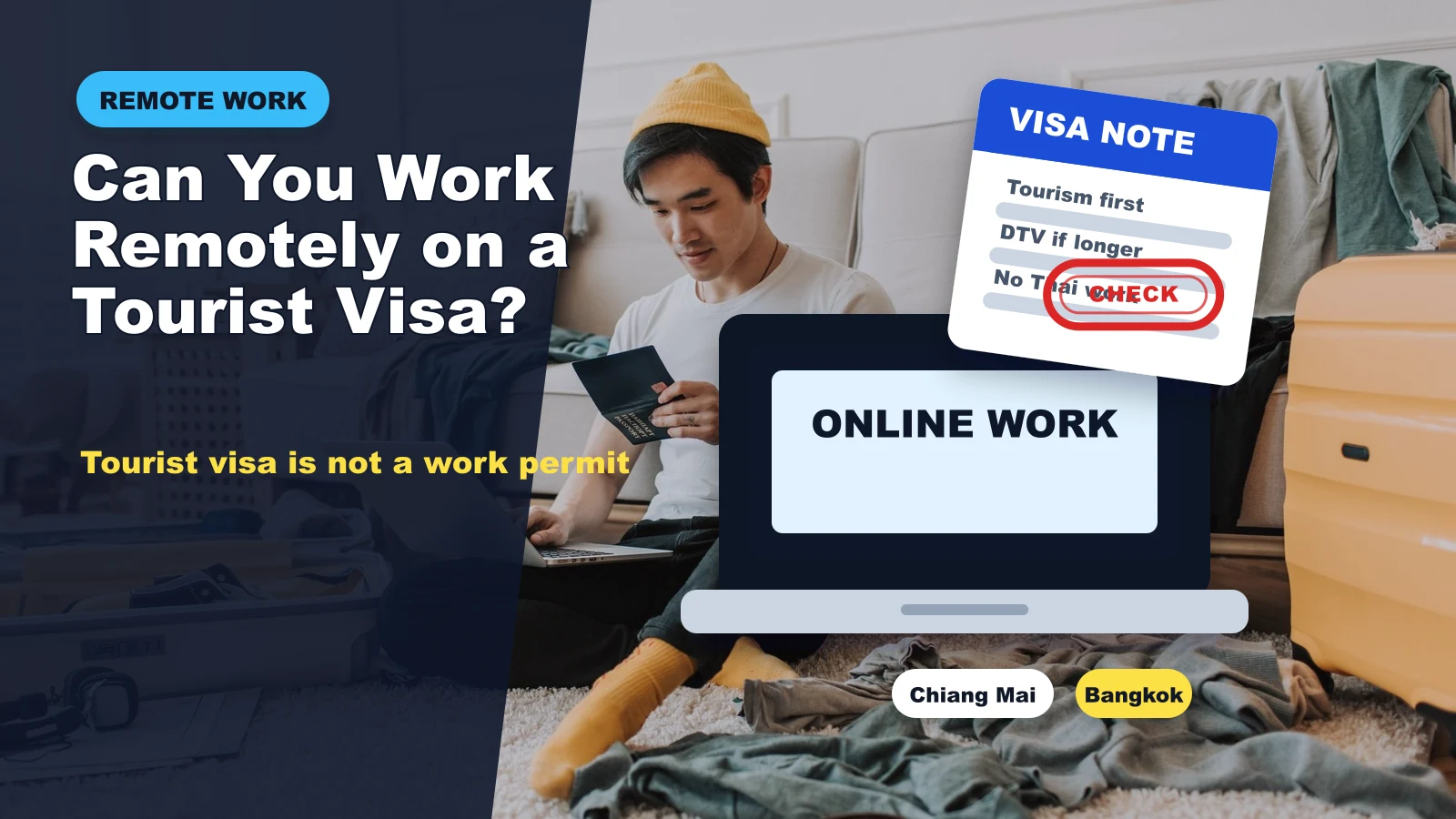
For remote workers, a tourist extension can buy time, but it should not replace a proper long-stay plan. If you are building your life around Thailand for months, compare tourist entries with longer options before your calendar gets messy.
Final Thoughts
Extending a tourist visa in Thailand is usually not difficult. It is just paperwork.
The travelers who struggle are usually the ones who go too late, bring incomplete documents, or assume every immigration office works exactly the same way.
Give yourself time, prepare the basics, and treat the process like a normal admin morning. Then you can get back to the better part of Thailand: food, beaches, mountain towns, and slow days that make the extra time worth it.