When I first heard about Thailand's DTV Visa, I assumed it was just another visa announcement that sounded exciting online but wouldn't change much in practice.
After all, Thailand has always been one of the easiest places in Asia to spend a few weeks or even a few months. Plenty of remote workers were already living in Bangkok, Chiang Mai, and Phuket long before the DTV existed.
But the more I looked into it, the more I realized the DTV isn't really about making Thailand easier to visit.
It's about making Thailand easier to stay in.
For people who work online and spend months at a time in one place, that difference matters.
Why Thailand introduced the DTV
For years, remote workers existed in a strange middle ground.
They weren't tourists in the traditional sense. They weren't relocating permanently either.
Many would spend months in Thailand, leave briefly, then return again. Entire lifestyles were built around visa renewals, extensions, and border runs.
The DTV (Destination Thailand Visa) feels like Thailand's acknowledgment that this type of traveler now exists in large numbers.
Instead of forcing everyone into tourist categories, the country created a visa that better matches modern remote work lifestyles.
Who is the DTV actually for?
The visa gets called a "digital nomad visa" all the time, but the reality is a bit broader.
It's suitable for people such as:
- Freelancers
- Remote employees
- Online business owners
- Consultants
- Content creators
- Location-independent professionals
It's that your income comes from outside Thailand while you spend extended periods living inside Thailand.
A different way of thinking about Thailand
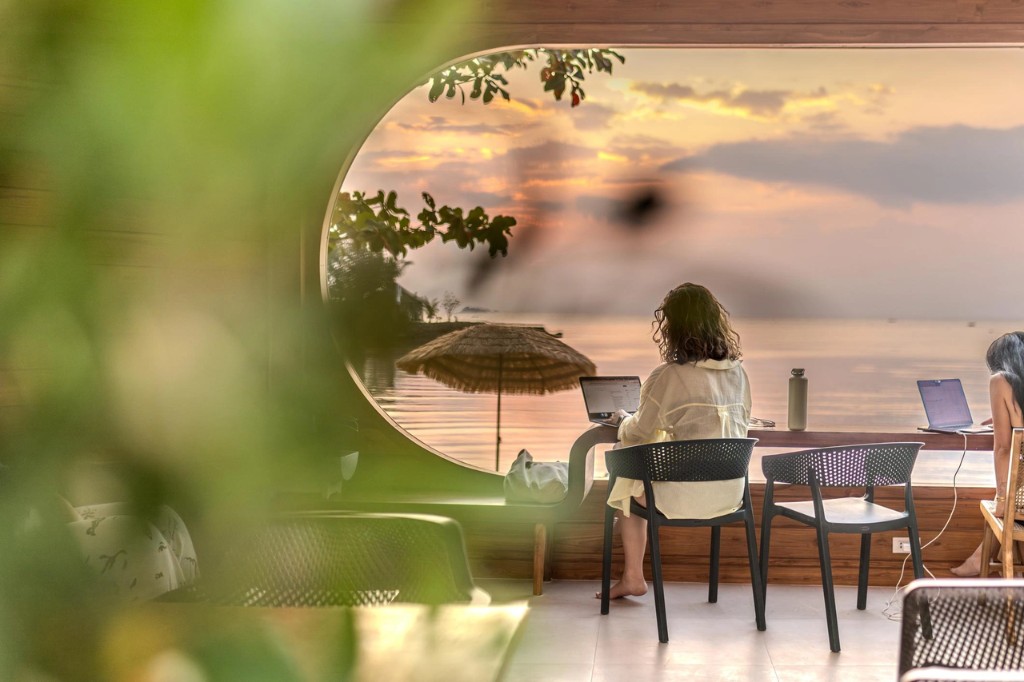
One thing I've noticed from talking to long-term travelers is that many eventually stop thinking of Thailand as a destination.
It becomes a base.
You start learning which neighborhood has the best cafés, where to find apartments, which coworking spaces fit your routine, and how to build a daily life instead of a travel itinerary.
That's where a longer-term visa starts becoming valuable.
Not because it lets you stay longer.
Because it allows you to stop constantly planning your exit.
The biggest attraction isn't the visa itself
Most discussions online focus on visa validity, entry rules, or application requirements.
But that's not what attracts people.
The real attraction is stability.
Anyone who has spent months moving between countries knows how exhausting visa planning can become.
Every few weeks you're checking dates, looking at extension rules, or calculating when you need to leave.
The DTV reduces much of that uncertainty.
And for remote workers, certainty is often more valuable than an extra tourist week.
The paperwork side nobody talks about enough
Most people get excited about the lifestyle side of the DTV.
The less exciting part is documentation.
If you're employed remotely, you'll likely need to show evidence of your work arrangement.
If you're self-employed, you'll probably need to demonstrate business activity or income sources.
This isn't necessarily difficult, but it's often more detailed than people expect.
The travelers who seem to have the smoothest experiences are usually the ones who organize their documents before they start the application process rather than figuring everything out at the last minute.
Why Thailand remains one of the strongest nomad destinations
Even without the DTV, Thailand was already popular among remote workers.
The visa simply strengthens what was already there.
A few reasons people keep coming back:
Affordable daily life
Compared with many Western cities, Thailand still offers excellent value for accommodation, food, transportation, and coworking spaces.
Established remote work communities
Whether you're in Bangkok or Chiang Mai, it's easy to meet other people working online.
Reliable infrastructure
Fast internet is no longer a luxury here. In most major areas, it's simply expected.
Lifestyle balance
Thailand offers a rare mix of city life, beaches, mountains, and cultural experiences without requiring constant travel between destinations.
Is DTV necessary?
Not always.
If you're planning a short trip, a standard tourist stay may be more than enough.
The DTV becomes more interesting when your relationship with Thailand changes.
For example:
- You spend several months each year in the country.
- You rent apartments instead of hotels.
- You have a work routine rather than a sightseeing schedule.
- Thailand has become part of your lifestyle instead of a temporary stop.
What surprised me most about the DTV
What surprised me wasn't the visa itself.
It was how much easier Thailand becomes once you stop planning your life around visa expiry dates.
Before, a lot of remote workers treated Thailand as a place to stay "for now." The constant need to think about extensions, border runs, or future entries made long-term planning difficult.
The DTV changes that mindset.
Instead of asking:
"How long can I stay this time?"
You start asking:
"How do I want to spend the next six months?"
For many freelancers, creators, and remote employees, that's a much bigger shift than any immigration rule.
The Thailand DTV Visa won't be the right fit for everyone.
If you're only visiting for a few weeks, a regular tourist stay is usually enough.
But if Thailand is becoming part of your lifestyle rather than just another destination, the DTV is one of the first visa options that genuinely reflects how modern remote workers live.
And that's probably why so many people are paying attention to it in 2026.