Thailand is one of the easiest countries in Asia to visit, but the phrase "visa-free" can make travelers a little too relaxed.
Visa-free entry does not mean you can stay as long as you like. It means your passport may allow you to enter without applying for a visa before travel, for a limited number of days, under certain conditions.
That number can change. Thailand has adjusted visa-exemption rules several times in recent years, and 2026 has brought more discussion about tightening short-stay rules again. So the practical answer is this: check the current official rule for your passport before flying, then plan around the date stamped by immigration when you arrive.
This guide explains how Thailand's visa exemption works, how long different travelers may stay, what extensions look like, and when a tourist visa is a smarter choice.
Thailand's Visa Exemption Program Explained
Thailand's visa exemption program allows eligible passport holders to enter Thailand without applying for a tourist visa in advance.
It is designed for short visits such as:
- tourism
- family visits
- short business meetings
- transit as part of a regional trip
- casual holidays
In recent years, many travelers from eligible countries received up to 60 days under Thailand's expanded visa-exemption scheme. In 2026, Thai authorities have also discussed or announced changes that may reduce visa-free stays for many visitors. Because of that, do not build a trip around old screenshots from travel groups.
The safest rule is simple: your allowed stay is whatever Thai immigration grants you on arrival.
How Long Can Different Nationalities Stay?
Thailand does not give the same visa-free stay to every nationality.
Depending on your passport and the rule in force at the time, common short-stay categories may include:
- 60 days for many eligible nationalities under expanded exemption rules
- 30 days for many visa-exempt visitors under standard or revised rules
- shorter periods for some bilateral or regional arrangements
- visa on arrival for certain nationalities, which is different from visa-free entry
This matters for airline check-in too. If the airline system says you are not eligible for visa-free entry, or that your stay is too long without a visa, you may be asked for proof before boarding.
Have an onward ticket that matches your permission. If you plan to stay 55 days but the current rule for your passport is 30 days, you may need a tourist visa or a different plan.
Can You Extend a Visa-Free Stay?
Many visa-free entries can be extended once at a Thai immigration office, commonly for up to 30 days.
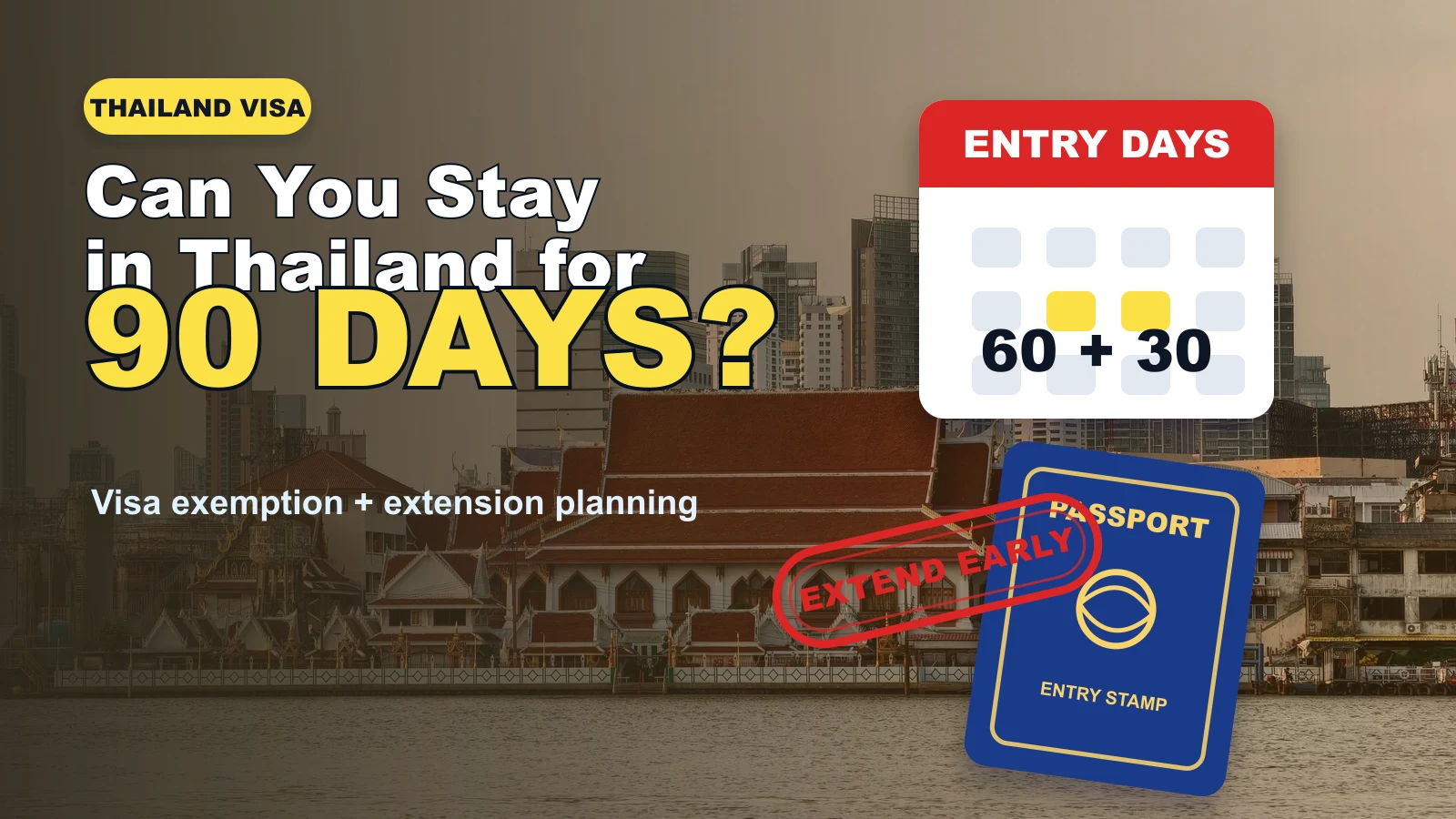
That means a traveler who receives 30 days may be able to reach 60 days, and a traveler under a 60-day exemption may be able to reach 90 days if the extension is approved. But approval is not automatic.
To extend, you usually need:
- passport
- copy of passport information page
- copy of entry stamp
- application form
- passport-style photo
- Thai address details
- extension fee, commonly 1,900 baht
For a step-by-step version of the process, read our Thailand tourist visa extension guide.
What Happens If You Overstay?
Do not overstay in Thailand.
Overstaying can lead to:
- daily fines
- delays at the airport
- problems getting future visas
- detention in more serious cases
- entry bans for longer overstays
If you realize you may overstay because of illness, canceled flights, or an emergency, contact immigration before your permission expires. It is much better to handle the problem early than to explain it later at departure.
Visa-Free Entry vs Tourist Visa
Visa-free entry is best for simple trips.
Use visa-free entry if:
- your trip is short
- your passport is eligible
- your onward ticket is within the allowed stay
- you do not need multiple entries
- you are not trying to stay long-term
- your planned stay is longer than the visa-free period
- you want more certainty before flying
- you are entering after several recent Thailand visits
- your airline may question your itinerary
- you want to reduce border stress
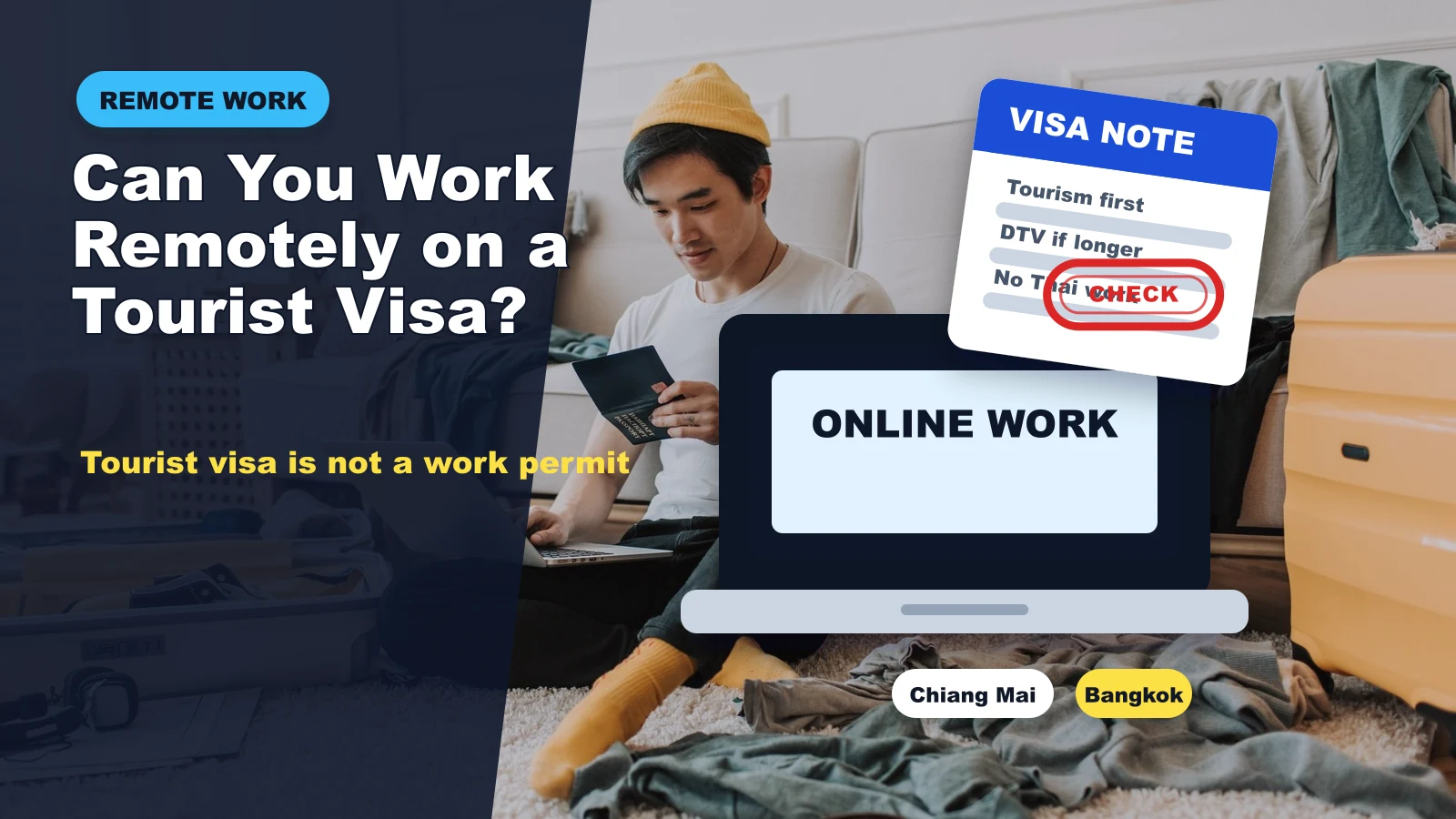
For people who work remotely and want Thailand as a base, tourist entries can feel easy at first and messy later. If you want months in the country, compare longer options like the Destination Thailand Visa rather than relying only on visa-free entries.
Tips for Long-Term Travelers
Thailand is comfortable, which is exactly why people accidentally stay longer than planned.
If you think that might happen, plan your immigration path early.
Keep a calendar reminder for your permission expiry date. Save a photo of your entry stamp. Know where the nearest immigration office is. Keep onward travel flexible but realistic.
Avoid repeated border runs as your main strategy. They can work until they do not. Immigration officers may ask why you keep entering, how you support yourself, and whether you are genuinely visiting as a tourist.
If you split time across Southeast Asia, Thailand pairs easily with Malaysia, Vietnam, Cambodia, and Indonesia. That can be a smoother lifestyle than trying to force every month into one country on short-stay permissions.
Also complete Thailand's digital arrival requirements if they apply when you travel. Since Thailand has moved arrival formalities online, fake websites and paid lookalike services have appeared. Use official channels only.
Final Thoughts
Thailand's visa-free entry is generous when your trip fits the rules. It is ideal for holidays, scouting trips, and relaxed short stays.
The trouble starts when travelers treat visa-free entry as a long-term residence plan. It is not built for that.
Check your passport's current allowance, keep your dates clean, and apply for an extension or proper visa before you run out of time. Thailand is much more enjoyable when you are not counting down immigration days in the background.