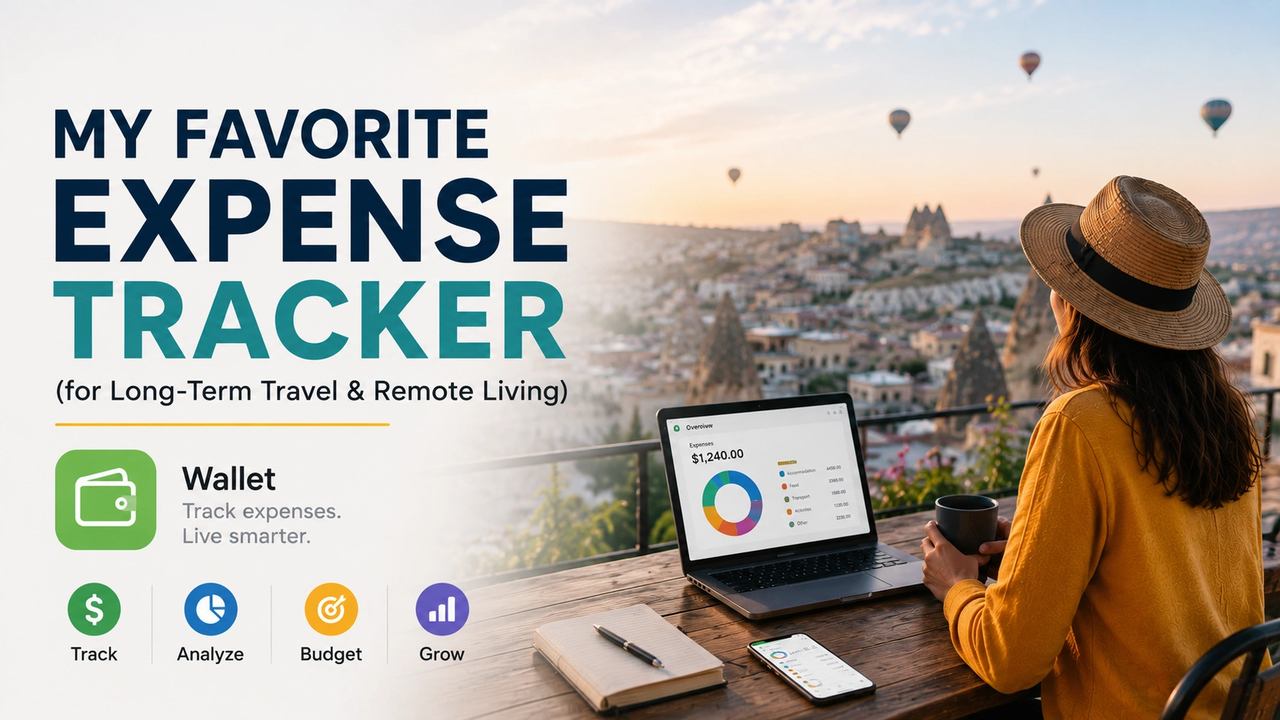
When you travel long-term, “budgeting” stops being a monthly activity and becomes something you deal with every day—often across different currencies, payment methods, and countries.
At some point, I stopped looking for a perfect budgeting system and focused on something simpler:
I just needed a tool that tells me where my money actually goes, without extra effort.
That’s where this setup comes in.
The core app I actually rely on
Wise
Technically, it’s not just an expense tracker—it’s my main financial layer for travel.
But in practice, it becomes my tracker because:
- Every transfer is already categorized by currency and country
- I can instantly see spending in different regions
- It reduces the need for manual logging
- It separates “travel money” from “home base money” automatically
Why I don’t use heavy budgeting apps anymore
I’ve tried the usual setup:
- detailed category breakdowns
- daily manual logging
- spreadsheets with formulas
- “perfect budget planning systems”
When you’re moving between cities, your routine changes too often to maintain complex systems.
So I switched to something more minimal:
Track less, but make what you track actually reliable.
My lightweight tracking approach
Instead of trying to log every coffee or taxi ride, I only focus on:
1. Fixed costs
- accommodation
- flights
- subscriptions
- coworking spaces
2. Variable daily spend (rough tracking)
- food
- transport
- random travel expenses
3. Monthly “reality check”
Once a month, I review:
- total spending per country
- unexpected spikes
- whether my lifestyle is drifting upward in cost
Optional tools people often pair with it
Depending on how detailed you want to go:
- Split expenses with friends or partners
- Track long-term budgets
- Visualize spending trends
The real insight after years of travel
Expense tracking for digital nomads isn’t about precision.
It’s about visibility.
Once you can clearly see:
- what each country costs you
- how your lifestyle changes over time
- and whether your income still supports your movement