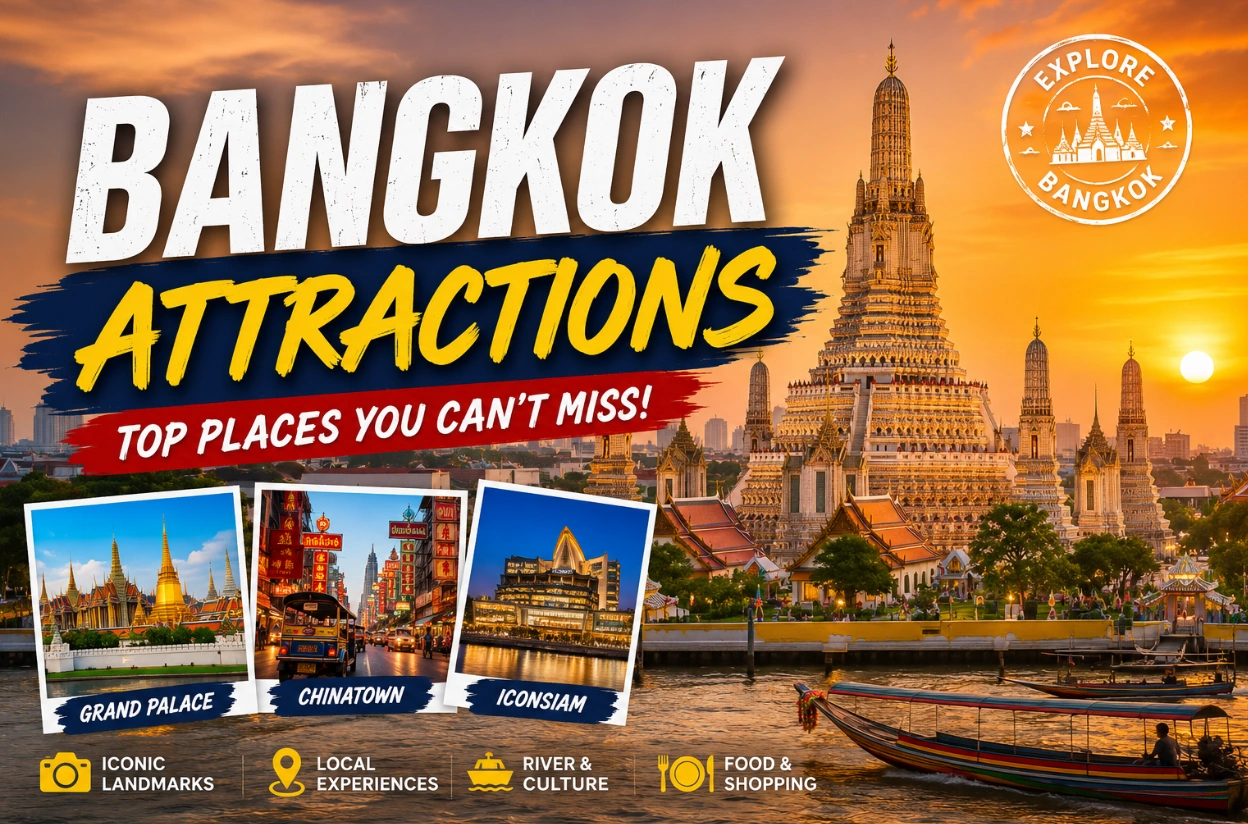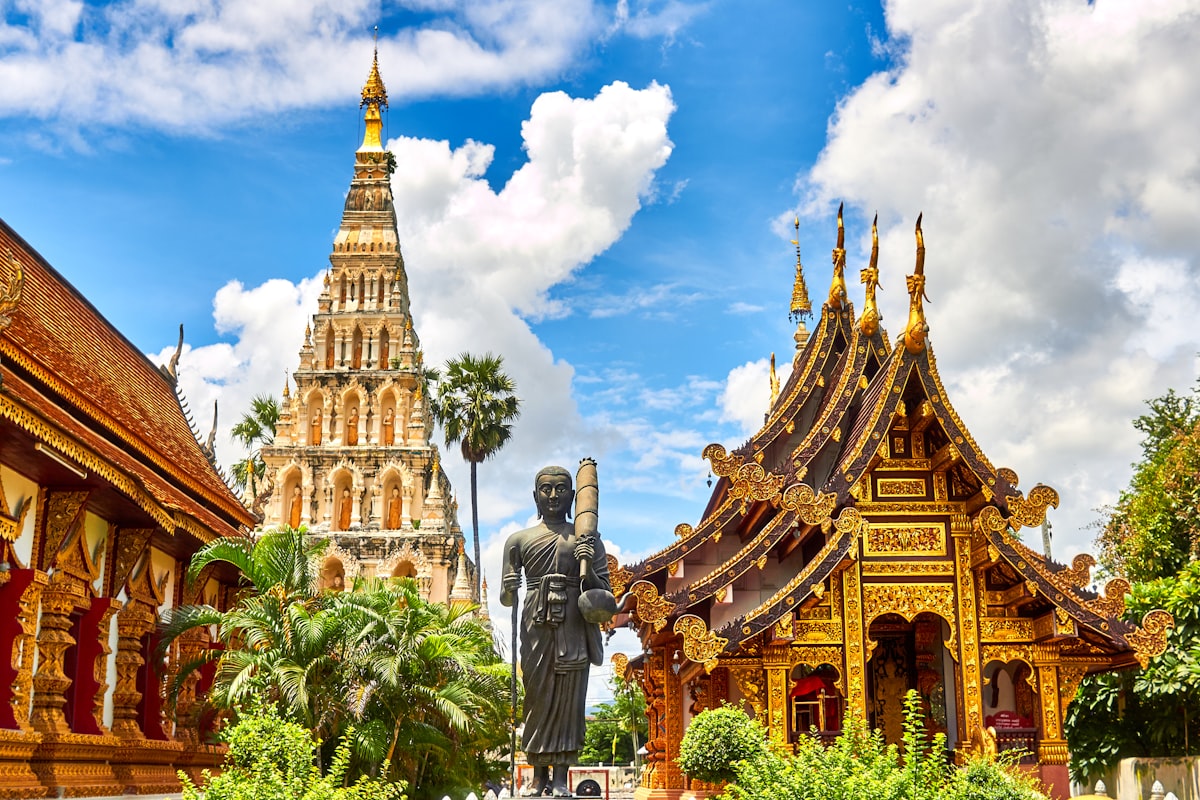
Most visitors say they "went to the Grand Palace" and only later realize they spent the emotional peak inside Wat Phra Kaew — the Temple of the Emerald Buddha. I made that mistake on my first trip, racing for courtyard selfies. On the second pass I treated Wat Phra Kaew as its own visit: slower, quieter, eyes on details instead of spires in the distance.
Wat Phra Kaew Overview
Wat Phra Si Rattana Satsadaram — commonly Wat Phra Kaew — is Thailand's most sacred royal temple. It houses the Emerald Buddha (actually carved jade or jasper — "emerald" is a name, not a geology lesson), which kings dress in seasonal costumes three times a year in a ceremony you won't casually stumble into.
The temple sits inside the Grand Palace walls on the east side of the old city. Architecture here is maximalist: gilded chedis, demon guardians, mirrored mosaics, and a cloister painted with the Ramakien epic wrapping the sacred core like a storybook you walk through.
Difference Between Wat Phra Kaew and Grand Palace
Think compound vs. highlight:
| Grand Palace | Wat Phra Kaew | |
|---|---|---|
| Character | Royal halls, state ceremony spaces, European-Thai facades | Sacred temple, Emerald Buddha, Ramakien murals |
| Ticket | Same ticket | Same ticket |
| Vibe | Crowds in courtyards, tour groups pausing for history | Shoes off zones, stricter silence, prayer traffic |
Full logistics: Grand Palace Bangkok travel guide.
Ticket Price
Included in the Grand Palace foreign visitor ticket (~500 THB in 2026). No separate queue for the temple once you're inside. Lose your ticket stub and staff may send you back — I clip mine to my bag zip.
Dress Code
Stricter than average Bangkok temples:
- Covered shoulders and knees
- No flip-flops that look like beach wear
- Remove shoes entering the Ubosot (ordination hall) and certain chapels
- No hats inside sacred halls
What to See Inside
Emerald Buddha hall — small figure, high platform, no photos inside. Spend five minutes absorbing scale and ritual space, not pixel count.
Phra Mondop and surrounding chedis — densely decorated; look up until your neck complains.
Ramakien Gallery (cloister) — 178 murals, restored repeatedly; walk it clockwise if you follow crowd flow. Battle scenes, demons, heroes — narrative chaos in the best way. I paused longest where paint was chipped, showing older layers.
Model of Angkor Wat — historical curiosity in the northeast corner; easy to miss.
Sound carries: bells, muffled chanting, tour radios bleeding through. Put your phone on silent. The one-way flow can feel rushed near the Emerald Buddha hall — let people pass, then step back in when the cluster thins.
Hydration note: there is little shade in inner courtyards after you leave the cloister. I drank warm water that tasted better than it should have because I was overheated.
Pair the same day with Wat Arun across the river — different Buddha, different light, and a sunset finish.
Photography Rules
- No photos inside the Emerald Buddha ordination hall — guards enforce this.
- Outer courtyards and cloister: generally allowed, flash discouraged near murals.
- Do not climb statues or block prayer paths for angles.
- Tripods attract attention — handheld is fine in open areas.
Best Time to Visit Wat Phra Kaew
Same as the palace: 8:30–10:00 AM weekday ideal. Tour groups peak 10:30–1:00. Afternoon light slants into the cloister but heat inside stone walkways is brutal.
If you only care about the Emerald Buddha hall, go straight there after entry, then explore outward — reverses the usual herd pattern slightly.
Nearby Attractions
- Grand Palace halls — same ticket, separate wow.
- Museum Siam — air-conditioned reset after the temple circuit.
- Wat Arun — ferry at sunset from Tha Tien.
- Saranrom Park — small green pause if you need shade before Grabbing back to Sukhumvit.