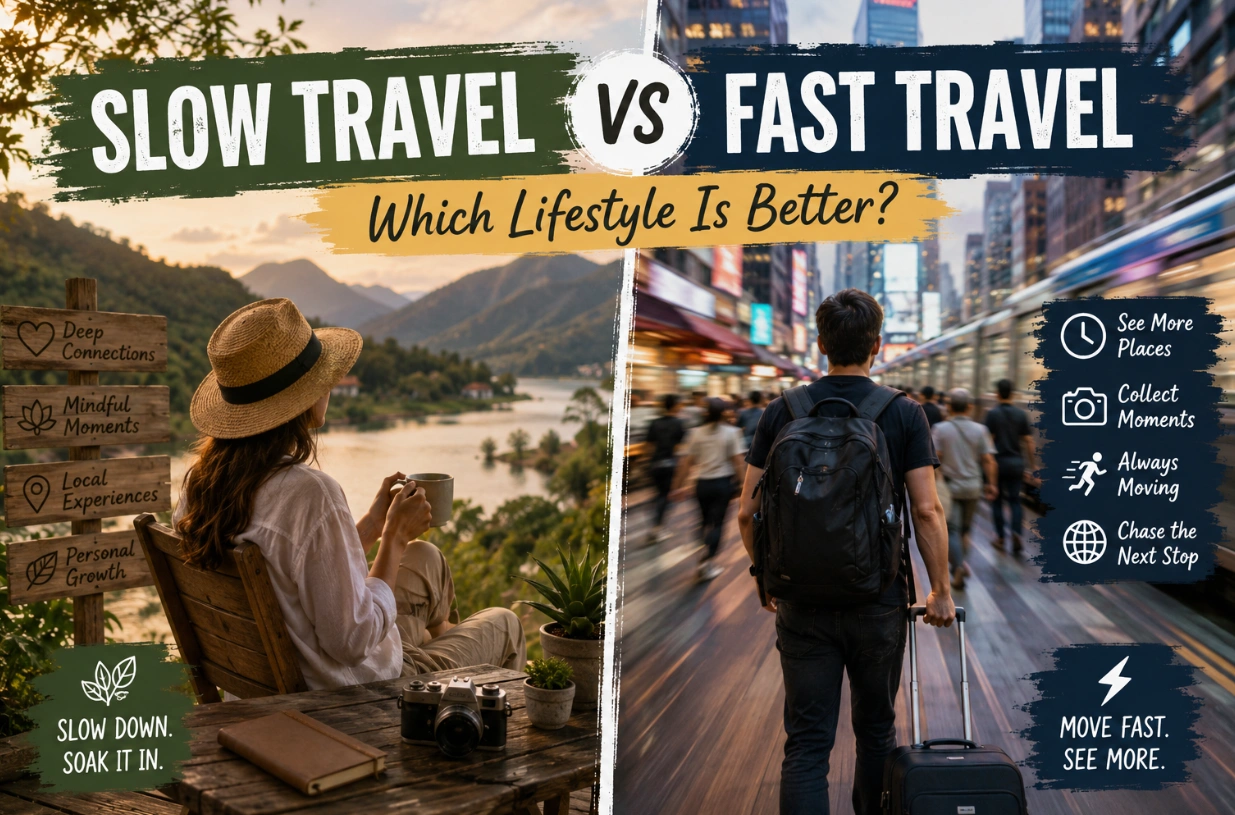

I answered Slack from a plastic chair facing My Khe beach and felt nothing about the water. A friend asked how freedom was treating me. I said "amazing" while already opening Skyscanner for the next hop. Staying still felt like failing. Moving felt like homework.
That was burnout. Not the dramatic kind. The smiling, still-booking-flights kind.
When Freedom Starts Feeling Exhausting
The first signs were small and ugly. Slow WiFi made me furious. A barista asking for my order felt like an interruption. Beautiful views stopped landing. I optimized the next city instead of living in the current one.
Freedom without structure became a second job: visas, housing, SIMs, client time zones, and the pressure to look like I was having a great time. My brain stayed in setup mode for months. Setup mode is exciting for a week. It is exhausting for a year.
Why Constantly Moving Can Drain Your Energy
Every move cost energy Instagram never shows. Find groceries. Test WiFi for calls. Learn which streets are quiet. Sleep three nights before a new bed feels normal. Rebuild a desk in a tiny room with one sad chair.
Fast hops also kept my social life at "nice to meet you." I rarely got a second conversation. I needed continuity more than novelty — the same walking loop, one person who knew my name without a LinkedIn preamble.
The Signs I Was Doing Too Much While Traveling
Looking back, the checklist was obvious:
- Dreading messages from people I liked
- Eating only while working
- Sleeping eight hours and waking unrested
- Unable to sit without scrolling
- Fantasizing about disappearing offline
- Booking flights to "reset" when the real problem was overload
Learning to Separate Work Time and Travel Time
My laptop lived three feet from the pillow. Work colonized everything. I could not afford a two-room place every city, so I separated with time.
Work block: clear start and end. Alarm both ways.
Life block: ninety minutes where tasks were banned — market walk, laundry, swim, call family.
Room cues: calls at the desk, reading on the bed. Same apartment, different signal.
I also stopped half-working and half-wandering every afternoon. Sightseeing got its own day. Half-and-half satisfied neither side and left me tired anyway.
Why Staying Longer in One Place Changed Everything
Six weeks in one base lowered the constant logistics hum. I stopped spending mental energy on where to buy soap. Sleep improved when the bed was familiar. Groceries became automatic.
I also got permission to have a boring Tuesday. Nobody expected me to "maximize" a city I would live in for a month and a half. That stability helped mental balance while traveling more than any wellness product I bought in a Ubud shop. Adventure became optional instead of mandatory.
Small Changes That Helped Me Slow Down
What actually reduced load:
- Minimum one month in mid-length bases when visas allowed
- One no-flight month when money and work allowed
- No work apps after a set hour — a timing rule, not a morality lecture
- Mornings without notifications until coffee finished
- Saying no to the next hop when rest sounded better than novelty
Creating a More Sustainable Nomad Lifestyle
Sustainable, for me, meant a schedule I could repeat next year — not a six-month sprint that looked cool and ended in collapse.
I needed client expectations that allowed slow weeks. An emergency fund so panic did not drive every booking. One or two relationships outside travel groups. Cities that matched my real energy, not my aspirational feed. Beach towns looked restorative until bass from bars killed my sleep. Quiet towns calmed me some months and isolated me others. Honesty beat fantasy.
What Digital Nomads Can Learn From Slow Travel
Slow travel traded more stamps for more normal days. Fewer packing nights. More mornings that looked similar in a good way.
Burnout recovery was mostly subtraction: fewer flights, fewer decisions, fewer performances of having a great time. When freedom felt heavy, I did not need a better productivity system first. I needed a quieter month, a bed I recognized, and work that ended while it was still light outside.
A practical recovery month looked like this: week one cancel optional trips and protect sleep; week two add a daily walk and one screen-free meal; week three one social recurrence; week four review before booking anything new. I told clients, "I am tightening my schedule this month." That sentence was enough. Most relationships survive clear boundaries better than missed deadlines from a crash.
What I Stopped Doing
I stopped launching side hustles to "feel inspired" while burned out. I stopped moving to louder party towns for a reset. I stopped filling empty days with tourist checklists to prove I was still adventurous. I tracked inputs for two weeks — nights past midnight on the laptop, city moves in 90 days, conversations deeper than travel small talk. Numbers made the problem concrete instead of vague guilt.
Burnout was not a personality flaw. It was what happened when output stayed high and recovery stayed optional for too long. I changed the calendar before I decided the whole lifestyle was broken.
A Scene I Still Remember
In Canggu I sat through a sunset everyone photographed and felt irritated the whole time because an invoice was late and my hostel WiFi kept dropping. That was the moment I admitted I was not "tired from traveling." I was overstimulated and underslept. The next morning I canceled a weekend trip to the next island and stayed put for four more weeks. It felt wrong for three days. By week two groceries felt normal. By week three I slept through a notification without panic. That timeline was messy and real — and it worked better than another flight.