I once booked a cute Airbnb because the photos had plants. At 2 AM I was staring at the ceiling listening to motorbikes, a thin mattress, and an aircon that clicked like a metronome. Morning call was at 8. Coffee fixed the meeting. It did not fix the week.
Sleep was the first thing long-term travel broke for me. Fixing it was less about perfect hotels and more about habits I carried between cities.
Why Sleep Becomes Difficult When You Live Everywhere
At home, sleep had cues: same pillow, same darkness, same street noise. Abroad those cues reset every move. My body stayed a little alert.
Work flexibility made it worse. No commute meant "one more email" at midnight was easy. Screens kept my brain in daytime mode. New cities meant late dinners that felt like opportunities — until every night was short before a morning call.
New Cities, New Beds, and Changing Time Zones
First nights in a new bed were rough even when the place was fine. Earplugs, an eye mask, and the same pre-sleep sequence shortened the adjustment.
Flying east usually hurt more. Soft landing helped — light meetings on day one, outdoor light in the morning, food on local time even when appetite lagged. Red-eye plus a full workday the next morning was a mistake I repeated too many times. One buffer day cost less than a wrecked week.
The Sleep Habits That Helped Me Adjust Faster
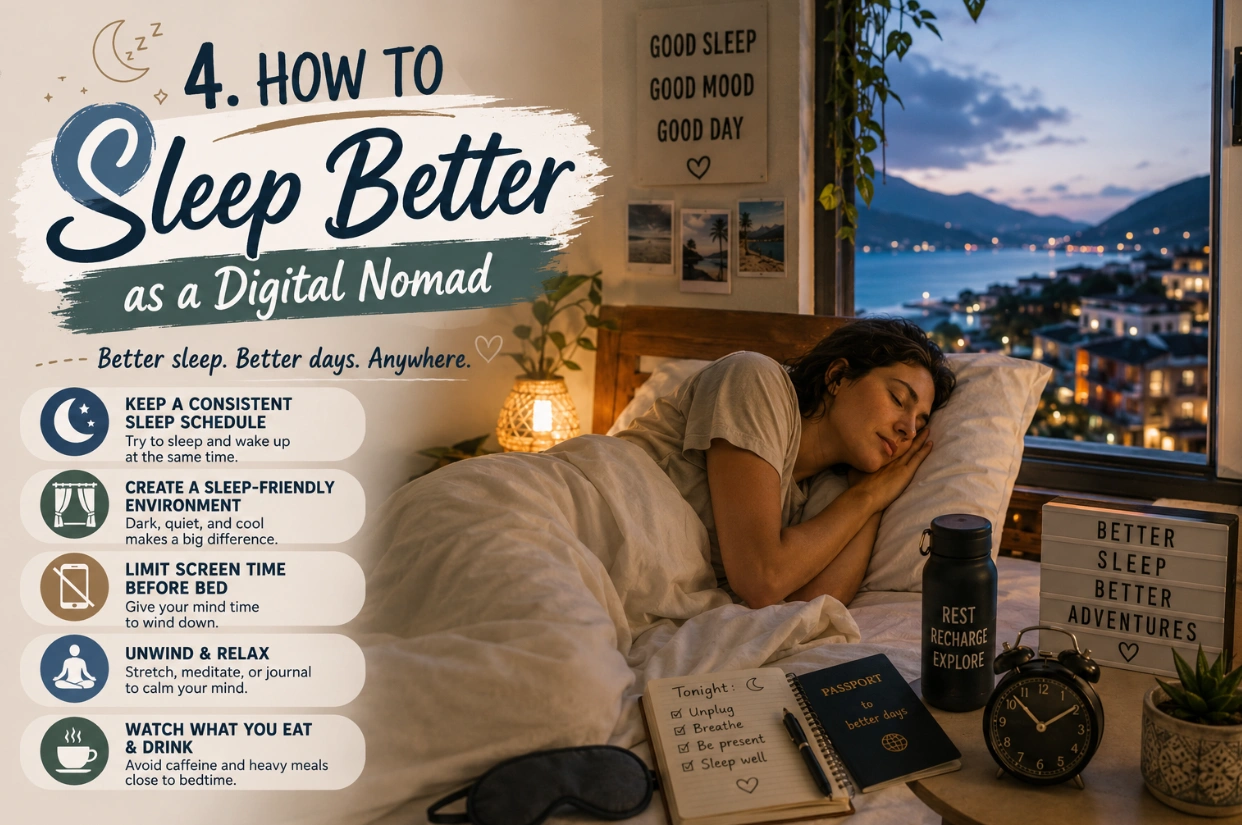
Fixed wake time beat a perfect bedtime. I woke in the same window; bedtime followed.
Morning light within an hour of waking — balcony, street, beach path.
Caffeine cutoff about eight hours before sleep. Afternoon iced coffee in hot cities felt innocent. It was expensive at night.
Wind-down: shower, short stretch, dim lights, paper book.
Phone across the room. Friction beat willpower.
A short stretching routine before bed helped laptop hips without waking me up like cardio.
Creating a Comfortable Space Wherever I Stay
I could not control every rental. I stacked odds:
- Recent reviews mentioning quiet nights, not only "great location"
- Room away from street or bar side when possible
- Earplugs and sleep mask in every packing list
- Fan for white noise when aircon cycled loudly
- Room cooler than I thought I needed in the tropics
Managing Late-Night Remote Work Without Losing Sleep
US clients sometimes meant evening calls. When that was regular, I batched them into one or two nights, used night mode after sunset, refused new deep work after late meetings, and kept a lights-out goal anyway. Naps only before 3 PM, under twenty minutes.
If a late call was optional, I treated it as expensive. Rescheduling one meeting was cheaper than a wrecked week. After a 10:30 PM call: no new deep work, five-minute stretch, shower, lights out within 45 minutes. Next morning I kept the same wake time even if I felt wrecked.
How Slow Travel Improved My Energy Levels
Moving every few days fragmented sleep even without jet lag. Packing, airports, and first-night adjustment added up. Three to six weeks in one base let my body trust the bed again.
Predictable evenings helped: same walk, same shutdown hour. When sleep returned, workouts, patience, and mental balance got easier. Sleep was the base layer. Everything else was decoration.
Simple Ways to Reset Your Sleep Schedule
After a chaotic week I ran a boring three-day reset:
- Same wake time, including weekends
- Morning walk without the phone
- No caffeine after 2 PM local
- Earlier, lighter dinner
- Screens off thirty minutes before bed
- Room dark and cool
I chased regularity first. Perfect eight hours could wait.
Things I Wish I Knew Earlier About Travel Sleep
Alcohol helped me fall asleep and hurt sleep quality. Cold aircon plus fan noise beat waking up sweaty. Roosters were not personal — earplugs were. Sleep debt stacked; I could not negotiate it away because sunrise looked nice. A rest day was productive if it prevented a crash that cost a work week.
Anxious nights often followed chaotic days, not only bad mattresses. A short evening walk or a note dump before bed helped more than another scroll session. I carry the same sleep kit every trip now so I am not improvising at midnight in a new 7-Eleven.
First Week in a New Time Zone
Day 1: light work if possible, morning outdoor light, early dinner. Day 2–3: same wake alarm, short nap only before 3 PM. Day 4–5: return to normal deep work if sleep is stabilizing. I stopped stacking nightlife and early client calls in the same week I landed. That combination wrecked more of my weeks than any average mattress.
If sleep stayed bad after noise, light, caffeine, and late work were fixed, I treated it as a health issue — not a travel aesthetic problem. Telehealth exists. This article is packing and scheduling advice, not medical care.
The Night I Learned About Reviews
I once booked for a pool photo and ignored reviews mentioning construction next door. I paid for that with four broken nights and a bad client week. Now I search reviews for "noise," "thin walls," and "loud" before I care about the infinity pool. A boring dark room that sleeps beats a photogenic room that does not. On arrival night: earplugs ready, room cooled, phone charging away from the pillow, tomorrow's first work block written down so my brain can stop planning at 1 AM.
I also learned alcohol helped me fall asleep after nomad dinners and quietly wrecked the next morning. I still go out. I just stopped pretending beer was a sleep strategy. Pair sleep with mental balance basics when visa stress or money worry keeps the mind loud after the street goes quiet — that combo wrecked more nights for me than roosters ever did.