I could find WiFi in any city. On Sunday nights I still felt weird — competent and unrooted at the same time. Home abroad was not a passport stamp. It was whether Tuesday had a shape.
I did not need to stop traveling to get that. I needed repetition and a few practical choices.
The Strange Feeling of Living Everywhere but Belonging Nowhere
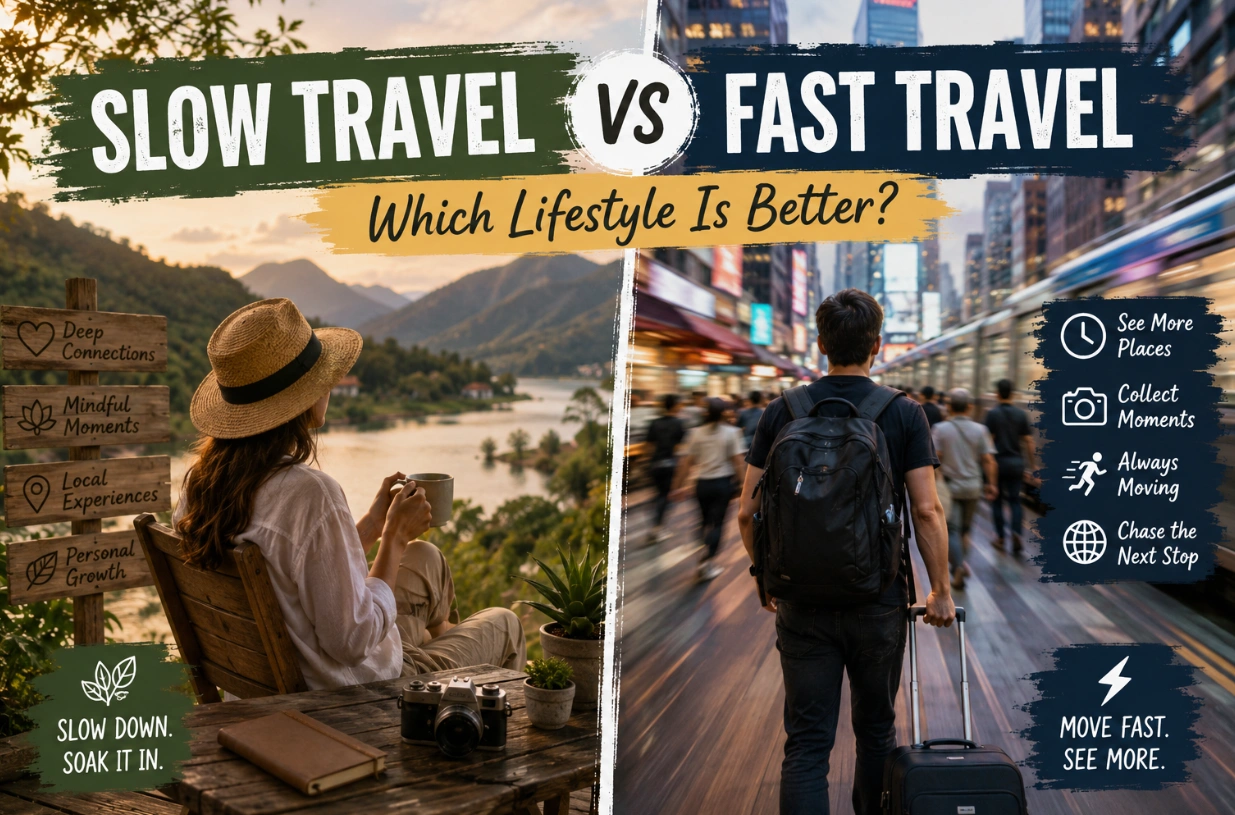
Visitor mode felt exciting: new cafes, new people, light plans. When I moved often, visitor mode never turned off. I never learned which bakery was good because I was already pricing the next flight.
Belonging turned out smaller than "settling forever." It meant people recognized me, I had a preferred lunch spot, I knew I would be here next Thursday. Seasonal roots counted.
How Small Routines Made New Places Feel Familiar
Routines traveled better than furniture. I reused the same sequence city to city:
- Same morning drink at one cafe until staff nodded
- Same after-work walk — river, beach, or temple lane
- Same weekly call with family or close friends
- Same cook night twice a week — eggs, rice, greens
- Same shutdown: close laptop, shower, read
Finding Your Favorite Places in a New City
I stopped judging a base in three days. Week one was logistics. Week two showed preferences.
I picked three anchors and returned on purpose:
1. Work spot — WiFi that held a call, outlets, fair prices 2. Food spot — healthy enough to repeat weekly 3. Quiet spot — park, beach, library corner
Favorite places were made by going back, not by collecting new pins. Reusing one healthy cafe weekly helped faster than buying decor.
Building Friendships When You Keep Moving
Depth needed overlap. I joined one recurring thing instead of ten one-off events: climbing night, language exchange, coworking desk, volunteer breakfast.
I showed up again. Online groups were good for tips. Offline repeats built friends. Three weeks was usually too short. Six weeks was more realistic.
Choosing Accommodation for Long-Term Comfort
Photos sold pools. My back cared about the chair.
I looked for a usable desk, kitchen basics, blackout options or an eye mask, a walkable neighborhood, and honest noise reviews. Bars next door wrecked sleep. A smaller place near a market often felt more like home than a fancy tower that needed Grab for milk.
Creating Your Own Version of Home Abroad
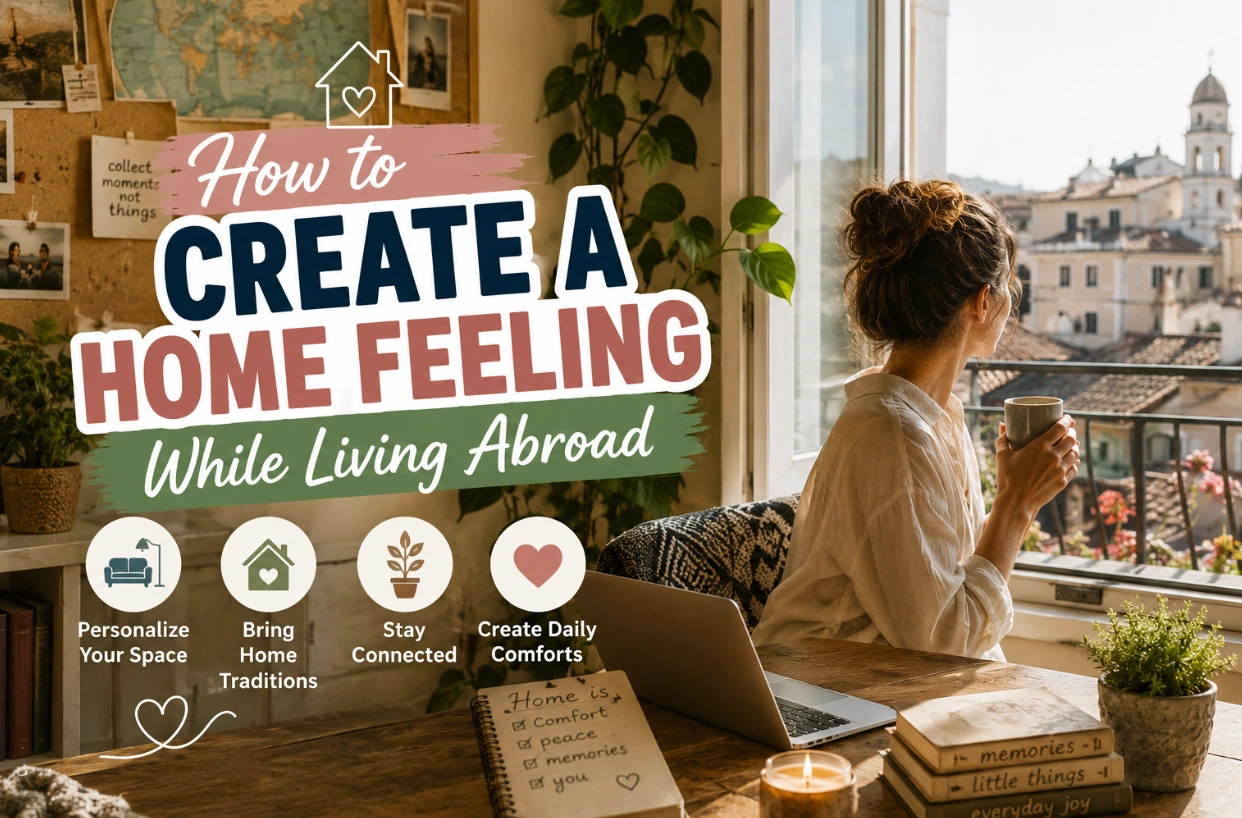
Home was partly objects: decent pillow, a mug I liked, tea that packed flat. Home was mostly behavior: how mornings started and evenings ended.
I kept a tiny continuity kit between cities — same tea, same scarf. Small cues helped on the first night somewhere new. Same cooking playlist helped too.
Why Slow Travel Helps You Feel More Connected
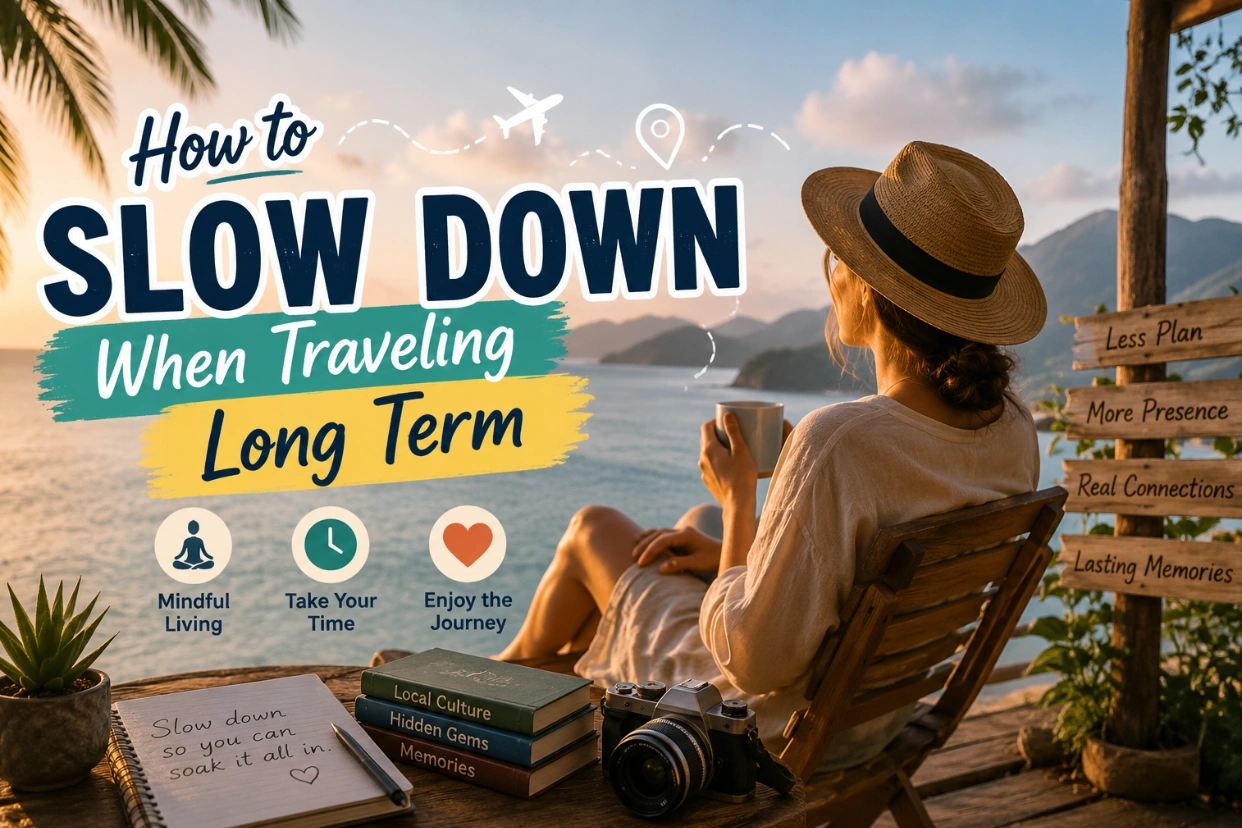
Connection needed time. One city per quarter still counted as mobile. Depth also helped mental balance — anxiety often dropped when tomorrow was not another checkout day.
Lessons From Living in Different Countries
Patterns that kept showing up:
- Day three felt hard everywhere — logistics peaked, then eased
- Community was built by showing up, not found by luck
- Home was rhythmic more than geographic
- Loneliness and solitude were different
- Ordinary weeks were the goal
I invited a friend once to a base I already knew. Showing them my Tuesday — laundry shop, lunch spot, evening walk — made the place feel more mine than another landmark tour. Home abroad was errands plus repeats. Do those for three weeks and the city stops feeling like a backdrop.
When Home Still Felt Missing
Sometimes the ache was missing people, not missing a lease. Video calls helped but did not replace sitting next to someone. I gave the in-between season time. I could feel at home for three months without deciding forever.
Home checklist I reused every city: quiet sleep setup, work setup with tested WiFi, food setup with a market route, people setup with one recurring activity within two weeks, body setup with a walking loop. When those five existed, the city became usable. Usable was the first step toward home. Pretty photos without those five still felt like a hotel stay.
Language and Small Belonging
Learning twenty useful phrases changed how markets received me. Vendors smiled differently when I tried. Progress was slow. That was fine. Belonging did not require fluency. It required respect and repeats.
I left one object in the bag between moves on purpose — the same tea tin. Continuity is small. It still helped when the first night felt blank and the street noise was new. Creating home abroad is not poetry. It is setup: do the errands, repeat the week, let familiarity feel like success instead of failure.
The first apartment that felt like home was not the nicest one. It was the one near a market, with a desk that did not wreck my back, and a cafe two blocks away that remembered my order by week two. I stopped chasing "dream places" and started chasing usable Tuesdays. That shift mattered more than any interior design tip.
You can feel at home for a season without deciding forever. Seasonal roots count. The goal is a Tuesday that works — laundry, lunch, walk, hard stop — not a binary choice between nomad life and settling down. Do the setup. Repeat the week. Home follows. That is the whole method I wish someone had told me earlier — before I kept moving to outrun a feeling that was really just missing a Tuesday.