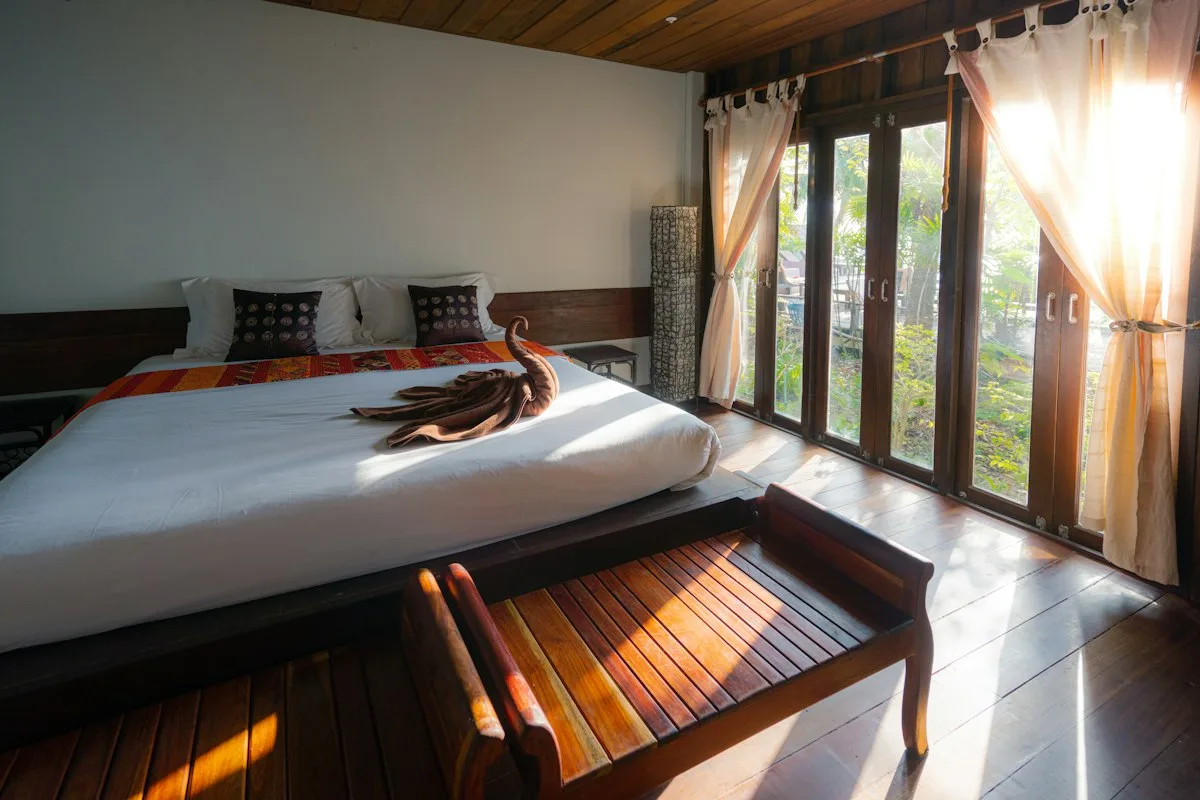

A month-long rental shapes your sleep, focus, and mood more than any spa day. This checklist helps slow travelers and remote workers inspect places before committing—without turning into a rent-price guide or sleep-science lecture. For making a place feel lived-in after you arrive, pair with creating a home abroad.
Look Beyond Price and Appearance
Listings optimize for photos: wide angle, golden hour, hidden clutter. Your body cares about noise, air, light, and whether you can work without hunching on a bed. Compare total wellbeing cost, not only monthly rent.
Check Noise, Privacy and Natural Light
Visit or ask someone to visit at night and early morning:
- Street traffic, bars, construction, temple speakers, neighbor TVs
- Thin walls between units
- Whether curtains actually block morning sun when you need sleep after a US call
Ask about neighbors above: moving furniture at midnight or early gym sessions travel through concrete. Corner units often trade street noise for fewer shared walls—worth pricing if sleep drives your productivity.
Evaluate Ventilation and Indoor Comfort
Open windows: cross-breeze or stale air? Smell mold in closets and bathrooms? AC maintenance affects both cooling and noise. In humid coasts, poor airflow shows up as damp laundry and foggy lenses—signs of deeper issues.
Make Sure the Space Works for Remote Work
Minimum checks:
- Desk or table depth for laptop + notes
- Stable chair or budget to buy one
- WiFi speed test at the hour you work
- Backup mobile data if fiber fails
Check the Kitchen, Laundry and Daily Essentials
Long stays need functioning basics:
- Stove, fridge, and knife that cuts
- Laundry—in unit, building, or affordable nearby
- Drinking water approach (filter, delivery, boil)
- Supermarket or market within a walk you will actually do in heat or rain
Consider Walkability and Nearby Services
Map a 10-minute radius: food, pharmacy, ATM, park, gym if you use one. Constant Grab rides erode budget and add decision fatigue. Stretching or walking routes are easier when streets feel safe in daylight.
Inspect the Property Before Committing to a Long Stay
If you cannot visit, ask for a live video tour showing:
- Window view and street noise
- Bathroom water pressure
- Under-sink pipes
- Router location
- Meter readings if utilities are separate
Balance Comfort, Location and Monthly Cost
Sometimes paying slightly more for quiet and light saves medical and productivity costs later. Sometimes a cheaper edge-of-center apartment wins if parks and coworking are nearby. Score three columns—comfort, commute to your life, price—and pick the best fit, not the best Instagram corner.
Trial Nights and Off-Peak Visits
If the landlord allows, inspect at the hour you usually sleep. A quiet afternoon visit hides bar noise at midnight. Rainy-day visits expose leaks and flooding paths. Tropical mold often appears after weeks of humidity—ask how the unit performed last wet season.
Furnishing Without Clutter
Long-stay wellbeing improves when you add one lamp, one plant, and one comfortable work chair instead of filling the room with cheap decor. Leave space to move and stretch. A cluttered studio increases cognitive load when you already manage visas and time zones.
Room-by-Room Quick Scan
Bedroom: blackout options, outlet near bed, phone signal.
Bathroom: hot water timing, ventilation fan, mold corners.
Kitchen: knife, pan, fridge temperature, pest signs.
Work corner: glare on screen, chair height, backup light for video calls.
Balcony or windows: security bars should not block emergency exit; check latches.
Score each room pass/fail before signing—photos for your future self when disputing deposit returns.
Tropical Climate Considerations
Humidity affects sleep, gear mold, and how often you run AC. Check whether electricity is billed separately and whether the unit has dehumidifier options or fan-only modes for shoulder season. Ground-floor units may be cooler but damper; high floors catch wind but heat up in afternoon sun. Ask neighbors about flood history in wet months if the area is known for storms.
Sublets, Agents, and Facebook Groups
Many nomads find monthly places through agents or social groups. Verify the person showing the unit is authorized to rent it. Avoid sending large deposits before seeing a contract. If something feels rushed, walk away—scams exploit urgency.
Neighbor Noise and Building Culture
Ask whether the building allows pets, renovations on weekends, or late parties. Family-oriented buildings may quiet early; student-heavy streets may peak at night. Match building culture to your sleep and work schedule.
Lighting for Mood and Productivity
Natural light helps mood; harsh bare bulbs at night feel institutional. Check whether you can add lamps without violating lease rules. Warm light in the evening supports wind-down after screen-heavy workdays tied to US or EU hours.
Frequently Asked Questions
Pre-rent checks, trial stays, and remote-work suitability are in the FAQ. Re-run the checklist when you move from dry-season to wet-season in the same city—buildings behave differently.