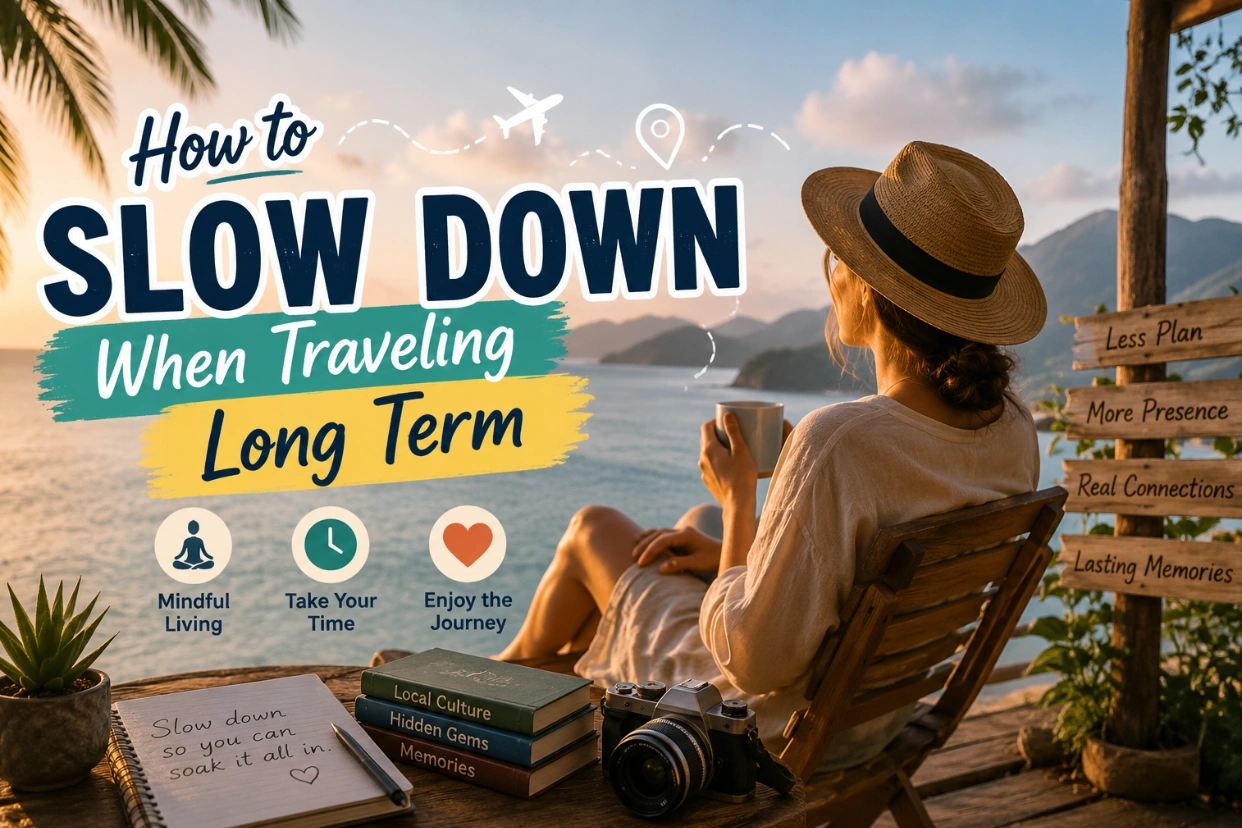
I once did two weeks and four cities with a suitcase that never fully unpacked. I had stamps. I also had three half-tested WiFi setups, two bad sleeps in a row, and a Sunday night spent Googling housing instead of resting. For remote work, pace stopped being a vibe question. It became a sleep and deadline question.
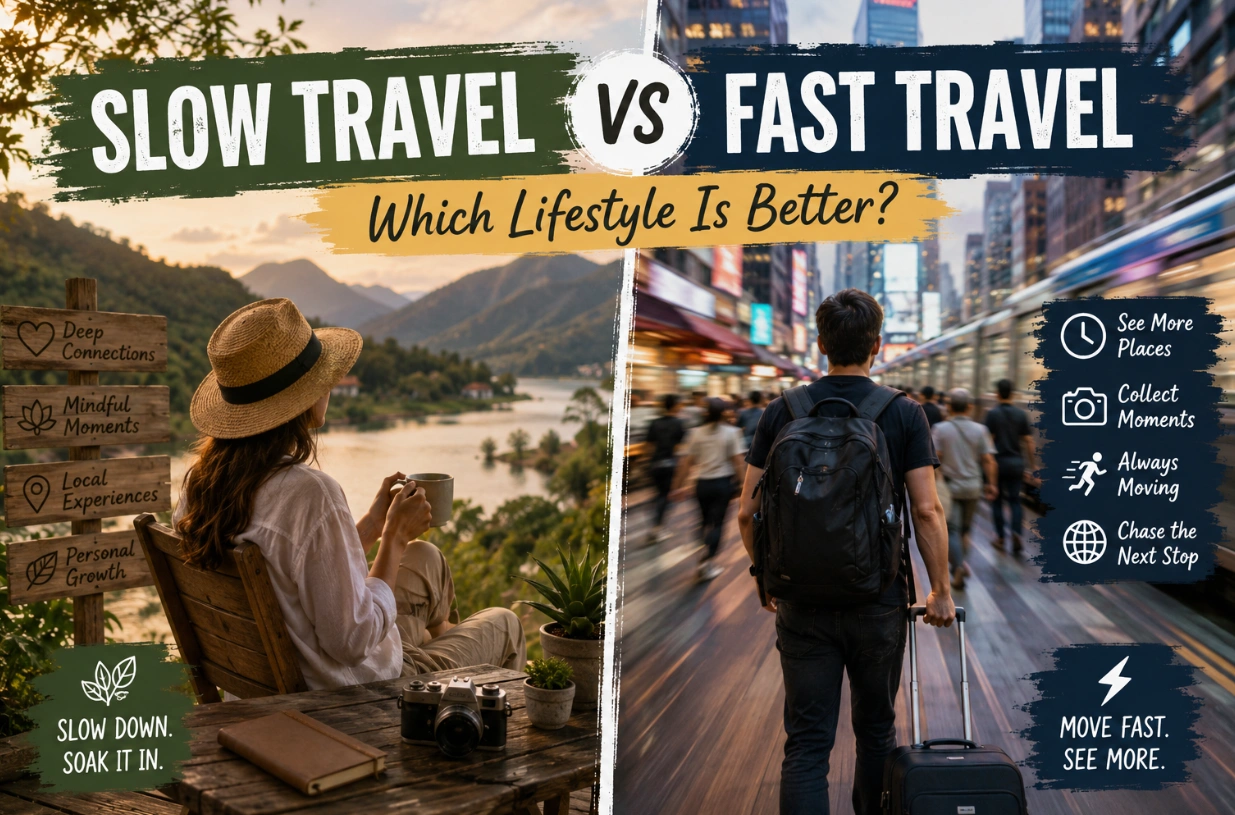
Slow travel vs fast travel, for me, came down to this: did I need breadth this year, or a base I could actually live in?
The Difference Between Visiting a Place and Living There
Visiting was highlights: temples, viewpoints, famous noodles, photos.
Living was errands: the same market, a preferred cafe, knowing which street flooded, having a laundry shop that recognized me.
I stayed in Chiang Mai a month once and still only visited it — every free hour was sightseeing. Another month I lived there: morning walk, lunch spot, laundry day, one neighborhood I knew well. Same city. Completely different nervous system.
My Experience With Fast Travel
Fast travel worked for short breaks and first looks at a region. Color, food, stories stacked quickly. I loved it for that.
Problems showed up when fast became default. Every move reset groceries, transport, and sleep. Work got squeezed between packing. Social life stayed at introductions. Flights and short-stay rates quietly drained the budget. Fast was not always cheaper. It was often just more frantic.
What Changed When I Started Traveling Slowly
Longer stays cut background stress. WiFi got tested once. Mornings stopped feeling like reconnaissance. Deep work blocks returned because Sunday was not another housing search.
Health improved for boring reasons: same bed longer, regular meals, repeatable walks. Phone noise dropped when life had a rhythm — similar to what I built with digital detox boundaries.
Comparing Cost, Stress, and Daily Life
| Factor | Fast travel | Slow travel |
|---|---|---|
| Flights | More frequent | Fewer, planned |
| Housing | Nightly rates add up | Monthly deals possible |
| Stress | High logistics | Lower after week two |
| Work focus | Fragmented | Easier to protect |
| Friends | Fun, shallow | Deeper if I showed up |
| Habits | Hard to keep | Easier to repeat |
Why Slow Travel Works Better for Remote Workers
Remote work needed reliable internet, quiet hours, and mental space. Fast travel spent that space on movement. Slow travel spent it on output and recovery.
Clients also got a stable timezone story. Deadlines stopped competing with checkout times. If income depended on focus, slow travel was the more professional choice — even when it looked less exciting online.
Building Connections When You Stay Longer
Friendships needed repeat contact. Fast travel gave me great first chats and rare second ones. Slow travel let me see the same people at a gym, market, or coworking desk.
Loneliness still happened. The difference was that community became possible. Language stuck better too — three phrases used daily beat thirty phrases used once.
Southeast Asia Cities That Fit a Slow Travel Lifestyle
Chiang Mai — walkable, affordable, strong remote-work setup without resort prices.
Da Nang — beach plus city, good food, manageable size.
Penang — food culture, slower than KL.
Ubud, Bali — green and calm if I accepted early heat and scooters.
Hoi An — small and bike-friendly; peak season crowds required timing.
I picked for climate, visas, and work hours — not only photos. Food got easier when I reused markets and lunch spots, like street food habits once I knew a neighborhood.
Is Slow Travel Better for Everyone?
No. Some people need variety. Visas and family can force faster moves. Slow travel also failed when I stayed somewhere I disliked out of stubbornness.
A mix that worked: slow bases with short bounded hops — two months in Chiang Mai, one week elsewhere, back to a monthly rental. Protect the slow blocks. Do not turn every weekend into another mini trip.
If I dreaded packing more than arriving, ate most meals at the laptop, and could not name one person I had seen twice, my pace was too fast for that season. Before each booking I asked: will this move help my work, sleep, or relationships this month — or only my map? If the honest answer was only the map, I stayed.
How I Switched Without Quitting Travel
I finished the current hop without adding cities. I booked 28–30 nights in a base I already liked. I put work hours on the calendar before sightseeing. I learned one neighborhood before day trips. I kept one weekend free on purpose.
Fast travel still had a place — a one-week side trip between two month-long bases, or a first look before committing. The problem was making speed the default while trying to do deep work and build friendships at the same time. Name which mode you are in before you book.
A Remote Work Week on a Slow Base
Monday–Tuesday deep work. Wednesday admin. Thursday afternoon for life errands. Friday lighter tasks and next-week plan. That calendar is what made slow travel feel productive instead of lazy. I still shipped work. I just stopped shipping myself to a new city every week.
Cost lesson I learned the hard way: four weekend flights plus short-stay housing erased the "cheap Southeast Asia" advantage fast. One monthly rental, local food, and fewer taxis left more money and more calm — even in the same country.
Stay longer when work needs focus. Move faster when you are truly exploring. Confusion between the two is what burned me out. If you need variety, schedule it. If you need focus, protect the base. Mixing both without a plan usually feels chaotic and expensive — I know because I tried.