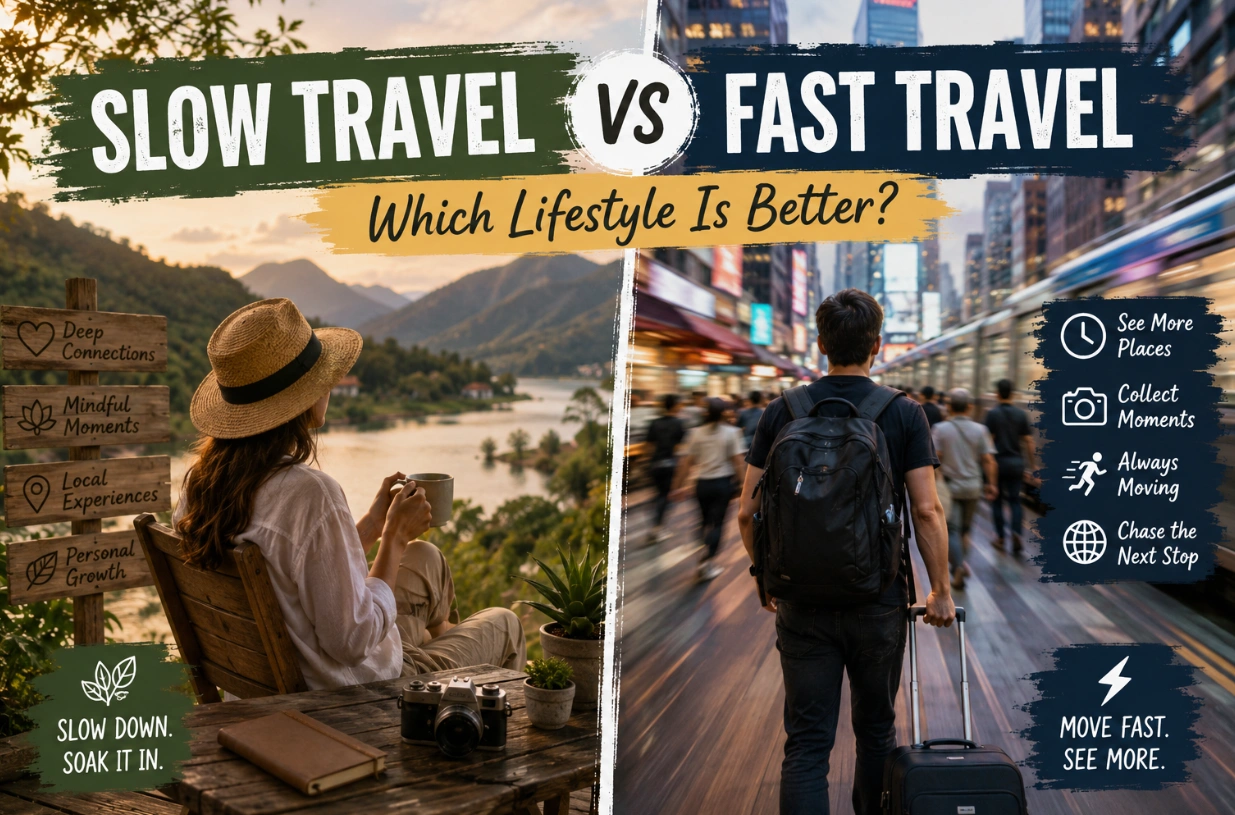
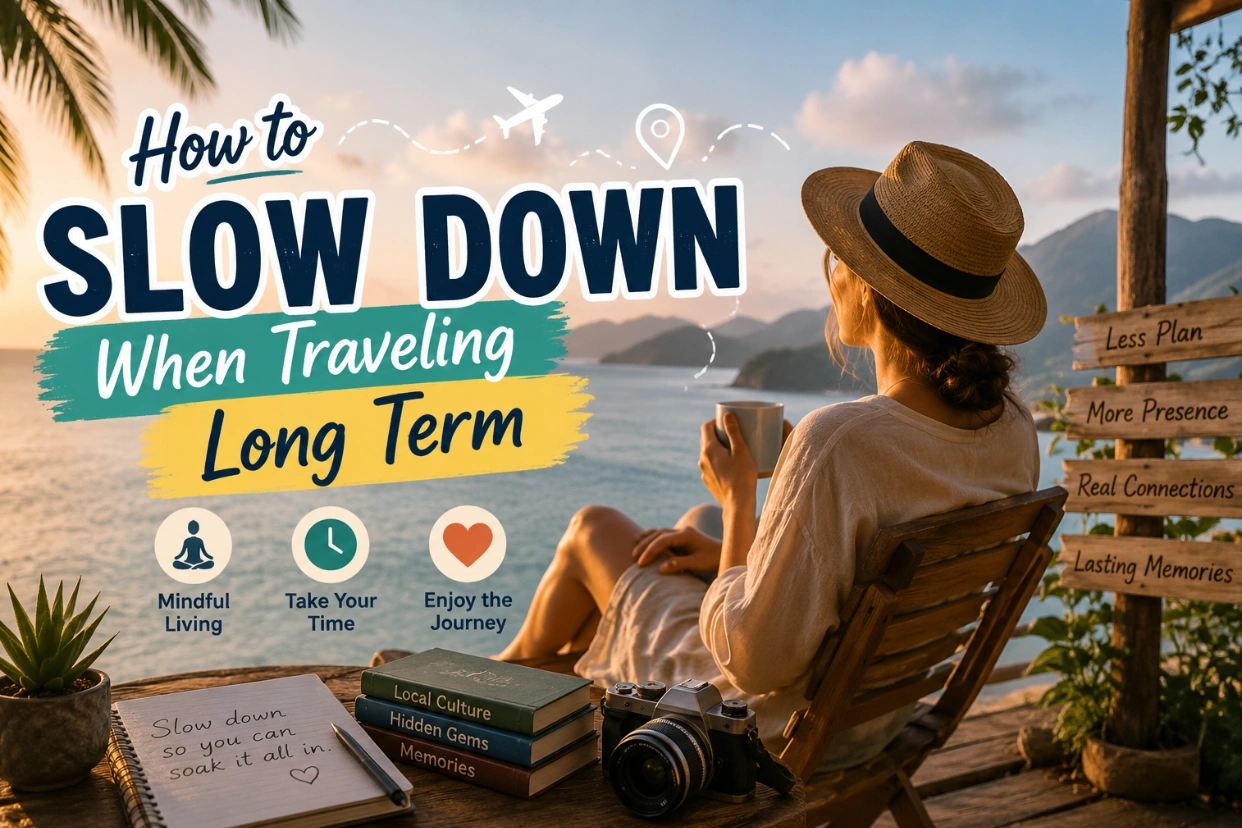
I remembered the airport better than the neighborhood. Another cheap flight sat open in a tab. Packing again felt heavier than arriving. That was the moment I needed to slow down — not quit travel, change the pace.
Slowing down was practical for me: work quality, sleep, money, and whether anyone in this city would notice if I left.
When Traveling More Does Not Mean Experiencing More
Checklist travel filled my calendar: temple, viewpoint, tour, bar, repeat. I could finish the list and still feel empty on the last night because nothing settled.
Experience needed repeats — second market visit, same street in different light, cafe owner who remembered my order. That rarely fit between checkout and check-in every four days.
Why I Stopped Rushing From Place to Place
Rushing looked like progress. Photos proved I was busy. Often it also hid FOMO and fear of sitting still while other nomads posted new flags.
Stopping was a decision. I booked one longer stay and noticed how week three felt compared with week one. That data was more useful than another itinerary.
Staying Longer Changed the Way I Travel
Month-long bases turned tourism into living. I bought spices instead of souvenirs. I knew market day. I skipped a famous sight because rain and sleep mattered — without guilt.
Work improved because Sunday was not another housing search. Sleep and meals stabilized. Phone use dropped when days had shape — overlaps with digital detox habits without needing a retreat label.
Creating a Daily Life Instead of Just Planning Trips
Slow travel meant Tuesdays existed: grocery day, laundry day, deep-work day, coffee with the same person. Not glamorous. Human. Adventure became optional, not the whole identity.
Learning to Enjoy Ordinary Moments Abroad
Ordinary was reading under a fan, cooking eggs in rain, walking to the same pier without filming it.
Social media trained highlight reels. Slow travel trained attention on what was already there. I picked the scoreboard that helped me sleep.
How Slow Travel Builds Deeper Connections
People recognized me when I returned to the same stall, gym, or desk. Conversations continued. Small favors happened — umbrella, scooter tip, festival invite.
Depth was not automatic. I still had to show up. Slow travel only made depth possible.
Best Southeast Asia Cities for a Slower Lifestyle
Chiang Mai — walkable, affordable, strong remote-work scene.
Da Nang — ocean plus city; easy gym and beach combos like Da Nang fitness setups.
Penang — food and a slower rhythm than capital cities.
Ubud — green and early; plan for heat and traffic.
Smaller towns — recovery months when I needed extreme quiet.
I matched season and visas, not only vibe photos. Cooking twice a week and learning one market helped the same way street food eating stays steady once you know a neighborhood.
Finding Your Own Pace While Living Abroad
Signs my pace was too fast:
- Dreading packing
- Irritable at nice views
- Work quality slipping
- Only shallow friendships
- Sleep never catching up
I did not fill free time with more work because rent "felt expensive." I did not stack side trips every weekend to prove I was still adventurous. I paused twenty-four hours before buying a flight I did not need. Slow travel was often the decision not to click buy.
Next action when I was rushing: extend the current stay if visas allowed, delete one optional flight tab, keep one weekend empty. Cook twice. Walk the same loop. That taught me more about slow travel than another article about mindful living. Slowing down did not mean I failed at nomad life. It often meant I finally made it workable.
Warning Signs I Learned to Trust
Relief when a flight got canceled. Cities from last week blurring together. Blaming WiFi for everything when work quality slipped. Saying "after the next place" about rest, gym, or friends. A suitcase that never fully unpacked.
If two or more showed up, I extended the stay before booking anything else. Slowing down was a calendar change: fewer flights, more empty days, one neighborhood learned well enough that errands felt automatic. At the end of the month I wrote one sentence — what would I miss if I left tomorrow? — and used that to choose the next base.
What a Slow Month Looked Like for Me
Week 1: settle the flat, test WiFi, find supermarket and laundry. Week 2: lock a work cafe and a walking loop. Week 3: one weekly social repeat. Week 4: notice what I would miss if I left tomorrow — that feeling was usually what people mean by home.
Boredom showed up. I used it for reading, language flashcards, long calls with old friends, cooking. If every dull afternoon felt like failure, I was still scoring life like a tourist checklist. "I am staying put this month" was enough for friends inviting me to the next island. No manifesto required. Cook twice. Walk the same loop. Keep one weekend empty. Then decide if you still need another country.
Most people I met who lasted years as nomads were not the ones with the most stamps. They were the ones who could unpack for a month without panicking. Slowing down did not make travel smaller. It made the days bigger. Open the booking app, extend the stay if visas allow, delete one optional flight tab. That is slowing down in real life — not a speech.
I still travel. I just stopped confusing movement with meaning. Fewer stamps. Better sleep. Work that ends. A few people who would notice if I disappeared for a week. That version of nomad life is the one I can actually keep.
Next time a cheap flight looks tempting, wait twenty-four hours. Ask whether you need a new place — or a quieter week in this one. Most of the time, for me, it was the quieter week.