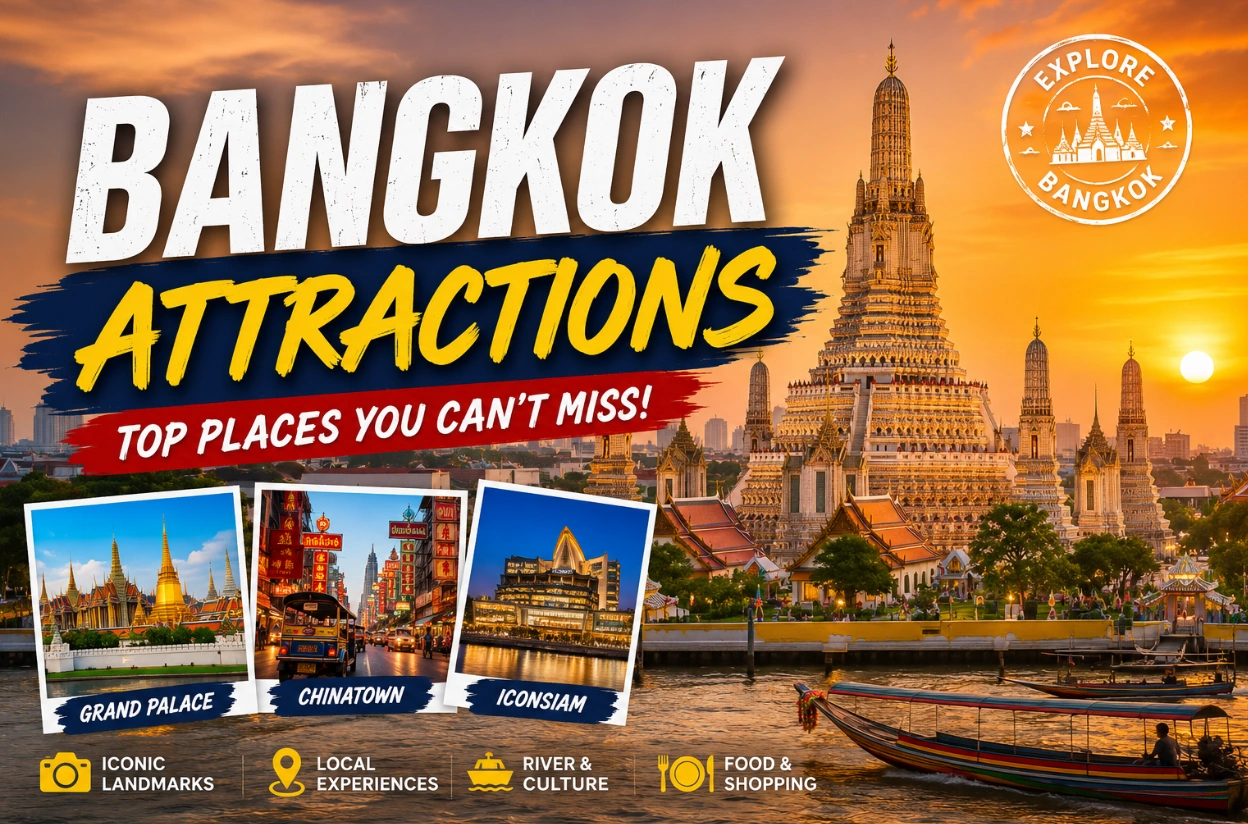
I showed up at the Grand Palace on a Tuesday in March thinking I was early. The sun was already leaning in, humidity sitting on my shoulders like a wet towel, and the queue outside the ticket windows moved slower than the river boats I'd just watched at Tha Tien. By 9:30 the courtyards would feel like a convection oven. Still — I'd do it again. You just need a plan.
Grand Palace Bangkok Overview
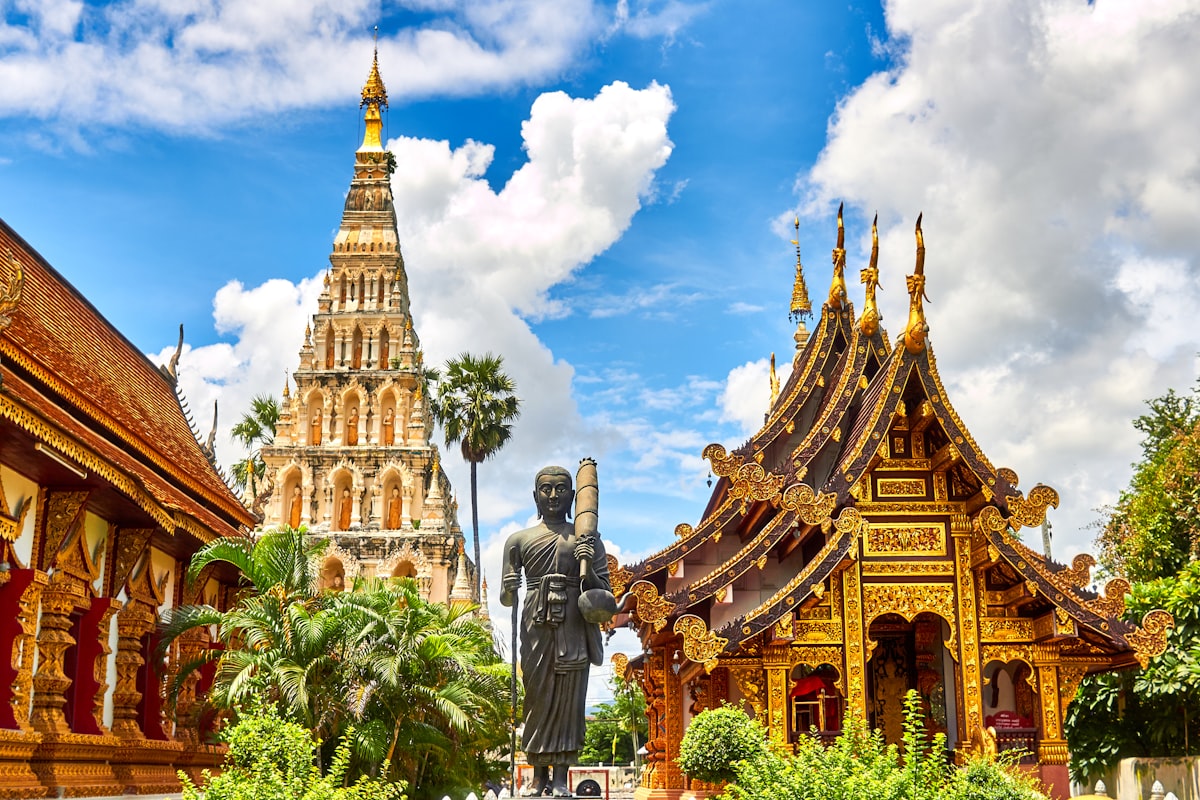
The Grand Palace is not one building you "enter and exit." It is a walled city of courtyards, throne halls, and the separate sacred zone of Wat Phra Kaew (Temple of the Emerald Buddha). Kings lived and governed here from the late 1700s until the early 1900s; today it is part museum, part working symbol of Thailand. Expect gold, enamel, mirrored glass, and crowds — lots of them — shuffling in the same direction because the site uses a one-way flow once you're inside.
First-timers often confuse the ticket gate with the main photo spots. The entrance is on Na Phra Lan Road; security checks bags and dress before you buy. Give yourself two to three hours if you want to actually look at the mural cloister instead of power-walking behind a tour flag.
Tickets & Entrance Fee
As of 2026, foreign visitors pay around 500 THB at the official ticket counters (prices change — check the sign the morning you go). The ticket includes the palace complex and Wat Phra Kaew in the same compound. Thai nationals pay a lower rate at a separate window.
Practical tips:
- Cash is reliable; some days cards work, some days the machine is "temporarily down."
- Keep your ticket stub — staff may check it between zones.
- Guided tours from Khao San or the river often bundle transport and skip-the-line stories; they do not always skip the heat.
- Online sellers exist; only buy from sources you trust. Counterfeit or expired passes happen.
Tour desks near Khao San and the river will sell "VIP" packages. Some are legitimate guides with good English; others are transport markup with a headset. If you want history, hire a licensed guide inside or use the palace audio guide once you're through security. If you only want photos, you do not need a three-hour lecture in the sun.
I watched a group lose twenty minutes because one person forgot a scarf — the rental stall works, but the queue moves slowly and smells like synthetic fabric heated to 40°C.
What to Wear to the Grand Palace
This is non-negotiable: shoulders covered, knees covered, no see-through fabric, no flip-flops that look like beach wear. I wore linen trousers and a light blouse; people in shorts were sent to rent sarongs outside — extra cost, extra fuss, and the rented wraps are hot.
- Scarves over tank tops sometimes pass, sometimes do not — bring a proper shirt.
- Tight leggings can be rejected; loose pants are safer.
- Hats off inside temple buildings; sunglasses on your head are fine outside.
- Large backpacks go through security; carry water in a small bag.
Best Time to Visit
Opening is around 8:30 AM. I aim for 8:15 at the gate on a weekday. You get twenty to forty minutes where courtyards are busy but not crushed, and the marble has not turned into a skillet yet.
Avoid 11:00 AM–2:00 PM unless you enjoy heat stroke cosplay. Late afternoon light can be beautiful on the outer walls, but interior halls close earlier than you expect and some zones stop admitting visitors before the posted closing time when crowds peak.
Royal or state events can close the palace with little notice. Check the official site the night before — I learned that after a tuk-tuk driver insisted "open for sure" on a holiday.
Rain is weird here: short bursts, then steam rising off stone. Umbrellas are useful; flip-flops on wet marble are not. If a storm hits, crowds pack under cloister roofs — patience, or accept you'll shuffle in a humid line smelling of rain and sunscreen.
Bring one liter of water minimum per person. Vendors sell drinks outside but prices jump; inside, options are limited once you're deep in the one-way route.
Inside the Emerald Buddha Temple
Wat Phra Kaew sits inside the same ticket. The Emerald Buddha itself is small — maybe 66 cm — raised on a gilded platform behind glass. No photos inside the ordination hall; shoes off at the threshold; voices drop to a murmur that still sounds loud because stone reflects sound.
The surrounding cloister mural is the part many people skip. It tells the Ramakien in chapters; the paint is dense, the gold is real metal, and the walkway offers shade if you move slowly. I stood ten minutes at one panel watching a restoration worker touch up a demon’s face — that was more memorable than another selfie in the sun.
For a deeper breakdown of rules and what you're looking at, see our Wat Phra Kaew Bangkok guide — same compound, different focus.
Getting to the Grand Palace Bangkok
Chao Phraya Express Boat to Tha Tien (N8) is my default. Walk five minutes north along the river wall — hard to miss the spires. Ferries are cheap, breezy, and immune to Sukhumvit traffic.
MRT Sanam Chai plus a ten-minute walk works if you're already on the subway. Grab is fine before 8 AM; after that, one-way streets and tour buses clog the approach.
From Khao San Road it's walkable in fifteen minutes if you accept heat and aggressive tuk-tuk offers. Negotiate nothing on foot — just walk.
Pair the morning with Wat Phra Kaew cloister time inside the compound, or cross the river at sunset for Wat Arun — different energy, better light on the Thonburi side.
Best Photo Spots
- Outer courtyard facing the Chakri Maha Prasat — classic symmetry; go wide, then crop people later.
- Wat Phra Kaew cloister — turn your back to the sun, shoot along the wall for depth; midday is harsh, morning is kinder.
- River side near Tha Tien after you exit — palace roofs over water, boats in frame; better than fighting for space at the inner chedis.
- Avoid blocking monks, prayer areas, or "no photo" signs — guards are polite until they're not.