The first time I saw Pai's Big Buddha I was on a scooter looking up from town — white figure on the hill, disproportionate against soft northern hills, slightly surreal in the way roadside Buddhas often are in Thailand. I assumed it was a quick photo stop. It became a 45-minute morning of steps, wind, and a panorama that made the whole Mae Hong Son loop feel geographically clear. Wat Phra That Mae Yen is not ancient mystery tourism. It is a working temple, a viewpoint, and a leg workout — best treated like Doi Suthep in miniature: dress right, go early, stay longer than the parking lot suggests.
Wat Phra That Mae Yen Overview
The temple sits on a hill east of Pai town, marked by a large white Buddha visible from many guesthouse balconies. The climb from the road involves a long staircase (often cited around 300+ steps) leading to the statue and terrace. From the top you look over Pai valley, rice fields, and the knot of low buildings that count as "downtown" here.
Unlike mega-complexes in Bangkok or Chiang Mai, this feels local and open. Monks may be present; offerings happen; tourists mix with Thai visitors lighting incense before breakfast. There is no grand palace ticket booth — donations and quiet behavior matter more than queue strategy.
Dress Code and Temple Etiquette
Shoulders and knees covered — same rule as Doi Suthep. Scarves work if they are not see-through. Remove shoes where indicated near shrine areas; follow posted signs about photography inside any hall.
Speak softly. Do not turn your back to the Buddha image for casual selfies in a disrespectful way — step to the side, frame thoughtfully. If a ceremony is happening, observe from the edges.
Best Time to Visit
Early morning wins for temperature and sound — birds, distant scooters, mist sometimes sitting in the valley. I aim for 7–8 AM after a quick coffee in town.
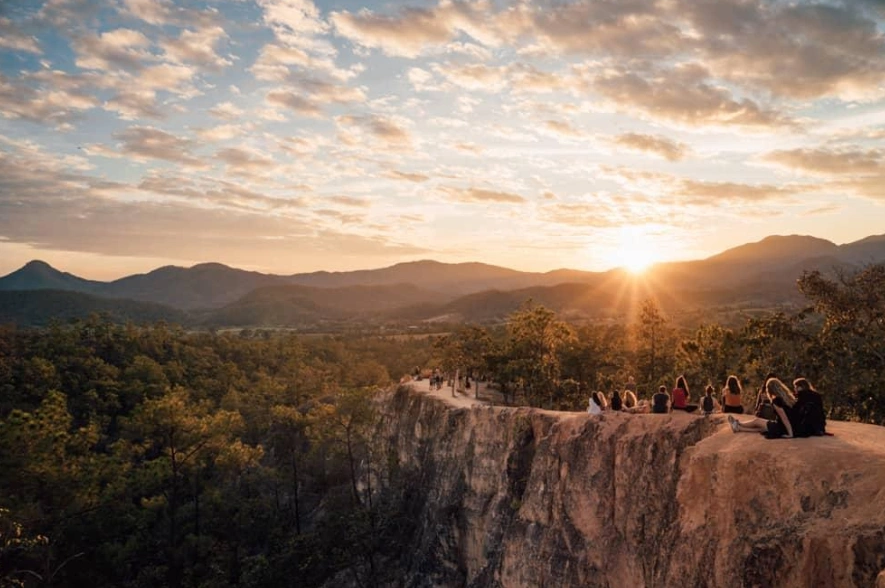
Late afternoon / sunset is photogenic but busier. Scooter traffic on the hill road increases; the staircase carries golden-hour hikers and influencers in equal measure. Still worth it if mornings are impossible.
Midday is hot on exposed steps. If you only have noon free, bring water and accept a shorter visit.
Getting There
Short scooter ride from Pai center — signs point toward the temple; locals know "Big Buddha." Parking at the base of the stairs is informal.
Songthaew or guesthouse-arranged ride works if you do not ride scooters. Walking from town is possible for fit walkers but the road is not scenic-shade friendly at midday.
Combine transport with Pai Canyon only if you split them — Big Buddha morning, canyon sunset is the classic split. Doing both in blazing noon heat is how people declare Pai "overrated."
What to Do at the Top
Walk the terrace loop slowly. The Buddha scale is the headline, but the 360-degree views are why I return. Identify your guesthouse roof, trace the river, watch weather move along ridges.
Spend ten minutes just sitting — no photos — before you descend. Pai rewards stillness more than checklist speed.
Small shrines and bells may be active; participate if you want merit, observe if you prefer.
The Mae Hong Son Loop Context
Most Pai visitors arrived via Chiang Mai–Pai bus or scooter loop — 762 curves if you ride. The Big Buddha helps orient: you see the whole basin you just nauseated through. If you are loop-tired, treat this as gentle first morning before canyon or hot springs stack.
Night markets the evening before mean slow start is fine — temple does not open for your alarm; you open for your legs.
Donations and Costs
Entry is typically free or low donation — carry small bills for merit bowls and parking attendants. No grand ticket counter like Bangkok palaces; respect still scales with behavior, not price paid.
Photography
Morning side-light on the white statue is cleaner than harsh noon. Wide shots include valley context; portrait lenses compress layers of hills. Drone rules change — assume restricted unless you confirm locally.
Respect worshippers in frame; ask before close portraits of monks or families praying.
How Long to Spend
Plan 45–75 minutes including the climb and terrace time. Add 20 if you are a serious photographer waiting for light shifts. This is not a half-day temple like Bangkok's Grand Palace zone — it is a hill stop with soul.
Pairing With Other Pai Days
- Big Buddha morning + cafe work afternoon — Pai nomad rhythm without beaches.
- Temple + hot springs — culture then soak; opposite of Chiang Mai's Bua Tong waterfall day but same "nature reset" idea.
- Before leaving for Railay — contrast mountain temple calm with limestone beach drama on the same trip.
Practical Tips
- Water before you climb — no vendors on every step.
- Rain makes stone slick; descend carefully.
- Scooter helmet hair is a fair trade for safe hill roads.
Sunrise vs Sunset — Which I Pick When
Sunrise means a 6 AM scooter ride in cool air, mist sometimes pooling in the valley, and maybe ten other people at the top. The white Buddha catches soft pink light; photos need no filter. Downside: guesthouses near Walking Street may still be playing live music when you try to sleep early — earplugs help.
Sunset is social — scooters lined along the hill road, golden light on the statue, more chatter on the stairs. The valley glows orange; temperature drops fast once the sun clears the ridge. Downside: descending crowded stairs in dim light; ride back among tired riders.
I choose sunrise when I want quiet and am pairing Pai Canyon same-day afternoon. I choose sunset when I slept in and want one big photo hour without a 5 AM alarm.
Midday between them is for people with tight schedules only — I tried once after brunch; the staircase felt like a sauna and the view haze flattened everything.
Step-by-Step Climb (First-Timer Reality)
From the road parking area, the staircase begins wide then narrows. First hundred steps: still telling yourself this is easy. Steps 150–250: thighs notice. Top terrace: wind hits, panorama opens, you forget the burn until descent.
Shrine areas near the Buddha may require shoe removal — factor time for that. Circumambulate respectfully; do not block prayer positions for your tripod.
The 360 views matter more than the single Buddha selfie. Pick out the canyon direction for later afternoon planning; trace the road you came from Chiang Mai; watch cloud shadows move across rice patches.
Allow ten minutes of no-camera sitting — Pai's whole pitch is slowing down, and this is the geographic orientation lecture you get for free.
Cost and Time Budget
Entry is typically free or donation-based — carry 20–50 THB for merit bowls. Parking attendants may ask a small fee; keep coins handy.
Scooter from town — included in daily rental (150–250 THB/day typical). Songthaew round trip 200–400 THB depending on wait time at sunset.
Time: 45–75 minutes on site for average visitors; 90 minutes if photographing both sunrise and valley fog transitions.
Weekend and Holiday Crowds
Thai weekends and holidays bring families and domestic road-trippers — the staircase carries more incense smoke and more selfie queues. Still manageable compared to Doi Suthep on Sunday, but not solitary.
Songkran and cool-season holidays stack scooters along the hill — arrive earlier or accept shared terrace space.
Two-Day Temple and Nature Split
Day A — Wat Phra That Mae Yen at 7 AM, cafe slow morning, afternoon hammock.
Day B — Tha Pai Hot Springs late morning, Pai Canyon sunset.
This avoids the classic mistake: stacking Big Buddha steps, hot soak, and canyon ridges in one blistering day. Your knees send postcards from that itinerary.
Who Should Skip
Travelers with mobility limitations on long staircases, serious heart or heat sensitivity, or zero interest in temple etiquette. If heights are fine but stairs are not, view from lower terraces near the road still offers partial valley glimpses without full climb.
Anyone expecting Bangkok-scale gilded halls — this is hilltop white Buddha calm, not palace opulence. Compare after Wat Arun and you will appreciate the difference in scale and crowd density.
Walking From Town (When You Skip the Scooter)
Fit walkers can reach the staircase from central Pai in 40–55 minutes one way — mostly road shoulder, not scenic trail. I tried once at 6:30 AM before scooter rental started; peaceful but not shade-friendly on return at 9 AM heat.
If you walk, carry water and plan one-way scooter back — guesthouses sometimes arrange pickup for 50–100 THB if you ask nicely.
Night Market Evening Before Temple Morning
Pai Walking Street runs late — live music, fried snacks, cocktail bars. If you temple at sunrise after a midnight market, the stairs win. Structure your week: market night, temple morning, not same-night stack before Pai Canyon sunset next day.
Wat Phra That Mae Yen will not replace a major temple city experience. It anchors Pai geographically and spiritually — the place you orient from when the valley fog lifts and you remember why you took the slow bus north.