I almost skipped Doi Suthep on my second Chiang Mai visit because the first time felt like a conveyor belt — red songthaew, naga stairs, golden chedi, photo, leave. On that trip I arrived at 10:30 AM on a Saturday and spent forty minutes waiting for other people's selfies to clear the terrace railing. The temple is genuinely stunning; the timing was the problem. The version I recommend now starts at 7 AM on a weekday, ends before the tour buses multiply, and includes twenty minutes of doing absolutely nothing except watching mist lift off the valley below.
Doi Suthep Overview
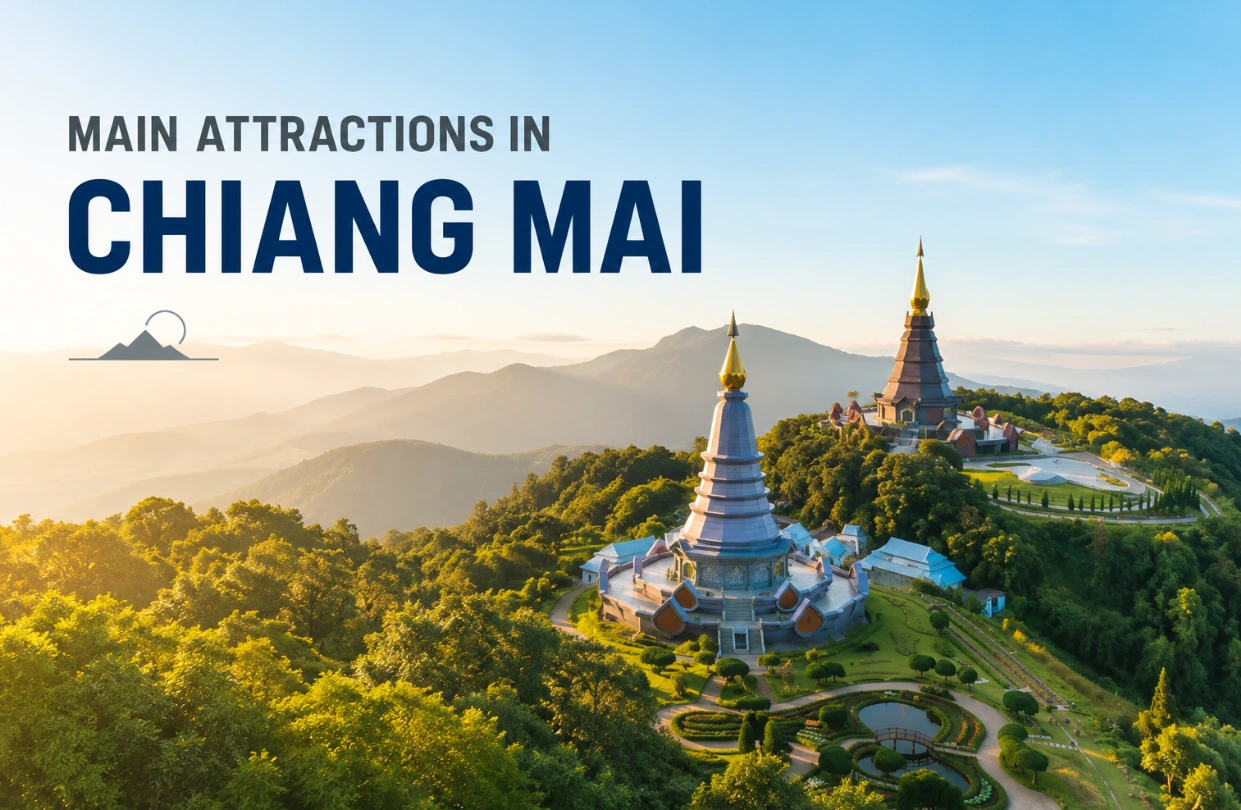
Wat Phra That Doi Suthep sits on Doi Suthep mountain, roughly 15 km west of Chiang Mai's Old City. The golden chedi is the headline, but the experience is really three things stacked together: the climb (or funicular), the temple complex itself, and the viewing terrace that looks over the entire city grid. Most visitors treat it as a one-hour checkbox. Slow travelers should treat it as a morning anchor — the kind of outing that sets tone for the rest of the week.
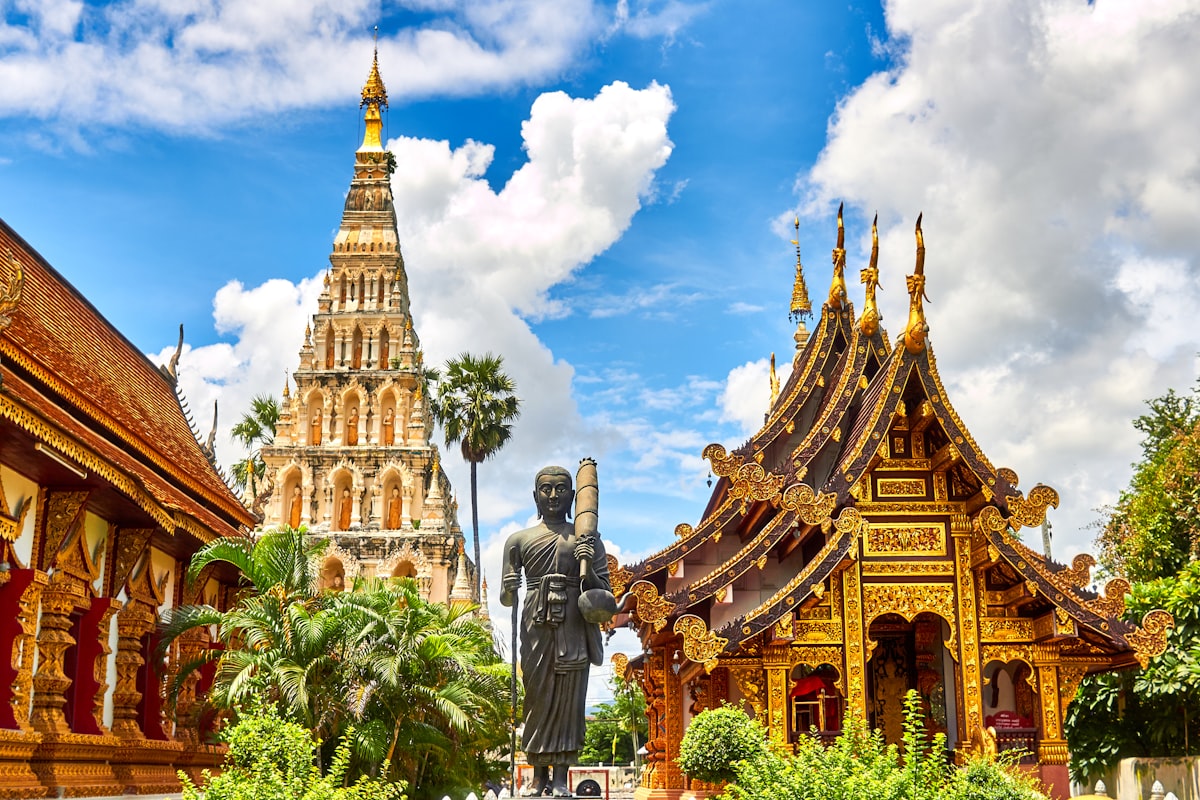
The temple dates to the 14th century in local telling, and it still functions as a working religious site, not a museum. Monks move through the courtyards, locals ring bells for merit, and incense hangs in the air before the souvenir stalls fully wake up. That mix of sacred and tourist is normal in Thailand; what changes is whether you notice the sacred part or only the tour-group choreography.
If your Chiang Mai plan is temples every day, Doi Suthep should be your big mountain temple once, not your template for every afternoon. Pair it with flatter ground later — a moat walk or market morning in the Old City walking guide keeps the week from becoming one steep staircase after another.
Why Mornings Change Everything
Early light is kinder for photos, but the real win is temperature and crowd physics. Chiang Mai mornings from November through February can feel almost cool at elevation. By 10 AM, heat builds, songthaews queue, and the naga staircase turns into a slow-moving human funnel.
My best visit looked like this: shared songthaew from near Chiang Mai University gate around 6:45 AM, arrival before 7:30, shoes off at the entrance, slow circuit of the chedi clockwise, then terrace time with a coffee bought at a stall near the base on the way down. I was back in the city by 10 AM with energy left for lunch — not the wiped-out feeling of a midday mountain run.
Weekends and Thai holidays compress that window. If you only have a Saturday, still go early; accept that the terrace will fill by 9 AM. Sunset trips are romantic on paper and crowded in practice — great if you want atmosphere and don't mind sharing it with dozens of tripods.
Getting There (Songthaew, Private, Scooter)
Most independent travelers use shared red songthaews that wait at Chiang Mai University area (Huay Kaew Road near the main gate) or sometimes near Pratu Chang Phueak in the north of the Old City. Drivers collect passengers until the truck is reasonably full, then head up the winding mountain road. Shared rides typically run 40–80 THB per person depending on how many people fill the truck and how hard you negotiate — confirm whether the price is per person and includes the return leg or only the uphill segment.
Private songthaew hire costs more (often 300–500 THB round trip for a small group) but gives you control over departure and return time. I use private hire when traveling with family or when I want to combine Doi Suthep with a stop at Doi Pui Hmong Village without watching a shared driver's schedule.
Scooter rental is an option for confident riders. The road is paved and scenic but winding; go slow, wear a helmet, and avoid rainy-season descents if you're not comfortable on wet curves. Parking near the temple entrance is available for a small fee.
There is also a funicular/cable car option for those who prefer not to climb the full naga staircase on foot. I still walk the stairs when my knees cooperate — the approach is part of the ritual — but the funicular is a legitimate choice if mobility or heat is a concern.
The Naga Staircase and Temple Etiquette
The classic approach is 306 steps flanked by naga railings — less brutal than some Thai temple climbs, but still enough to raise your heart rate at altitude. Take your time. Step aside for monks ascending or descending. Do not treat the staircase as a gym sprint; people are praying at the top.
At the entrance, remove shoes and dress appropriately: shoulders covered, knees covered. Scarves are often available to borrow near the gate, but bringing a light sarong or wrap saves queue time. Hats come off inside the main worship areas.
Inside the complex, walk clockwise around the golden chedi if you follow local custom. Ring the row of bells if you want — locals do it for merit, not for content. Keep your voice low, don't point feet at Buddha images, and ask before photographing monks up close.
What to See Inside the Complex
The golden chedi is the visual center — covered in gilt that catches morning light in a way phone cameras struggle to translate. Surrounding halls hold Buddha images, mural fragments, and donation points that support temple upkeep. I spend more time on the viewing terrace than inside any single hall: Chiang Mai spreads below in a hazy grid, mountains layer behind it, and for a few minutes the city makes sense as a geographic whole.
Smaller shrines and bells line the perimeter. If you arrive early, you may hear monks chanting from an inner area — stand quietly at the edge rather than pushing in. The terrace is where most visitors linger longest; claim a spot on the wall early if you want a still moment before groups arrive.
Entrance Fee and Practical Costs
Foreign visitors pay a modest temple entrance fee (amount varies slightly by season/policy — bring small bills and change). Thai nationals often enter free or at a reduced rate. Shoe storage, toilets, and drinking water are available near the entrance cluster.
Budget beyond the gate fee:
- Shared songthaew round trip: roughly 80–160 THB total per person if you negotiate clearly
- Coffee or snack at base stalls: 40–80 THB
- Donations: optional, whatever feels right
- Funicular one-way/round trip: small additional fee if you skip the stairs
Dress Code and What to Bring
Required: covered shoulders and knees, easy-on shoes (you'll remove them repeatedly), sun protection. Recommended: small towel for sweat, water bottle, light jacket Nov–Feb mornings, phone/camera with patience for haze.
Leave heavy bags at your guesthouse if possible. The climb and shoe-removal rhythm gets annoying with a full backpack. A crossbody bag is enough.
Best Photo Spots (Without Blocking Prayer)
The terrace wall facing the city is the classic panorama — arrive early for clear layers. The naga staircase photographs well from the bottom looking up or from mid-stairs with a wide lens. Inside, respect worshippers: do not block the chedi circumambulation path for a shot.
Haze is real some months — especially burn season (roughly Feb–Apr). A hazy cityscape can still be beautiful; don't assume a failed postcard means a failed morning.
Nearby Pairings and What to Skip
After descending, I like a late breakfast in the Old City rather than rushing to another mountain sight the same morning. A sunrise temple loop on a different day pairs well — Doi Suthep is the mountain temple; flat Old City wats are the repeat-play temples.
Skip the elephant attractions and photo-tiger setups that cluster on the tourist trail near Doi Suthep. Ethical wildlife experiences exist elsewhere in Thailand; this morning is about the chedi and the view, not riding animals for ten minutes.
Doi Pui Hmong Village can combine with a private hire day if you want highland scenery — but that turns the outing into a full-day mountain trip. For slow travel, Doi Suthep alone is often enough.
Sample Slow Morning Timeline
- 6:30 AM — Coffee and quick bite in city, grab cash
- 6:45–7:00 AM — Shared songthaew from CMU area
- 7:15–8:30 AM — Stairs or funicular, temple circuit, terrace pause
- 8:45–9:30 AM — Descend, optional stall coffee at base
- 10:00 AM — Back in city; moat walk or cafe reset before lunch heat
Doi Suthep isn't a checkbox. It's a morning that sets the tone for a slower week in the north — if you time it right.