I used to treat temple hopping like a scavenger hunt — pin every wat on Google Maps, walk until my shirt was soaked, wonder why Buddhism felt like a gym class. Chiang Mai fixed that when I switched to sunrise mornings and a three-temple maximum. The city has over three hundred temples; you will not see them all, and trying is how you learn to dislike incense. The better frame is one quiet morning, three courtyards, coffee before 9 AM, done. That rhythm matches how locals actually use these spaces — brief merit, shade, move on — not how tour buses schedule them.
Sunrise Temple Overview
This loop stays inside the Old City on flat ground — intentionally different from a Doi Suthep mountain morning. You are not climbing 300 steps; you are walking sois while monks sweep and markets half-wake. Sunrise temple hopping is about light, temperature, and sound — birds and bells before scooter roar takes over.
The experience fails when you stack too many stops or start at 10 AM. It succeeds when you finish by 9:30 with a breakfast plan and no blisters.
Stop 1 — Wat Phra Singh (Early Light)
Start at Wat Phra Singh if you're near the center — or end here if your guesthouse is closer to another gate. At 6:45 AM the main viharn may still be quiet; monks and early joggers set the pace. Dress code: shoulders and knees covered, shoes off in halls.
Spend 25–35 minutes. Circumambulate slowly, sit once, leave before tour buses unload. Wat Phra Singh is "major temple" energy — detailed roofs, active worship, photo-worthy but not a photo factory yet.
Entrance fees apply for foreign visitors at some major sites — keep 20–50 THB notes.
Stop 2 — Wat Chedi Luang (Ruined Chedi Weight)
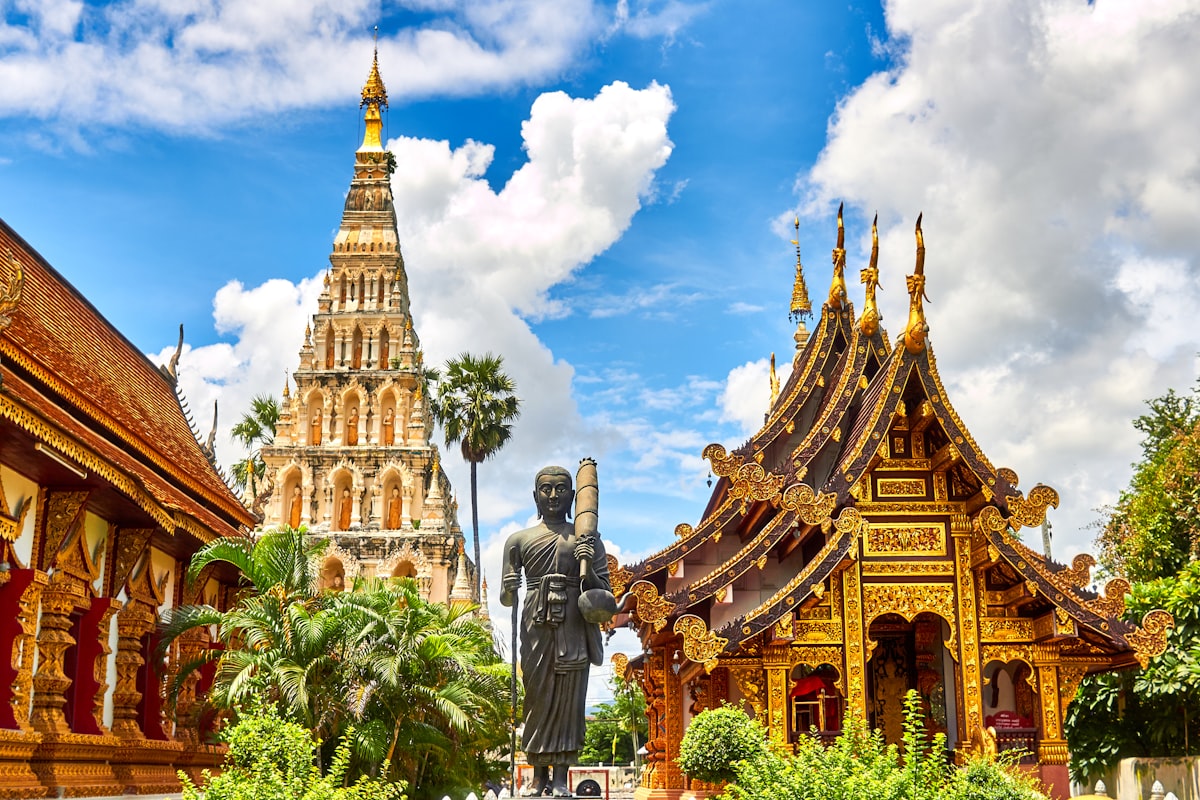
Walk toward Wat Chedi Luang next. The ruined chedi has a different emotional register — stone mass, sky through broken tiers, less gold flash, more time. This is where I sit longest on a sunrise loop: one bench, one coffee from a nearby cart if they've opened, watch locals offer merit without performing for cameras.
Allow 30–40 minutes. If a monk chat happens naturally at the edge of a hall, fine; don't chase "monk conversations" as content.
Stop 3 — Neighborhood Wat (Choose by Proximity)
The third stop should be small and walkable — a neighborhood wat you notice on the map one soi over, not another headline complex. Maybe Wat Chiang Man if you're north side, or a name you can't pronounce that has three dogs asleep at the gate. The point is noticing scale: not every wat is a museum.
15–20 minutes. Ring a bell if moved. Donate small coins if you want. Leave.
Three stops. Done.
Walking Route and Distance
Total walking for this loop is roughly 2–4 km depending on guesthouse location and detours. Flat terrain. The full route Tha Phae → Phra Singh → Chedi Luang → neighborhood wat → breakfast can finish under 3 hours including sitting time.
If you're staying in the Old City neighborhood, you may skip songthaews entirely. From Nimman, Grab to Tha Phae first — don't spend sunrise in traffic.
Dress Code and Temple Etiquette
Same rules everywhere: covered shoulders and knees, remove shoes, quiet voice, don't point feet at Buddha images, step aside for monks, ask before close-up monk photos. Carry a sarong — faster than borrowing at every gate.
Turn phone notifications off. One temple notification sound is louder than you think in a quiet viharn.
Heat and Timing Strategy
6:30–8:30 AM is the window. After 9 AM, heat climbs and groups arrive. If you sleep through sunrise once, repeat the loop another day — Chiang Mai rewards repetition.
Nov–Feb mornings can feel cool; Mar–Apr sunrise still beats midday but air quality during burn season may push you indoors earlier. Check AQI if you have respiratory sensitivity.
Breakfast Handoff (Don't Skip)
End at a market or khao soi cart near Tha Phae or Chang Phueak — breakfast is part of the ritual. Temple hopping on an empty stomach makes you rush. Slow travel includes food as punctuation.
What This Loop Is Not
Not a substitute for Doi Suthep — do mountain temple another day. Not a photography marathon — three temples, not twelve. Not a guided history lecture unless you hire a guide you actually want.
If you want deeper Old City context, save a full moat-and-market afternoon for another day when you want longer walking time without repeating the same three wats.
Practical Packing List
- Water bottle
- Light sarong or scarf
- Socks that slip on/off easily (temple floors vary)
- Sun hat for post-9 AM exit
- Small cash for donations and fees
- Offline map for soi navigation
Sample Sunrise Timeline
- 6:30 AM — Wat Phra Singh
- 7:10 AM — Walk soi toward Wat Chedi Luang
- 7:20–8:00 AM — Chedi Luang sit time
- 8:10–8:30 AM — Neighborhood wat
- 8:45 AM — Breakfast and cafe reset
Why Sunrise Beats Sunset Here
Old City temples at sunset can be beautiful but often coincide with tour-group end-of-day rushes and hotter pavement holding heat from afternoon. Sunrise gives you quiet courtyards and monks beginning daily routines — a different emotional register than golden-hour photography sessions. I tried both; sunrise is what I recommend for first-time temple hoppers who want feeling over filters.
Combining with the Rest of Your Week
Treat this loop as repeatable infrastructure — same three stops on day one, different neighborhood wat on day five when you know which soi shade you prefer. Add Doi Suthep on a separate mountain morning; don't stack both on one calendar page unless you enjoy suffering.
If you stay north of the moat, swap Phra Singh for a closer wat and keep the three-stop discipline. The number matters more than the fame.
That's a complete morning — spiritual without performative, structured without rushed. Chiang Mai temples work best when you stop before they blur together.