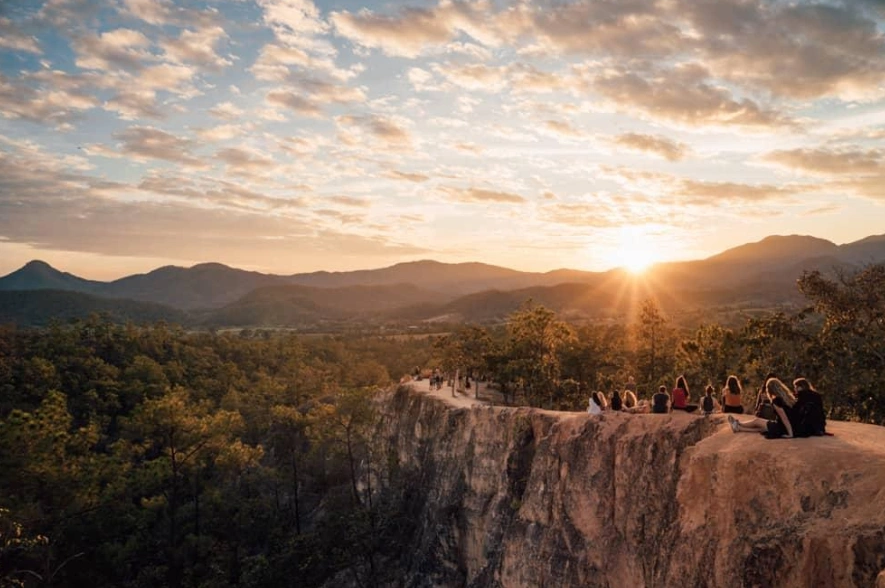
I almost skipped Pai Canyon because Instagram made it look like a yoga influencer convention at sunset. First attempt: arrived at 2 PM, heat bouncing off red clay, wrong sandals, turned back after ten minutes. Second attempt: left town at 4:30, parked where everyone parks, walked the ridge slowly, sat on a narrow ledge while the valley turned gold — and understood why people extend their Pai trips "just two more nights." The canyon is not a hike in the national-park sense. It is a mood place: short, exposed, slightly risky if you rush, unforgettable if you time it right.
Pai Canyon Overview
Pai Canyon (Kong Lan) sits a short ride southwest of Pai town — eroded red sandstone ridges with drops on both sides and views across forested valleys toward the mountains you drove through from Chiang Mai. There is no formal "trail map" feeling; you follow worn paths along knife-edge ridges, sometimes hopping narrow sections where only one person fits at a time.
Most visitors come for sunset. Locals and long-stay travelers also come for late-afternoon light when the heat eases. The site is free or low-cost depending on current local practice; bring small bills. Toilets and drink vendors cluster near the parking area — not at the far viewpoints.
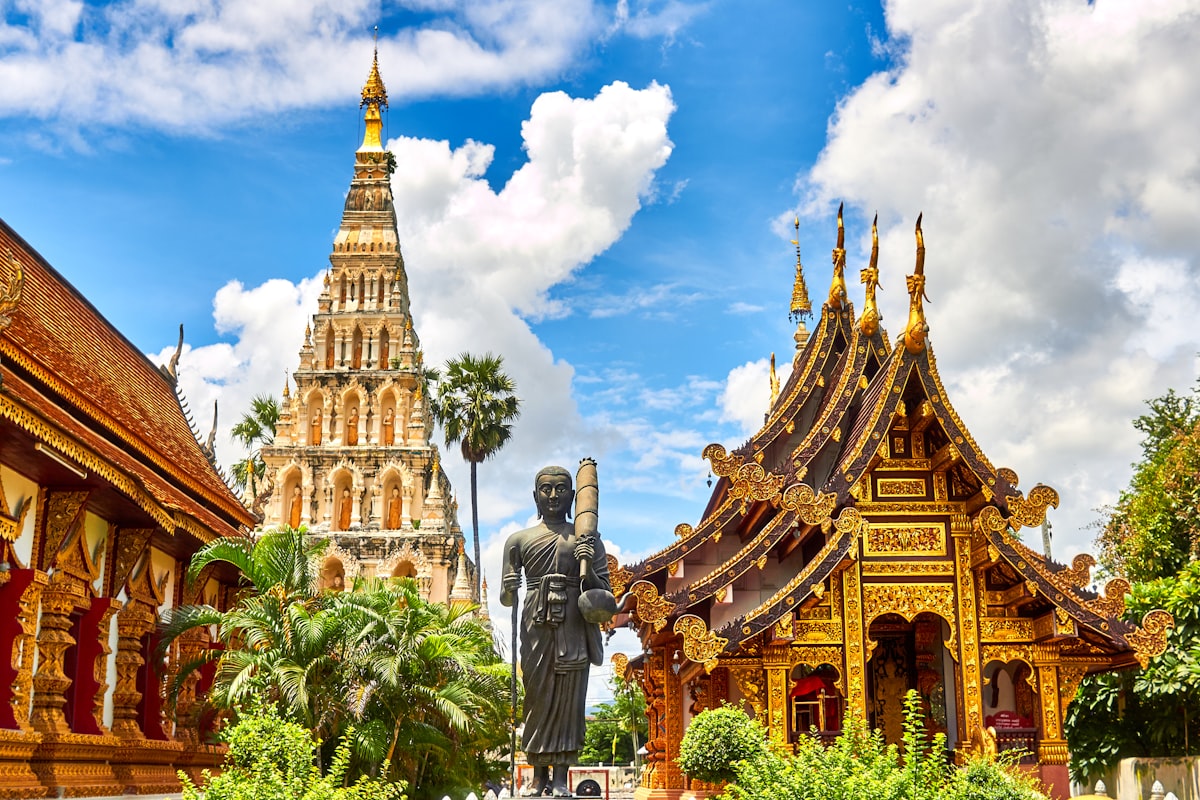
If your northern Thailand trip is temple-heavy from Doi Suthep mornings in Chiang Mai, Pai Canyon is the opposite energy: no dress code beyond shoes, no monks, just wind and height.
Best Time to Visit
Late afternoon is the sweet spot. I aim to start walking 60–90 minutes before sunset, which gives time to explore side ridges, find a sitting spot, and watch colors shift without sprinting back in the dark.
Mornings are cooler and empty — good if you hate crowds and do not care about golden hour photos. Midday is brutal: little shade, hot sand-colored rock underfoot, and the kind of light that flattens every photo.
Rainy season changes the game. Paths get slick; ridges that felt easy yesterday become genuinely dangerous. If it rained heavily in the last hour, postpone. A twisted ankle in Pai is annoying; a fall off an unfenced ridge is worse.
Getting There from Pai Town
Scooter is what most independent travelers use. The ride from central Pai takes 15–25 minutes depending on your guesthouse and how often you stop for photos. The road is scenic and mostly paved; still ride sober, wear a helmet, and do not attempt your first-ever scooter lesson on this trip.
Songthaew or shared pickup works if you do not ride. Ask your guesthouse to arrange — prices vary by season and group size. Confirm return pickup time if you are going for sunset; drivers sometimes wait in the parking area.
Bicycle is possible for fit riders; the climb out of town is real. I have met people who cycled up and regretted timing against sunset descent in the dark.
Parking is informal near the trailhead. Arrive earlier on weekends and Thai holidays — the lot fills, and latecomers walk farther carrying water they should have brought anyway.
The Walk: What to Expect
From the parking area, paths branch quickly. The main ridge loop can be done in 30–45 minutes if you do not stop; plan 90+ minutes if you want photos, sitting time, and exploration of side spurs.
The paths are narrow and sandy. Some sections have drops on both sides without fencing. Move single-file when passing. Do not run. I have seen confident hikers slip on dry sand — grippy shoes matter more than fitness.
There are no railings on the classic photo ridges. That is part of the view; it is also the risk. If heights make you dizzy, stay on wider sections near the start. You still get valley views without the knife-edge choreography.
Scooter Return After Sunset (Real Talk)
The parking lot empties in a twenty-minute burst after the sun drops. Everyone hits the same winding road toward town at once — dust, dim light, tired riders. Leave five minutes before the perfect color if safety beats one more photo. If you stayed for blue hour, ride slower than pride wants.
Guesthouses rent scooters for roughly 150–250 THB per day depending on season — confirm insurance and deposit rules. Fill fuel before canyon day; no station at the ridge.
Weather by Season
Cool dry season (Nov–Feb) — best footing, busiest sunsets, jacket useful after dark. Hot season (Mar–May) — still doable at sunset only; dehydration hits fast. Rainy season (Jun–Oct) — skip ridges when wet; cloud can be beautiful from the parking area without risking slides.
What to Wear and Bring
- Shoes with grip — trail runners or closed sandals with tread; not flip-flops.
- Water — one liter per person minimum for sunset visits.
- Light layer — cools fast after sun drops.
- Phone light — if you stay past sunset, you walk back in dim light.
- Sunscreen — exposed ridges, reflected heat.
Photography Tips
Wide angles show the ridge curves; telephoto compresses layers of valley haze at sunset. The classic shot is a person on a narrow spine with empty space behind — be honest about risk; do not pose on crumbling edges for content.
Golden hour is short. Shoot the valley before the sun touches the horizon, then turn around for warm light on the rock itself. After the disk drops, stay ten more minutes for blue-hour gradients if you have a headlamp walk back.
Pairing With the Rest of Pai
Same-day combos that work:
- Afternoon canyon + night market — sunset here, shower, Walking Street food after dark.
- Canyon + Tha Pai Hot Springs — only if you start hot springs early; do not hot-spring after dark then rush to canyon.
- Morning temple + afternoon canyon — Wat Phra That Mae Yen Big Buddha views in cooler air, canyon later.
Sample Afternoon Timeline (What Actually Worked)
This is the rhythm I repeat on return visits — not rushed, not hanging around in midday heat:
- 3:30 PM — Leave guesthouse, fuel check if on scooter, water bottles filled.
- 3:50 PM — Park near trailhead; paths already have early sunset crowd but ridge still walkable.
- 4:00–4:45 PM — Main ridge loop plus one side spur; scout sitting ledge before golden hour peaks.
- 4:45–5:45 PM — Sit, photos, watch color shift; resist leaving at first orange flash.
- 5:50 PM — Start back toward parking before the mass exodus jams the road.
- 6:15 PM — Back in town, shower, Walking Street food.
Cost Breakdown (Honest Numbers)
Pai Canyon itself is typically free or a small local fee when collected at parking — carry 20–50 THB in small bills and do not argue over informal charges; they are part of the local economy around popular viewpoints.
Budget the day, not just the ridge:
- Scooter rental — roughly 150–250 THB/day from guesthouses, plus 50–80 THB fuel for canyon round trip.
- Songthaew hire — often 300–500 THB round trip depending on season and whether the driver waits through sunset.
- Water/snacks — vendors near parking; 40–80 THB if you forgot supplies in town.
The Chiang Mai–Pai Bus Context
Most canyon visitors arrived via the windy road from Chiang Mai — three to four hours by minivan, sometimes longer if the driver stops for photos and cigarette breaks. Your legs may still feel bus-soft on day one; the canyon is short but sandy footing surprises people who have only walked night markets.
I do not recommend canyon sunset on arrival day if you took the morning bus — fatigue plus unfamiliar scooter plus dusk roads is how guesthouses fill their accident stories. Give yourself one slow town day first: coffee, Wat Phra That Mae Yen morning, canyon day two.
If you are looping north Thailand, Pai Canyon pairs mentally with waterfall days like Bua Tong near Chiang Mai — both reward leaving before heat wins and returning before pride outruns headlights.
Common Mistakes
- Flip-flops — the most common regret I hear at the parking lot on the way out.
- No torch — sunset looks romantic until the path back is black.
- Crowd timing — arriving exactly at sunset means fighting for ridge space; arrive early, claim a spot, wait.
- Scooter inexperience — mountain roads at dusk with tired tourists returning together; ride slow.
- Underestimating dehydration — you are not hiking Everest, but exposed ridges at 35°C still drain you; drink before you feel thirsty.
- Chasing the perfect Instagram pose — I watched someone back toward a crumbling edge for a reel; the view is already enough from seated position.
- Same-day stack after hot springs — soaking then rushing to ridges sounds romantic; slippery feet and relaxed reflexes do not mix on sand paths.
Who Should Skip It
Anyone with serious fear of heights, unstable knees, or toddlers who bolt. Anyone who cannot ride or hire transport confidently after dark. If that is you, Pai still works — coffee, markets, and hot springs without cliff edges.
Travelers who need fenced viewpoints, paved accessibility, or interpretive signage will find Pai Canyon thin. It is atmosphere and exposure, not infrastructure.
Three-Night Pai Pairing (Canyon in Context)
Night 1 — Arrive, walk night market, sleep early.
Night 2 — Big Buddha morning, lazy afternoon, canyon sunset.
Night 3 — Hot springs soak, pack for south toward beaches like Railay or Promthep Cape if your trip continues — different water, same lesson about showing up at the right hour.
Pai Canyon is not the deepest canyon in Thailand or the most dramatic landscape in the north. It is a short, high-sensation walk at the right hour — and for many slow travelers, the moment the valley turns gold is the reason Pai feels worth the windy bus from Chiang Mai.