To stay hydrated while traveling in Southeast Asia, drink before you feel thirsty, use safe drinking water, and adjust your habits around heat, humidity, walking, workdays, and outdoor time. The climate can drain you quietly. You may not feel dramatic thirst, but afternoon headaches, low energy, cramps, poor sleep, and irritability can all show up when hydration is off.
This is not medical advice, and people with heart, kidney, blood pressure, or other health conditions should follow professional guidance. For most healthy travelers, the key is simple: make water easier to access than another coffee.
Why Hydration Matters in Southeast Asia
Heat and humidity turn ordinary days into sweaty days. Walking to a café, carrying groceries, waiting for a ride, or exploring temples can use more fluid than the same tasks at home.
Hydration is part of your work setup, not a side habit. A clear head often begins with a full bottle.
How Heat and Humidity Affect Your Daily Routine
In humid climates, sweat may not evaporate well, so your body works harder to cool itself. A short walk can feel like exercise.
New arrivals often underestimate this because the activity looks normal. If you are coming from a cooler place, give your body time to adapt. Hydration needs may be higher during the first week.
This pairs well with a stable wellness routine in a new city, because hydration is easier when attached to daily anchors.
How Much Water Should You Carry While Traveling?
Needs vary by body, activity, and heat. Carry enough for the next few hours rather than hoping you will find a shop at the right moment.
Start the day with water, especially before coffee. Keep a bottle visible while working. If the bottle stays in your backpack, you will forget it. On long walks or travel days, pack more than you think you need and refill when you can.
Safe Drinking Water Options for Travelers
Tap water safety varies across Southeast Asia and sometimes by building. Many travelers use bottled water, filtered refill stations, hotel filters, or boiled water.
Ask locally, but be careful with vague answers. "Locals drink it" may not mean your body will handle it well immediately. If you refill bottles, check that the refill source is maintained and intended for drinking.
How to Remember to Drink Water During a Workday
Attach water to work blocks. Drink when you sit down, when you finish a call, and when you stand up for a break.
Keep the bottle beside the laptop, not in another room. Moderate coffee is not usually a major problem, but replacing water with coffee in humid weather can make dehydration symptoms more likely.
Staying Hydrated During Long Walks and Outdoor Activities
Start hydrated before you leave. Carry water where allowed. Add electrolytes after heavy sweating, long walks, workouts, or scooter days in heat.
After arrival from a flight, bus, or ferry, rehydrate before judging your energy, mood, or first impression of the city. Bathroom access can make people drink less on travel days, so start earlier rather than catching up later.
What to Drink Besides Plain Water
Water alone may not be enough after heavy sweating. Electrolytes replace salts lost through sweat and can help when you feel washed out despite drinking.
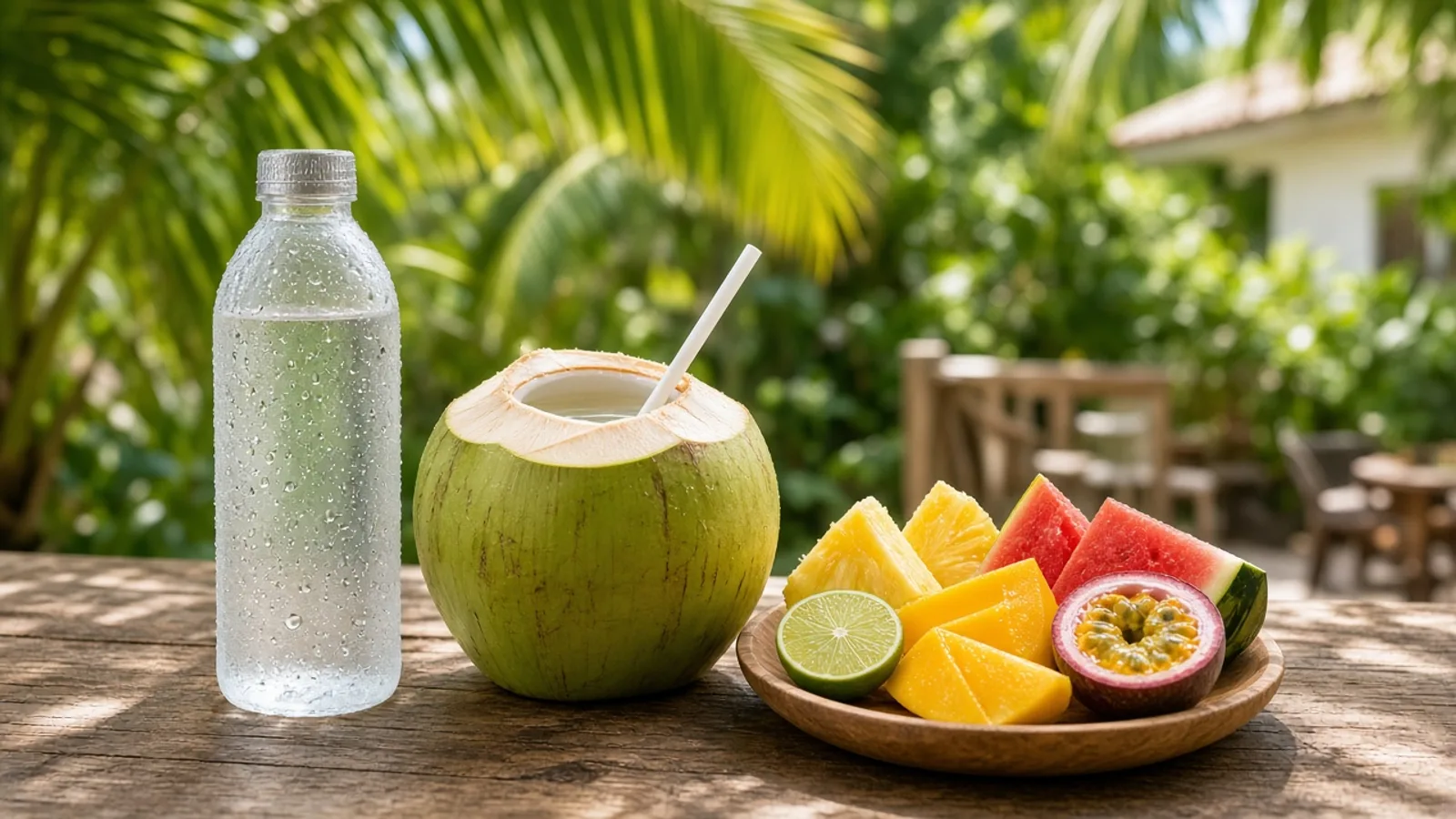
Use oral rehydration salts, electrolyte tablets, coconut water, salty food, or sports drinks when appropriate. Watch sugar levels if you use sweet drinks often. Broths, fruit, soups, and fresh juices can also contribute fluid.
Use a simple rule with alcohol: water between drinks, and extra fluids after a late night.
Signs That You May Need More Fluids
Mild dehydration can feel like tiredness, headache, dry mouth, dark urine, dizziness, or poor focus. Heat illness is more serious and can involve confusion, fainting, rapid heartbeat, or inability to cool down.
Seek medical help if symptoms are severe, persistent, or unusual.
For a broader health setup, read our guide to staying healthy in a tropical climate.
Simple Hydration Habits for Long-Term Travelers
Start with water in the morning. Keep a bottle beside your laptop. Add electrolytes after heavy sweat. Use safe water sources. Reduce alcohol on very hot days. Rehydrate after travel.
That routine is not complicated, which is why it works. In Southeast Asia, hydration belongs in the same category as WiFi and sleep: basic infrastructure for long-term travel.