When I first looked into Malaysia's digital nomad visa, I honestly expected it to be one of those programs that sounds better on paper than in real life.
Most countries say they "welcome remote workers," but when you dig into the details, it usually turns into tourist visa workarounds or unclear rules.
Malaysia felt a bit different.
The country, part of Malaysia, actually built a structured program called the DE Rantau Pass, designed specifically for remote workers who want to stay longer while working online.
But the interesting part isn't the official description.
It's what happens when you actually try to apply.
What the Malaysia Digital Nomad Visa actually is
The Malaysia Digital Nomad Visa, officially known as the DE Rantau Pass, is meant for people who earn income from outside Malaysia.

- freelancers
- remote employees
- online business owners
- consultants
- digital professionals
On paper, it looks clean and well-organized. And to be fair, the structure is clearer than many similar programs in the region.
But the application experience adds more nuance.
Malaysia Digital Nomad Visa requirements feel straightforward—but matter more than expected
Most applicants notice the same thing early on: the requirements are not complicated, but they are specific.
You're usually expected to show:
- proof of remote income
- employment contract or freelance work evidence
- minimum annual income (commonly around USD $24,000)
- valid passport and insurance
But in practice, the way you present your documents often matters more than the documents themselves.
Freelancers, especially, tend to spend more time organizing income proof because payments often come from multiple sources.
How the application process actually feels
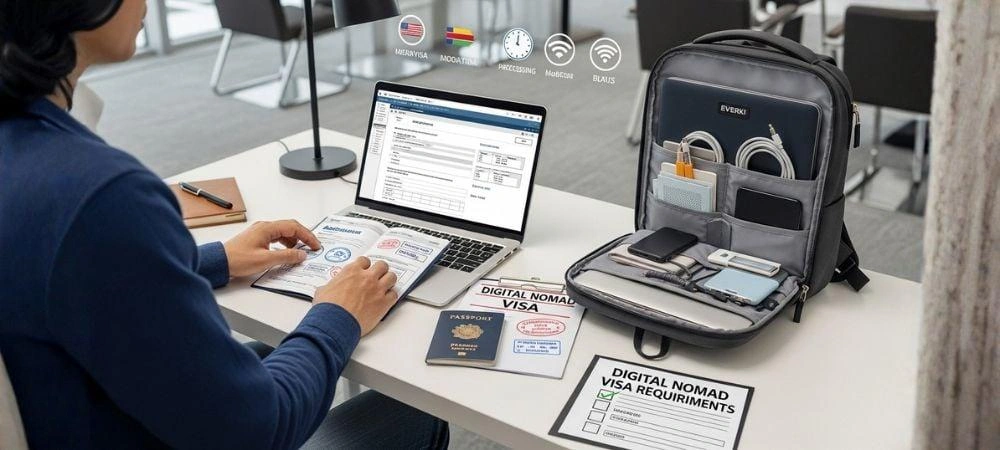
1. Create an account on the DE Rantau system
2. Submit personal details and documents
3. Upload income and work proof
4. Provide insurance details
5. Wait for review
That's the clean version.
In reality, applicants often describe it as more "stop-and-go."
Some people get updates quickly. Others wait weeks or even months between status changes.
Sometimes additional documents are requested after initial submission, even if everything seemed complete at the start.
It doesn't feel chaotic—but it does feel slower than expected.
What real applicants usually say
If you read through experiences from people who have actually applied, a pattern appears.
Most of them don't say the process is difficult.
They say it requires patience.
Some applicants mention long waiting periods without much communication. Others say their approval came smoothly but took longer than the estimated timeline.
So the overall experience is less about complexity and more about uncertainty in timing.
That's something official guides rarely emphasize.
Why do people still choose the Malaysia Digital Nomad Visa
Even with the waiting time, people still go through the process.
The reason is simple: stability.
Once approved, you're not thinking about visa runs or short stay limits anymore. You can actually build a routine.
That usually changes how people experience Malaysia.
Instead of treating it as a stopover, they start treating it like a base:
- renting apartments instead of hotels
- joining coworking spaces
- staying in one city for months
- Building a daily work rhythm
Living in Malaysia after approval
Most digital nomads end up surprised by how livable Malaysia feels.
It's not just about affordability. It's also about convenience:
- modern infrastructure
- reliable internet
- international food options
- English widely used in daily life
That's often when the visa starts making sense in hindsight.
What people underestimate during the process
The application itself is not the hardest part.
The mindset shift is.
Many people approach it like a formality: submit documents, wait, move on.
But in reality, it works better when you treat it as part of a longer plan:
- stable income documentation
- realistic timeline expectations
- willingness to wait without certainty
Is the Malaysia Digital Nomad Visa worth it?
For short-term travelers, probably not necessary.
But for remote workers who:
- stay in one place for months
- want legal clarity
- prefer stability over constant movement
It doesn't remove all complexity, but it reduces the need to constantly think about immigration rules.
And for many people working online, that alone is valuable.
The Malaysia Digital Nomad Visa isn't perfect, and the application process doesn't always match the clean version described on official pages.
But it does something important:
It turns remote work in Malaysia from an informal lifestyle into something more structured and sustainable.
And for a growing number of digital nomads, that structure is exactly what makes it worth considering in 2026.
At the same time, some travelers prefer even simpler long-stay setups while moving around Southeast Asia.
In that case, options like the Cambodia Business Visa are often explored as a more flexible alternative for staying longer without as much formal structure.