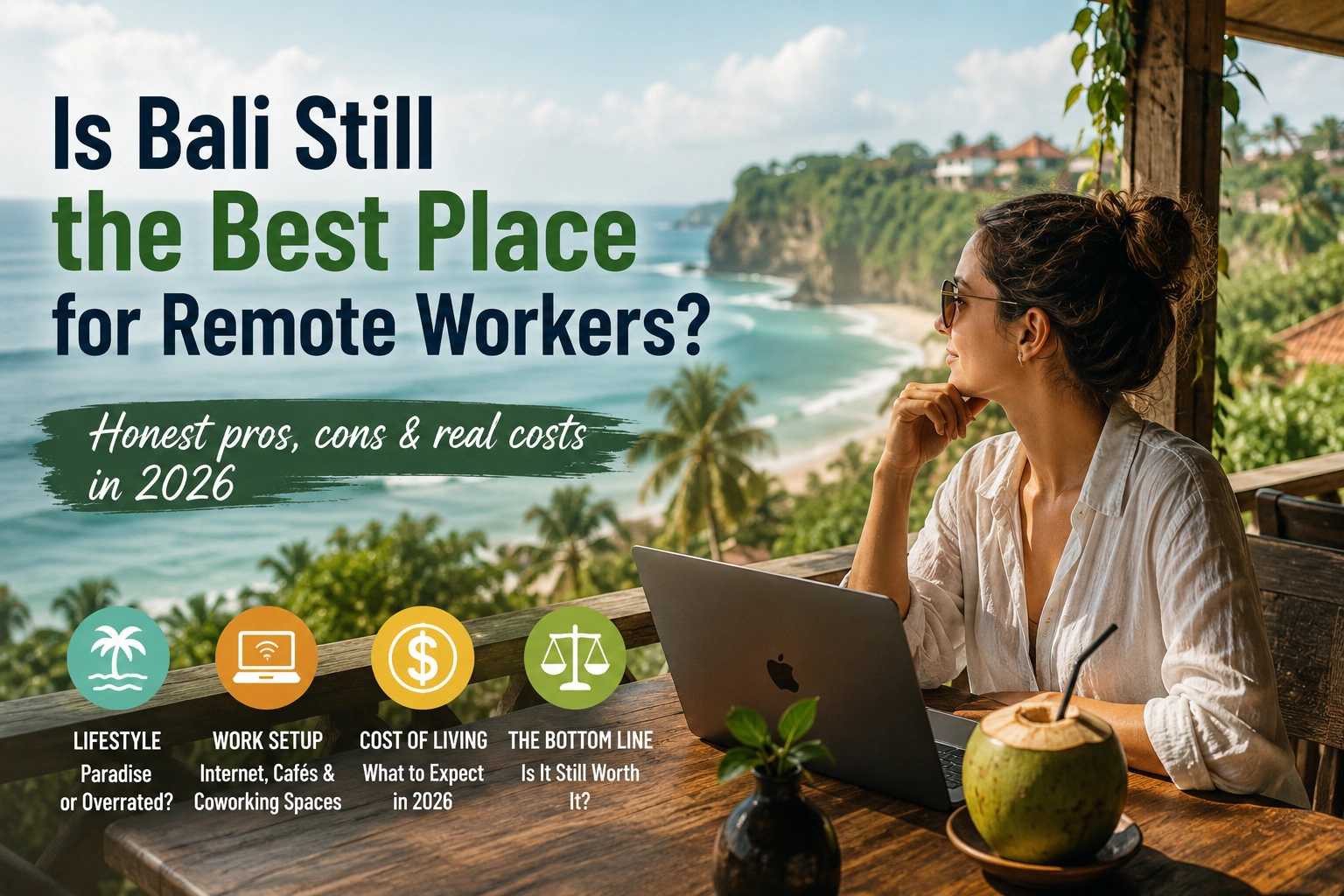
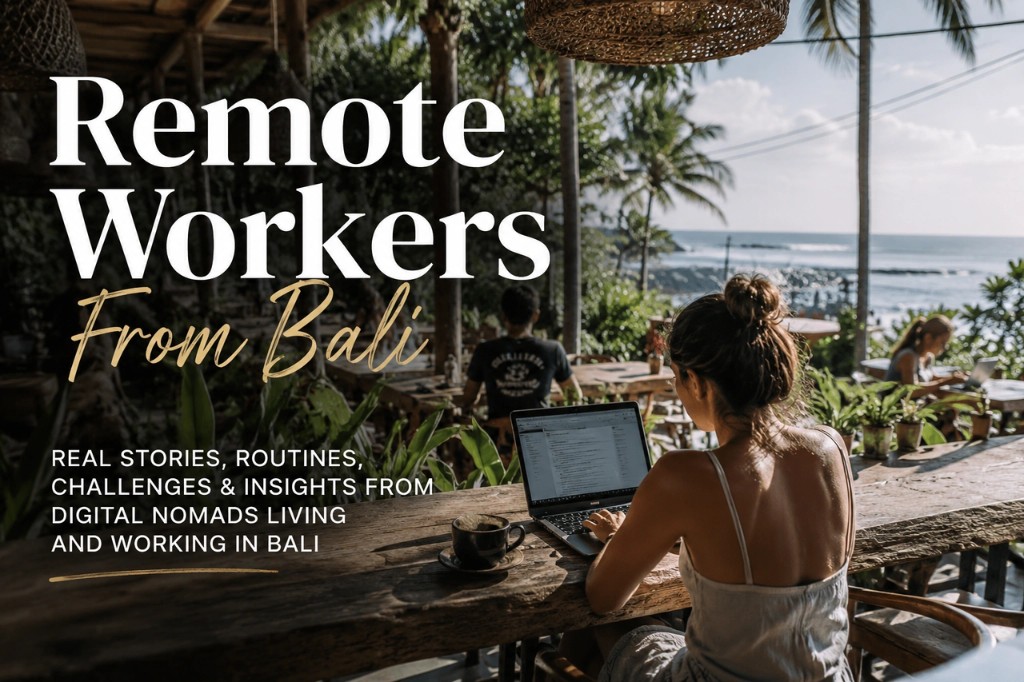
Why Remote Workers Keep Coming to Bali
I didn't come to Bali with any expectations.
Like most remote workers, I just wanted a place where I could work online, stay near the beach, and not feel stuck in a routine.
But once I arrived in Bali, I started noticing something interesting:
People here don't just travel—they build entire work lifestyles around the island.
Some stay for weeks. Some stay for years. And most of them didn't plan it that way.
This article is based on real observations and conversations with remote workers living across Bali, especially in Canggu and Ubud.
What Remote Workers Expect vs Reality in Bali
Most people arrive expecting:
- perfect work-life balance
- productive mornings + beach afternoons
- easy networking with other digital nomads
- constant inspiration
Yes, Bali is beautiful and functional for remote work. But it is also highly stimulating, socially active, and sometimes distracting.
Remote workers here quickly realize:
Bali doesn't automatically make you productive—it gives you too many options.
The First Phase — "Everything Feels Productive"
Almost every remote worker goes through the same first stage.
The first 3–7 days feel incredible.
You wake up early, go to cafés, feel inspired, and suddenly your work feels lighter.
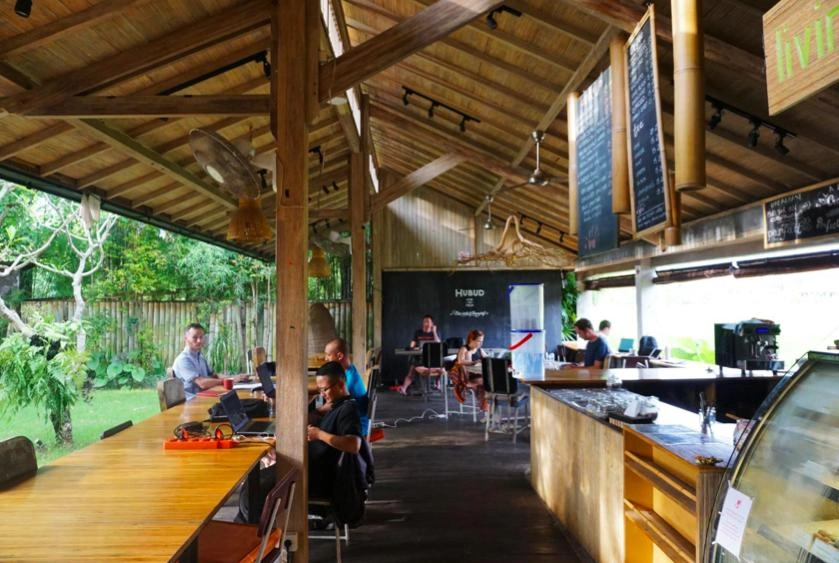
Cafés in Canggu are full of laptop users, coffee culture is strong, and everything feels like a "creative workspace."
At this stage, productivity is high because everything is new.
But novelty fades quickly.
The Second Phase — Social Overload
After the initial excitement, something changes.
Bali is extremely social.
Remote workers start meeting people constantly:
- café conversations
- coworking introductions
- beach meetups
- networking dinners
- random "quick coffee?" invitations
But slowly, it becomes fragmentation.
Many remote workers report the same pattern:
They feel busy all day—but struggle to complete deep work.
Not because they are lazy, but because the environment encourages constant switching.
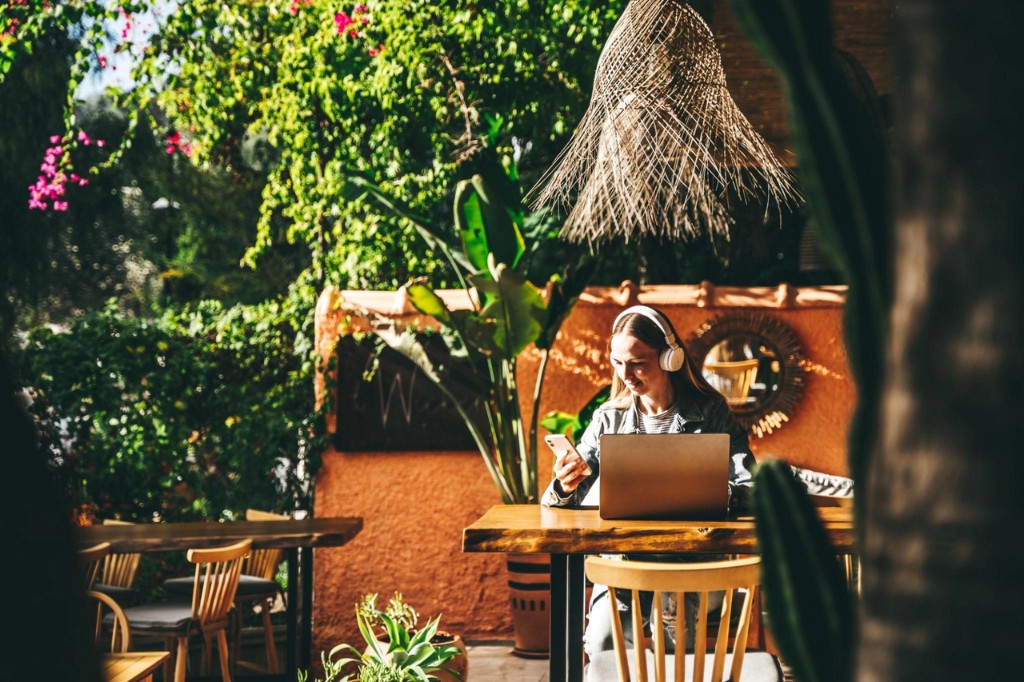
Café Culture in Bali (Work-Friendly but Distracting)
Cafés are one of the biggest reasons remote workers choose Bali.
Most cafés offer:
- stable WiFi
- laptop-friendly seating
- international communities
- aesthetic interiors
Cafés in Bali are not silent work zones—they are social spaces.
You are always one conversation away from distraction.
This is why many experienced remote workers eventually stop café-hopping randomly and start choosing specific cafés for specific types of work.
How Experienced Remote Workers Actually Structure Their Day
After talking to long-term remote workers in Bali, a pattern becomes clear.
They don't treat the island as one workspace.
Instead, they divide it:
Canggu → Social & Light Work
Best for meetings, networking, and creative energy.
Ubud → Deep Work & Focus
Better for writing, planning, and structured work sessions.
Quiet Areas → Reset Mode
Used for recovery, reflection, or avoiding overstimulation.
This mental mapping helps them stay productive without burning out.
The Real Productivity Problem in Bali
The biggest challenge in Bali is not WiFi, cost, or infrastructure.
It is attention fragmentation.
Remote workers often experience:
- too many social invitations
- too many café options
- too many travel micro-decisions
- too many "opportunities"
Over time, it affects deep work quality more than people expect.
The Types of Remote Workers in Bali
Based on observation, there are three common patterns:
1. Short-Term Intensifiers
- Stay 2–4 weeks
- High productivity
- Low social integration
- Use Bali as a sprint environment
2. Social Builders
- Stay longer
- Focus on networking and community
- Work becomes flexible around lifestyle
3. System Builders (Most Sustainable)
- Create strict routines
- Limit social noise
- Choose fixed work environments
- Maintain long-term productivity
What Actually Works for Remote Work in Bali
Experienced remote workers eventually adopt simple rules:
- limit café switching
- avoid over-social scheduling
- assign spaces for specific work types
- protect deep work hours
- reduce "random yes culture"
Beach Life vs Work Reality
Social media often shows laptops on the beach.
In reality, most remote workers don't use the beach for real work.
Wind, brightness, heat, and distractions make it impractical.
Instead:
- beach = recovery space
- cafés = shallow work
- coworking = structured work
- quiet areas = deep work
Final Insight — Bali Amplifies Your Work Habits
After spending time with different remote workers in Bali, one thing becomes clear:
Bali doesn't change how you work.
It amplifies it.
If you already have structure, Bali makes your lifestyle feel powerful and fluid.
If you don't, it becomes easy to drift between distractions.
That is why two people can live in the same place—but have completely different outcomes.