
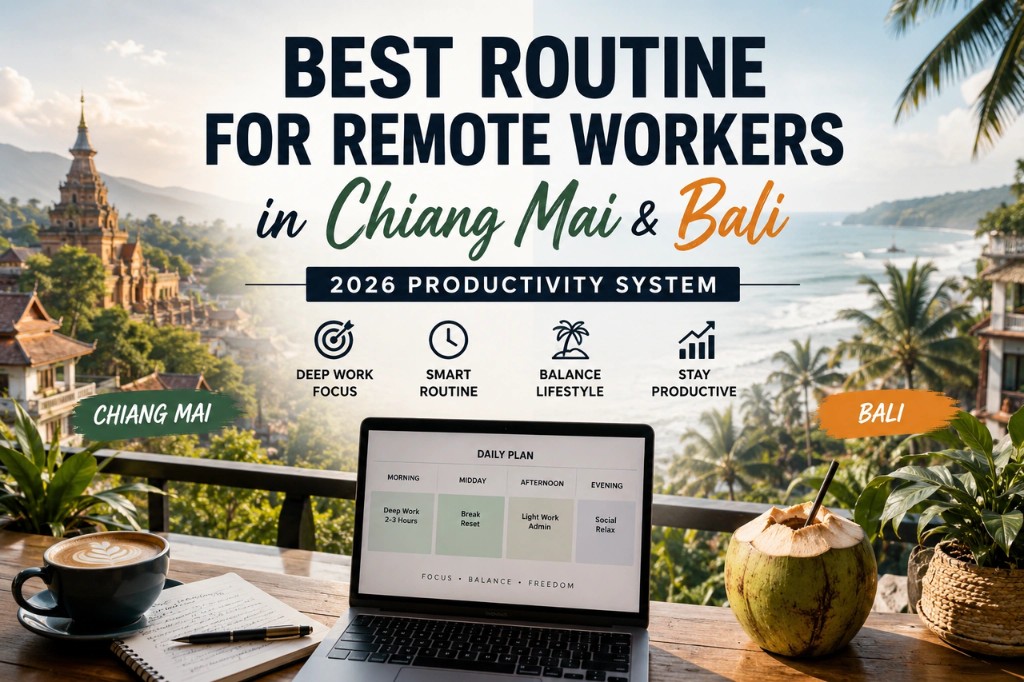
Chiang Mai and Bali are two of the most popular hubs for digital nomads, but success in these places is not just about location—it's about having a repeatable routine that keeps your focus stable while living in a constantly changing environment.
This guide breaks down a practical daily system remote workers use to stay productive, avoid burnout, and still enjoy the lifestyle.
Why Routine Matters for Digital Nomads
When you travel, your environment constantly changes—cafés, accommodation, time zones, and even social circles.
Without a structured routine, common problems appear:
- Loss of focus and inconsistent output
- Overworking or underworking randomly
- Decision fatigue (where to work, when to start)
- Social life interfering with deep work
Morning Routine (Focus Foundation Block)
The morning is the most important deep work window.

Recommended structure:
- Wake up at consistent time (7:00–8:30)
- No phone for first 30 minutes
- Light movement or walk
- First coffee + planning session
- 2–3 hours of deep work (no distractions)
Chiang Mai mornings are quiet, while Bali mornings feel slower and more reflective—both are perfect for high-focus tasks.
Work Block 1: Deep Work Session (Core Output Time)
This is where most meaningful work should happen.
Ideal setup:
- 90–120 minute focus blocks
- Noise-cancelling headphones
- Single-task environment (no multitasking tabs)
- One defined outcome per session
- Chiang Mai: Nimman cafés, coworking spaces
- Bali: Canggu coworking hubs, villa workspace setups
Midday Reset (Avoid Burnout Zone)

After deep work, mental energy naturally drops.
Best reset activities:
- Walk outside (10–20 minutes)
- Eat local lunch (light but energizing)
- No screen scrolling during break
- Short social interaction or café change
Work Block 2: Light Work / Admin Tasks
Afternoon work should NOT require deep focus.
Best tasks:
- Emails and communication
- Editing or reviewing work
- Planning next day
- Light creative tasks
If morning is "creation mode," afternoon is "maintenance mode."
Evening Routine (Recovery + Social Balance)
Evenings define long-term sustainability.

Recommended structure:
- Stop working 6–7pm
- Social time or networking
- Light movement (walk, gym, swim)
- Journaling or reflection
- Early wind-down (avoid heavy screen use)
Weekly Structure (The Hidden Productivity Layer)
Instead of repeating the same day, most remote workers rotate focus:
- Mon–Tue: Heavy deep work
- Wed: Creative + meetings
- Thu–Fri: Execution + admin
- Weekend: Exploration + recovery
📍 Chiang Mai vs Bali Routine Differences
- More structured work rhythm
- Café-based productivity
- Strong morning focus culture
- Lower cost, stable routine
- More flexible, lifestyle-integrated work
- Villa + coworking hybrid setup
- More social interruptions
- Better for creative workflows
Final Takeaway
A successful remote work routine is not about discipline alone—it's about environment design + repeatable structure.
If you can consistently control:
- Morning deep work
- Midday reset
- Afternoon light tasks
- Evening recovery