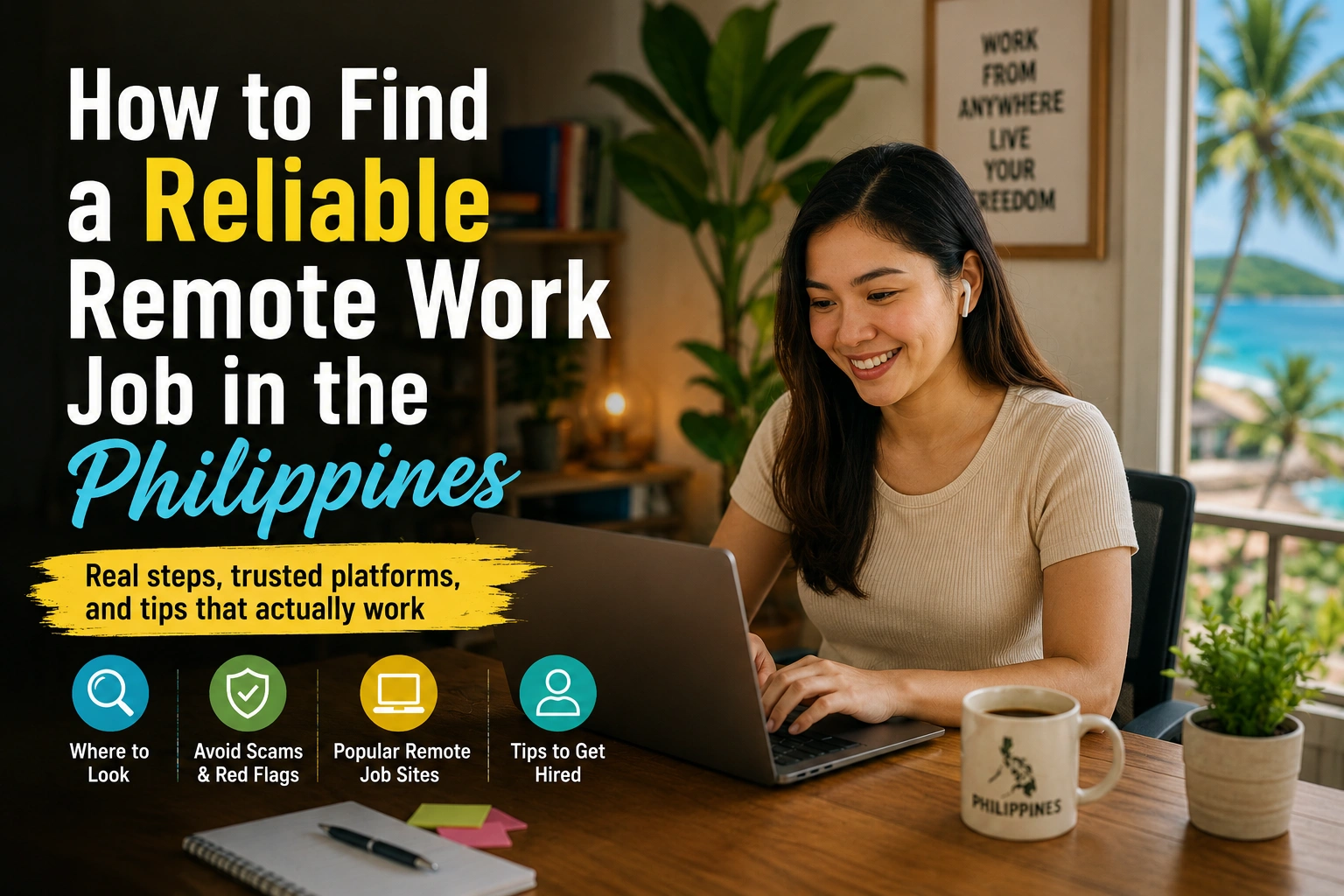
Yes, there are reliable remote work opportunities in the Philippines, but finding them usually takes more than searching for "work from home jobs" on a single website. The safest approach is to focus on established companies, trusted job platforms, and employers with a clear hiring process. If a company asks for money upfront, promises unrealistic income, or avoids video interviews, it's usually best to move on.
Why So Many Filipinos Work Remotely
Remote work has become part of everyday life for many professionals in the Philippines. Strong English communication skills, experience working with international clients, and a growing online workforce have made Filipino professionals highly valued by employers in the US, Australia, Europe, and other countries.
For some people, the biggest advantage is flexibility. For others, it's the opportunity to earn a better income without leaving home. Whatever the reason, demand for remote talent has remained strong.
The First Thing I Check Before Applying
Before sending a resume, I usually ask myself a few simple questions:
- Does the company have a professional website?
- Are there real employees listed on LinkedIn?
- Is the job description clear and detailed?
- Does the employer explain the salary and working hours?
- Can I find reviews or mentions of the company online?
Quick Tip: A reliable remote employer will usually have a professional website, public employee profiles, a clear hiring process, written job details, and will never ask applicants to pay upfront.
Where Reliable Remote Jobs Usually Appear
Instead of relying on one job board, it's worth checking several different sources every week.
| Source | Why It's Worth Checking |
|---|---|
| Great for job alerts, recruiters, and remote filters | |
| Company Career Pages | Many companies post openings here first |
| Remote Job Boards | Employers already hiring distributed teams |
| Slack & Discord Communities | Good for referrals and private job openings |
| Professional Referrals | Often lead to trusted opportunities with fewer applicants |
A Simple Scam Filter
Whenever I come across a new opportunity, I ask myself three questions.
| Question | If the Answer Is "No" |
|---|---|
| Can I verify the company online? | Be cautious. |
| Is there a clear interview process? | Be cautious. |
| Am I being asked to pay money? | Stop immediately. |
Skills That Tend to Get Interviews Faster
Technical skills matter, but employers also want people who communicate well, manage their time, and can work independently.
Some of the most common remote roles include:
- Customer Support
- Virtual Assistant
- Digital Marketing
- Graphic Design
- Software Development
- Bookkeeping
- Content Writing
- Video Editing
What Usually Helps More Than Sending 100 Applications
Many applicants send the same resume to every company and hope for the best. A better approach is to spend more time on fewer applications.
Try this instead:
- Apply only for jobs that genuinely match your experience.
- Adjust your resume for each position.
- Keep your LinkedIn profile updated.
- Follow up politely when appropriate.
- Continue learning while you're applying.
A Few Final Thoughts
Finding a reliable remote job in the Philippines isn't about discovering one secret website. It's about building a professional profile that employers can trust and applying through the right channels.
If I were starting today, I'd focus on LinkedIn, company career pages, and professional communities before anything else. Those three sources consistently offer better opportunities than scrolling through hundreds of generic "work from home" advertisements.
And if something feels suspicious, trust your instincts. There will always be another opportunity.