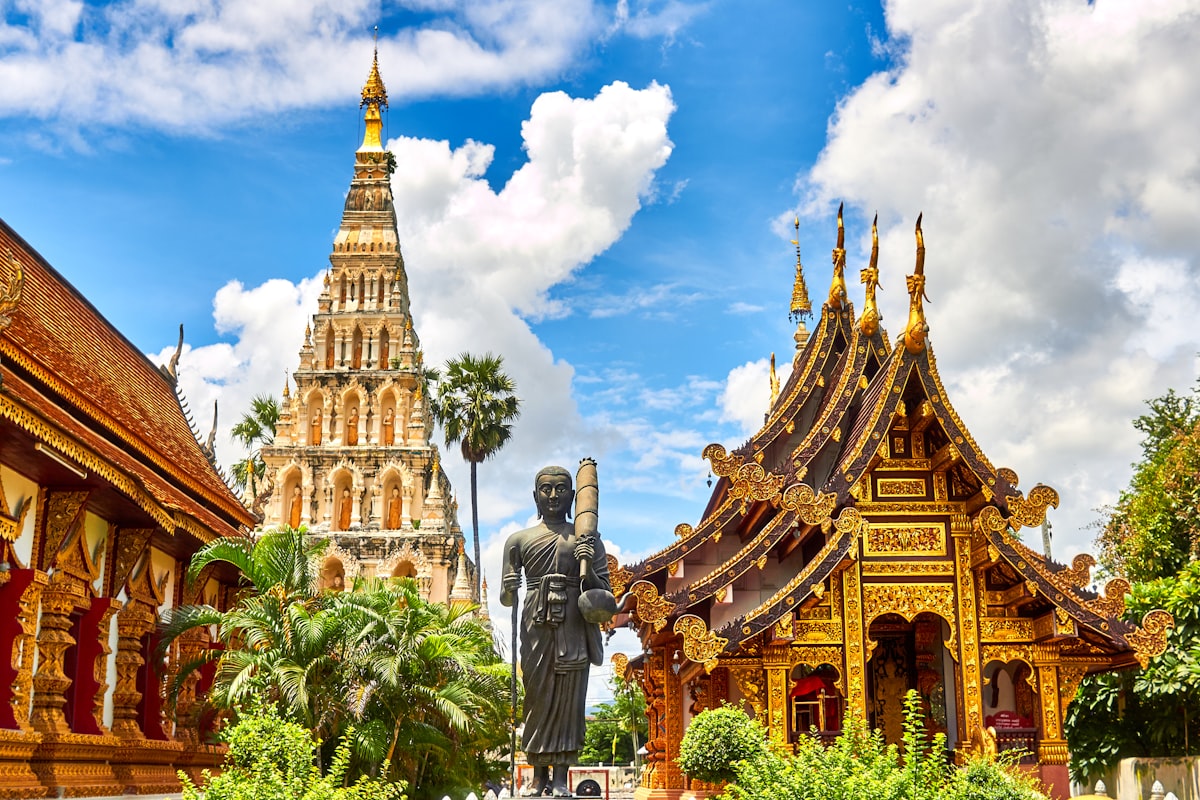
I climbed the steps to Wat Phra Yai on a December morning when the northeast coast was still soft — not yet the midday furnace. The Big Buddha sat above the bay like a calm referee over tourist traffic below: tour vans idling, scooters weaving, a dog asleep on the bottom step like it owned the place. Groups came and left in twelve-minute cycles; I stayed long enough to watch one family teach a kid to wai properly, and that was more memorable than another wide-angle photo. An older woman tied gold leaf with focus that made my rushed itinerary feel silly. Samui sells beaches hard in every brochure; this temple reminds you the island has a spiritual spine that predates beach clubs. You do not need to be Buddhist to benefit from that pause — you only need to stop treating the statue as a drive-by thumbnail.
Big Buddha Overview
Wat Phra Yai — the Big Buddha Temple — is one of Koh Samui's most visible landmarks: a twelve-meter golden statue on a small island-linked hill near Bophut and the airport approach. It is active, not a museum prop. Monks, incense, donations, and dress codes apply. The site also offers sea views toward Fisherman's Village direction and passing boats that make scale obvious.
First-timers often treat it as a photo stop only. Slow travelers add context: modest clothing, morning timing, and pairing with a northeast coast day instead of racing from Lamai traffic for ten minutes of selfies.
Dress Code and Etiquette
Shoulders and knees covered — same Thailand temple basics. Sarongs are sometimes available for rent but bringing your own light pants or scarf is cooler and faster.
- Remove shoes where signs indicate
- Lower voice near prayer areas
- Do not turn your back to the Buddha for casual selfies — step to the side respectfully
- Women can visit; menstruation folklore sometimes circulates — follow posted rules if any
Best Time to Visit
Early morning (7:30–9:30 AM) — fewer tour vans, softer light, easier parking.
Late afternoon — warmer but golden tone on the statue; check closing times — many temple zones stop admitting visitors before sunset.
Avoid midday if you can — exposed stairs and plaza heat add up. Rainy season brings brief downpours; umbrellas help; marble gets slick.
Getting There
Located on route 4171 northeast — scooter, taxi, or Grab from Bophut is straightforward. From Lamai allow twenty to forty minutes depending on traffic. Airport arrivals sometimes stop here first — luggage in trunk, quick visit works if you are not exhausted.
Parking is usually ample early; tour buses fill gaps by 10 AM. Motorbike helmet off at shrine zone — secure helmet on bike, not on statue rails.
What to Do On Site
Walk the stairs slowly — count as meditation if you want. Main platform for Buddha respect and photos from approved angles. Smaller shrines around the complex deserve two minutes each — not a full hour, but not zero.
Optional stalls sell drinks and souvenirs — prices are tourist-tier; water before climbing is smarter.
Pair with:
- Fisherman's Village evening if you are on a Bophut rhythm
- Daily Life in Koh Samui for how temple mornings fit island blocks
Photography Tips
Wide shots from lower stairs include sea context. Mid shots on platform — respect active prayer, do not block paths. Sunset light can work from distance; closing rules may limit late access — verify day-of.
Who Should Skip or Shorten
If temples are not your travel language, thirty respectful minutes still work — you do not need a lecture. If you are temple-saturated from Chiang Mai weeks, Samui's Big Buddha is one anchor, not a marathon.
Mistakes
Shorts rejected at gate — time lost renting wrap. Visiting at noon with kids — meltdown predictable. Treating monks like photo props — don't.
Sample Northeast Morning Itinerary
7:30 — Big Buddha, quiet stairs, twenty minutes platform time.
8:30 — Coffee toward Bophut or Maenam — not Chaweng yet.
10:00 — Pool or massage if yesterday was travel heavy.
Evening — Fisherman's Village weekday pier if not Friday.
This block avoids ring-road stress — you are not crossing the island three times before lunch.
Families and Mobility
Stairs are real — strollers stop at base; baby carriers work better. Elderly guests may view from lower terrace without full climb — still meaningful. Kids learn wai and shoe removal — good cultural minute if framed respectfully.
History in One Minute
The statue was completed in the early 1970s and became a symbol of Samui visible from boats and planes. You do not need a lecture — knowing it is living temple, not theme park decoration, changes how you move through the space.
Compared to Mainland Temple Days
Bangkok Grand Palace is half-day epic. Big Buddha is hour-scale — pair with island life, not replace it. Doi Suthep is mountain cool; Big Buddha is coastal humid — dress accordingly.
Cost Notes
Free entry; donations welcome. Parking often free or low fee. Grab surge minimal early; higher if you leave exactly when tour buses depart. Donation 20–100 baht if moved; candles and incense optional purchases.
Rain and Revisit Logic
Brief rain — wait under cover near stalls; marble dries slower than you think. Second visit at different light — morning gold vs afternoon haze — teaches photography without new tickets.
Closing Thought
Temple mornings age well on Samui — you remember the wai lesson longer than the panorama. Let the site be small and finished, then go eat something local without photographing it. If you are flying out tonight, still go — airport stress shrinks when you have stood still above the bay for ten honest minutes. If you live in Bophut, make Big Buddha your "guest arrives" ritual — free orientation better than any slide deck.
Big Buddha is Samui's easy cultural win — modest dress, morning timing, respectful pace. Do it once with attention; drive past daily with a nod if you live on the island — that is slow travel maturity.