For years, I assumed a bigger backpack would make travel easier.
More space meant more options. More clothing, more gear, more "just in case" items.
But after enough flights, train rides, and city-to-city moves, I noticed a pattern: the larger my backpack was, the more unnecessary things I carried.
Eventually, I downsized to a 28L backpack.
What surprised me wasn't how much I had to leave behind. It was how little I actually missed.
The Moment I Realized My Backpack Was Too Big
It wasn't a dramatic moment.
I wasn't climbing a mountain or running through an airport.
I was unpacking in yet another accommodation and noticed that half the items in my bag hadn't been touched in weeks.
Some had been there for months.
At that point, my backpack had become a storage unit rather than a travel tool.
That's when I started questioning whether I needed all that space.
What Changed When I Switched to 28L
The first thing that changed wasn't weight.
It was decision-making.
A smaller backpack forces you to be selective. There isn't room for five backup plans or gear you "might" use one day.
Every item has to justify its place.
That sounds restrictive, but it actually made travel feel simpler.
Instead of managing belongings, I could focus on where I was going.
My Packing Rules Became Much Simpler
After moving to a 28L backpack, I started following a few simple rules:
If I don't use it weekly, it probably stays home.
This eliminated a surprising amount of clutter.
One item should do multiple jobs.
For example, a lightweight jacket should work for flights, cool evenings, and occasional rain.
Replace duplicates whenever possible.
I stopped carrying multiple versions of the same thing.
Small decisions like these created a lot of extra space.
What Fits Inside a 28L Backpack?
One of the biggest misconceptions about smaller backpacks is that they can't carry enough.
My typical setup includes:
- Laptop
- Portable SSD
- Kindle
- Noise-cancelling headphones
- Chargers and cables
- Travel documents
- Clothing
- Toiletries
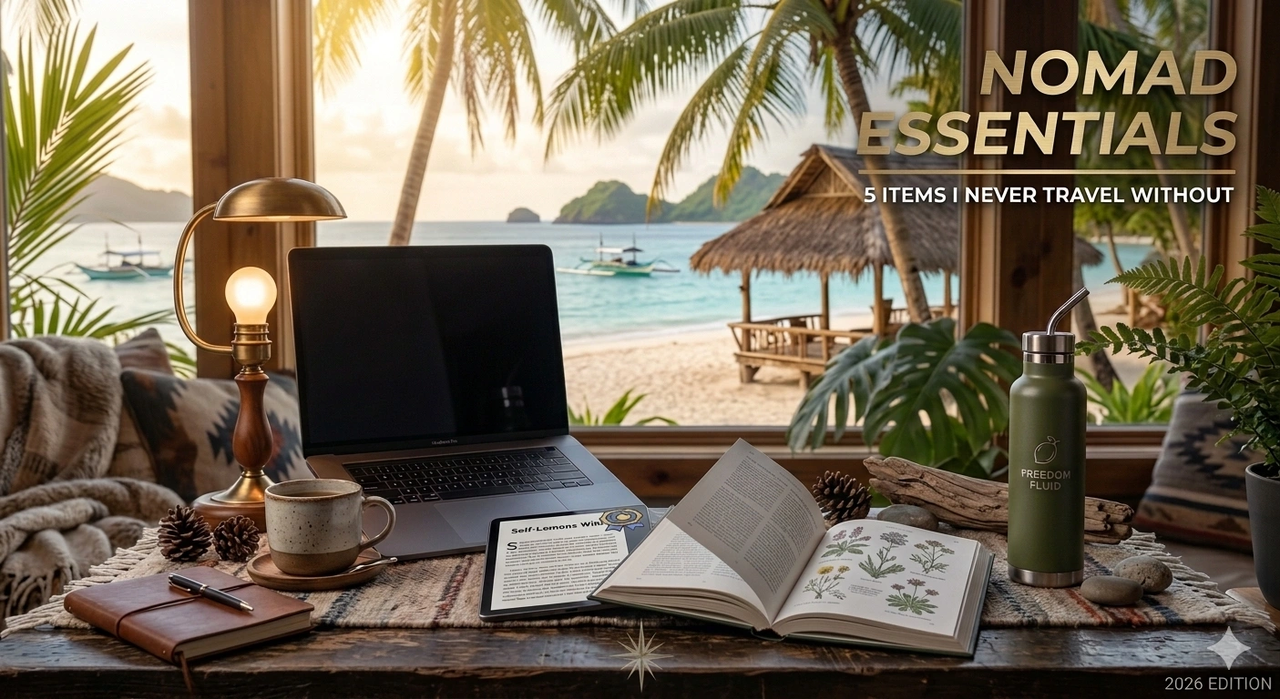
👉 5 Travel Essentials I Never Travel Without as a Digital Nomad
The goal isn't to fit everything.
The goal is to fit everything important.
Airports Became Easier
This was an unexpected benefit.
A smaller backpack means:
- Faster movement through terminals
- Less waiting at baggage claim
- Fewer concerns about weight limits
- Easier transitions between flights and accommodation
I Became More Comfortable Buying Things Locally
Before switching to a smaller backpack, I packed for every possible scenario.
Now I take a different approach.
If I genuinely need something, I'll buy it when I arrive.
Almost every destination has:
- Clothing stores
- Pharmacies
- Electronics shops
- Convenience stores
The Biggest Surprise: I Felt More Flexible
I expected a smaller backpack to feel limiting.
Instead, it felt freeing.
Changing cities became easier.
Walking became easier.
Short trips became easier.
Even finding space in crowded cafés, buses, and trains became easier.
The less I carried, the less I had to think about my belongings.
Why I Don't Miss a Bigger Backpack
Every now and then, I see travel setups with massive backpacks and remember why I downsized.
A larger bag offers more capacity, but it also creates temptation.
If space exists, it's easy to fill it.
And once it's filled, you're the one carrying it.
The 28L backpack gave me a useful constraint. It forced me to focus on what I actually use rather than what I might need someday.
Would I Recommend a 28L Backpack?
If your travel style involves moving frequently, working remotely, or simply wanting a lighter setup, I think 28L is worth considering.
It's not the right size for everyone. Some travelers need camera gear, cold-weather clothing, or specialized equipment.
But for many long-term travelers, it's a practical middle ground.
Large enough for essentials.
Small enough to stay mobile.
And after switching, that's the balance I've found hardest to give up.