Son Tra Peninsula hangs over Da Nang like a green thumb pointing at the sea. Locals call the area Monkey Mountain because of the primates, not because the hill looks like a cartoon monkey — though from certain hotel windows the outline kind of works. I rented a scooter one clear March morning, smelled jackfruit and exhaust at the base, then ten minutes later smelled jungle heat and salt. The city noise dropped. That contrast is the whole reason to come.
What Is Son Tra Peninsula?
Son Tra is the forested headland north of My Khe Beach — a nature reserve with military roads, tourist viewpoints, the giant Lady Buddha statue, and pockets of wild coastline you cannot reach from the city grid. It is not a national park with ranger lectures. It is a managed peninsula where monkeys, tourists, and telecom towers share canopy space.
One road system loops and branches; you are never far from Da Nang below, which makes it feel like an escape without a full expedition.
The reserve status means trees stay thick even as the city grows below. You hear cicadas over scooter hum when you pause. That sound alone separates a morning here from another beach chair afternoon.
Why Visit Son Tra Peninsula?
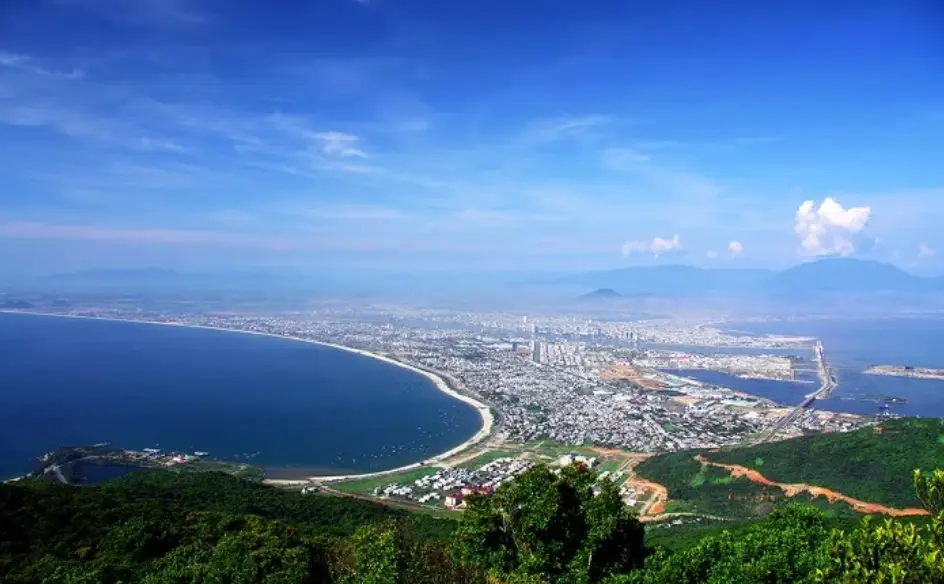
Views: The classic photo — jungle foreground, curved beach, city white blocks, hazy mountains — comes from up here.
Air: Cooler breeze than the sand at noon.
Wildlife: Monkeys if you are patient and quiet — not guaranteed on a five-minute stop.
Perspective: Helps you understand Da Nang’s layout: river mouth, beach axis, port side.
If you only lounge at hotels, skip it. If you like one good drive per trip, this is the one inside city limits.
Is Son Tra Peninsula Worth Visiting?
Yes for motorbike-confident travelers, cautious drivers with patience, and anyone okay with a half-day. Skip if you hate heights, refuse helmets, or expect a theme park.
It is free to drive except parking at major pagoda lots. Value beats a paid viewpoint tower because the road itself is the experience.
Not worth it in heavy rain — visibility collapses and corners get slick.
How to Get to Son Tra Peninsula (Car, Motorbike or Tour)
Motorbike: Most common. Rent in My An; fuel is cheap. Ride counter-clockwise or clockwise depending on traffic advice from your hotel — mornings lighter.
Car/Grab: Possible to Linh Ung Pagoda drop-off; less flexible for random viewpoints.
Tour bus: Big groups stop at Lady Buddha; fine if you dislike two wheels.
Bicycle: Only for athletes — steep grades, heat.
No public train. Walking the full peninsula is not realistic.
Best Viewpoints in Son Tra Peninsula
Ban Co Peak area: Higher lookouts with city panorama — check which gates are open; military signs matter.
Roadside pull-offs: Unmarked gaps where you see beach curve — stop only where safe, not mid-corner.
Linh Ung Pagoda terrace: Lady Buddha plus ocean — classic, crowded midday.
Northern coves: Some beaches require steps; water can be rough — swim only if locals do.
Go at golden hour if haze allows. Midday heat haze washes photos flat.
Linh Ung Pagoda & Lady Buddha Statue
The white Lady Buddha faces the sea from Linh Ung Pagoda — 67 meters tall, visible from My Khe. Up close it feels like a vertical cruise ship made of prayer flags and incense.
Etiquette: Cover legs and shoulders, remove hats inside halls, quiet voices.
Crowds: Tour buses 10 AM–2 PM. Earlier or later is calmer.
Time: Forty minutes for photos and a short hall visit; not a half-day unless you meditate.
Monkey Mountain: What to Expect
Monkeys are wild. I saw red-shanked douc langurs once at a distance — lucky, quiet, early. Feeding them trains aggression; rangers fine people for food handouts.
Do not: Scream, chase, or corner babies.
Do: Back away if one approaches your bag.
Street dogs also appear near stalls — separate issue, same caution.
The nickname “Monkey Mountain” sets expectations high; some visitors see none. Treat wildlife as a bonus, not a ticketed show.
Son Tra Peninsula Travel Tips (Road, Safety, Timing)
Helmet: Non-negotiable. Police checkpoints happen.
Speed: Tourists crash on downhills — engine brake, no hero lean angles.
Fuel: Top up before ascending; no stations on the ridge loop.
Phone map: Download offline — signal drops in folds.
Timing: Start 7–8 AM for light and monkeys; finish before afternoon haze if photographing.
Hydration: One bottle per rider minimum; no convenience stores on the ridge loop. I drank mine before halfway and regretted it.
Repairs: Road maintenance happens — detour signs appear without much warning. Slow down, ask workers which lane is open, do not weave around cones.
Sunset option: Late afternoon light on the city side can be golden if you descend before full dark. Headlights on the way down are essential — turtles on the road are rare, but dogs and loose gravel are not.
Lodging angle: Remote workers sometimes live on the quieter Son Tra side for calm — our Da Nang remote work guide mentions that tradeoff: cheaper peace versus longer rides to cafes.
Combine with: My Khe sunrise below, not same-day Ba Na — too much driving.
Parking at Linh Ung: Motorbike lot fills; cars queue on holidays. Arrive early or walk last segment from a lower pull-off if guards allow.
Trash: Bring a bag — fewer bins on the ridge than in the city. I picked up two bottles near a viewpoint; felt better than complaining about litter in Instagram comments.
Military presence: Active areas exist; obey closed gates and no-photo signs without arguing. The peninsula is shared space, not a playground.
Wildlife luck: On a third attempt I heard movement in the canopy — branches shaking, orange fur flash, then silence. No selfie, just binoculars from a respectful distance. That minute mattered more than any pagoda gift shop.
Son Tra gave me the map-in-my-head moment Da Nang needed — where the beach ends, where jungle starts, how small the city looks against the South China Sea. Ride slow, look up once without a phone, and drive down before the sun makes the asphalt a mirror.