Bangkok stopped feeling chaotic to me when I stopped trying to "cover everything." A better strategy is day-part rhythm: move early, hide smart at noon, re-enter after sunset. It sounds simple, but it changes your whole relationship with the city — and your bank account, because bad timing is expensive here. I still love Bangkok on messy days, but the version I recommend to friends is built around blocks, not attractions. One strong morning, one protected midday, one gentle evening. That is how I live here for weeks without burning out.
Daily Life Overview
The city rewards structure more than spontaneity during hot months. If you time activities by weather and traffic patterns, your days feel smoother and less expensive. Bangkok is not a city you beat by speed; it is a city you beat by timing.
I think of Bangkok as three cities in one day: outdoor (morning), indoor (midday), social (evening). Run all three at full volume and you leave saying the city is "too much." Slow living here is logistics dressed as lifestyle — especially if you are working remotely and need your best hours for temples or canals, not inbox catch-up in the sun.
Morning Routine (Best Energy Window)
Use mornings for walks, temple visits, canal routes, or neighborhood coffee runs. Heat is lower and transit flow is easier. If you only do one "hard thing" in Bangkok per day — a big temple, a market, a long walk — do it before 10 AM.
Good morning anchors:
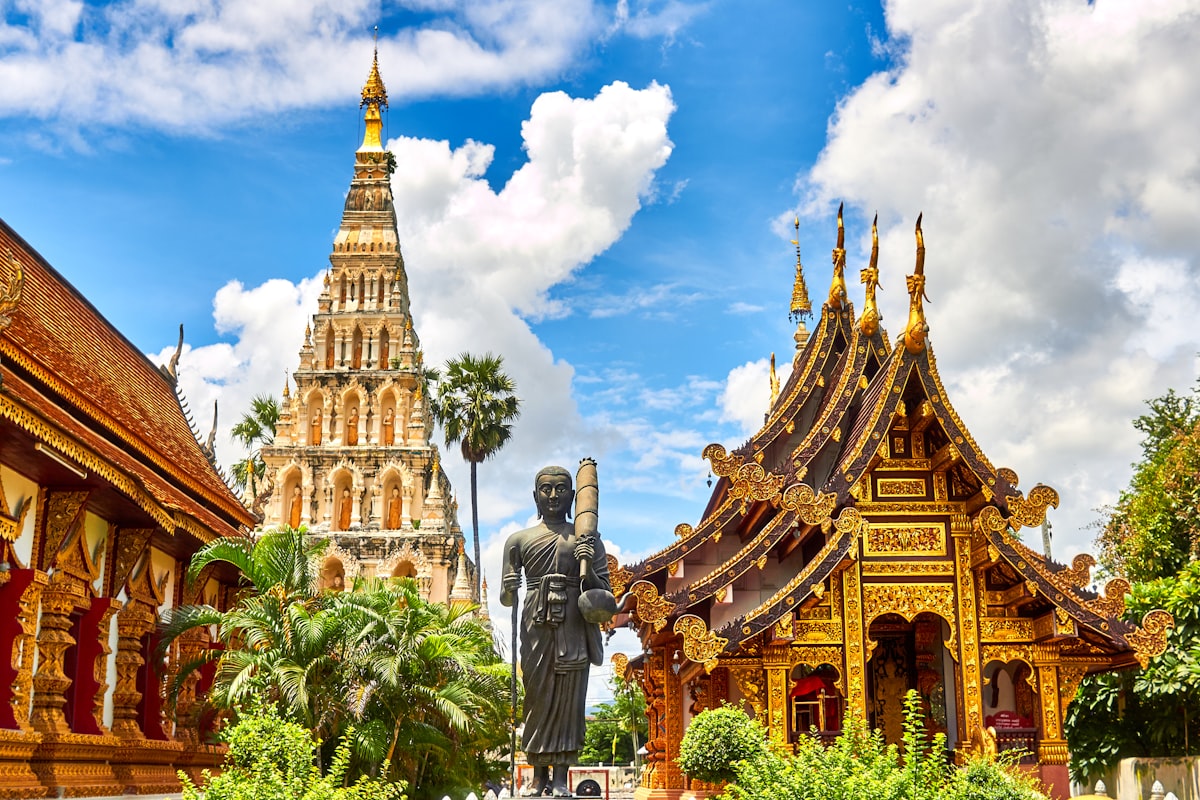
- Temple core: Grand Palace + Wat Phra Kaew
- Water Bangkok: Canal Boat Morning
- Calm base day: coffee in Ari then BTS into the center
For culture mornings, I queue early at royal/temple zones, do the big sight once, then stop. For neighborhood mornings, I pick one lane to explore deeply instead of five photo stops. Canals are underrated lifestyle medicine: you see domestic Bangkok, not brochure Bangkok, and you finish before glare ruins the ride.
If you work from cafes, morning is still your best outdoor window — errands, market runs, short BTS hops — before you disappear into air-conditioning for the focus block.
Midday Reset Strategy
From late morning to mid-afternoon, prioritize indoor plans: museums, reading cafes, massage, or focused work sessions.
This is also when Bangkok feels most hostile. Air-conditioning becomes a travel tool. So does a good lunch. If you try to "push through" midday outdoors, you will spend the afternoon buying expensive cold drinks and feeling slightly angry at the city.
My midday reset menu rotates: museum with strong AC, massage (90 minutes fixes a bad morning), long lunch with one dish and iced water, or a deliberate work sprint in a cafe or coworking space. The goal is recovery, not "more sightseeing." I treat 11:30 AM–3:00 PM as protected time the way some travelers protect dinner reservations.
For remote workers, midday is often the overlap zone with Europe/US meetings. That is fine — but do not stack a meeting block and a temple march in the same half-day. Pick one. If calls run long, your "reset" becomes your work block; move outdoor plans to late afternoon instead of forcing both.
Hydration here is a routine, not heroics. I drink on a schedule before I feel thirsty. Electrolytes help on walk-heavy days. A small towel in the bag sounds touristy until you have walked Old Town stone in April.
Late Afternoon Re-entry
As temperature drops, shift back to mobility: neighborhood browsing, short ferry rides, or rooftop-to-dinner transitions.
This is when you can do a second activity without paying the heat tax. It is also when Bangkok light gets soft again — street scenes, river reflections, and temple walls start to look cinematic instead of harsh.
I use late afternoon for low-stakes exploration: one market lane, one river crossing, one neighborhood drift. Not another full temple complex unless I arrived early and rested at midday. Around 4:30–6:00 PM, the city becomes social again — people appear on sidewalks, vendors set up, and movement feels possible without anger.
This window is also when I transition from "traveler mode" to "evening mode": freshen up, change shirt if needed, eat a small snack so dinner stays enjoyable. Rushing from a hot walk straight into a formal rooftop is how nice plans feel like chores.
Evening Food and Culture Rhythm
Bangkok evenings work best as sequence, not one giant destination. Example: one rooftop drink, one street-food lane, one quiet wind-down stop.
If you want a simple arc: Rooftop Sunset → Yaowarat/Chinatown food night → early sleep. Bangkok rewards people who leave before the night becomes an industrial production.
I plan evenings as three beats, not one mega itinerary. Beat one: atmosphere (view, river breeze, one drink). Beat two: food with pacing — small dishes, short walks between stalls. Beat three: wind-down (tea, dessert, easy ride home). When I skip beat three and stack bars until 2 AM, the next morning destroys the whole rhythm.
Noise and stimulation are real costs. If you are sensitive, choose calmer dinner streets or eat earlier. If you love energy, go late — but accept that your morning window shrinks. Neither choice is wrong; mixing them daily is what hurts.
Neighborhoods for Slow Days
For calmer pacing, bases like Ari help. For culture-first days, Old Town gives stronger context and walking value.
Where you sleep changes your default rhythm more than any app. Ari gives me easy mornings — coffee, BTS, return to quiet evenings. Old Town gives me early temple wins and river movement, but I plan midday indoor escapes nearby. Sukhumvit bases trade calm for convenience; I use them when work and meetings dominate the week.
Slow days are not empty days. They are days with one anchor and wide margins: one museum, long lunch, sunset walk. I measure success by how human I feel at 9 PM, not how many pins I hit on a map.
Practical Lifestyle Tips
- Keep a hydration routine, not just reactive buying.
- Use transit apps, but always add weather buffer.
- Schedule one low-intensity block daily.
- Do not plan three "big" attractions in one day. Bangkok heat turns ambition into regret.
For longer stays, I buy a reusable water bottle and refill where safe, and I pick one grocery routine so I am not eating only tourist-zone pricing. Laundry rhythm matters too: light packing only works if you are not sweating through two shirts a day.
What to Skip
Skip over-packed all-day itineraries in high heat. Bangkok is better when you leave margin between activities.
Also skip the guilt narrative. Missing one famous sight does not mean you failed Bangkok. The city is large and repetitive in a good way — temples, markets, and food streets rhyme. Come back with better timing instead of worse memories.
If a day goes wrong — storm, closure, bad sleep — shrink the plan to one block and reset tomorrow. Bangkok rewards repeat visitors who learn rhythm, not sprinters who conquer a list in four days.