Yogyakarta is one of the best places in Indonesia to explore ancient temples, but you do not need to visit every temple to appreciate the region's history.
For a first trip, Borobudur and Prambanan are the two essential stops. They represent two different religious traditions and are also the most impressive temple complexes in the area. Once you have seen them, smaller sites such as Sewu, Plaosan, Sambisari, Kalasan, and Banyunibo are worth adding if you have more time.
The good thing about temple sightseeing around Yogyakarta is that many of these places can be grouped together geographically, making it possible to explore several sites without spending the entire day on the road.
Start With Borobudur
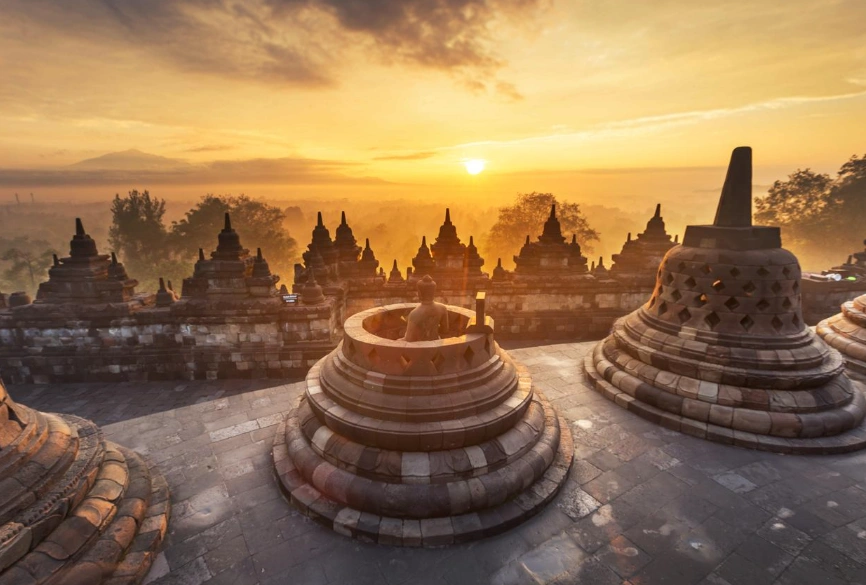
If you only have time for one major temple, Borobudur is difficult to leave out.
The enormous Buddhist monument rises above the surrounding landscape and is covered with carved reliefs and Buddha figures. Walking around the different levels gives you a much better sense of its scale than photographs do.
Borobudur is also different from most traditional temple visits because the monument itself is part of a larger religious concept. The structure gradually leads visitors upward through different levels, with the upper sections opening toward views of the surrounding countryside.
It is outside Yogyakarta city, so allow additional travel time when planning your day.
For first-time visitors, Borobudur makes the most sense when you want a combination of history, architecture, religion, and scenery rather than simply another sightseeing stop.
Then See Prambanan
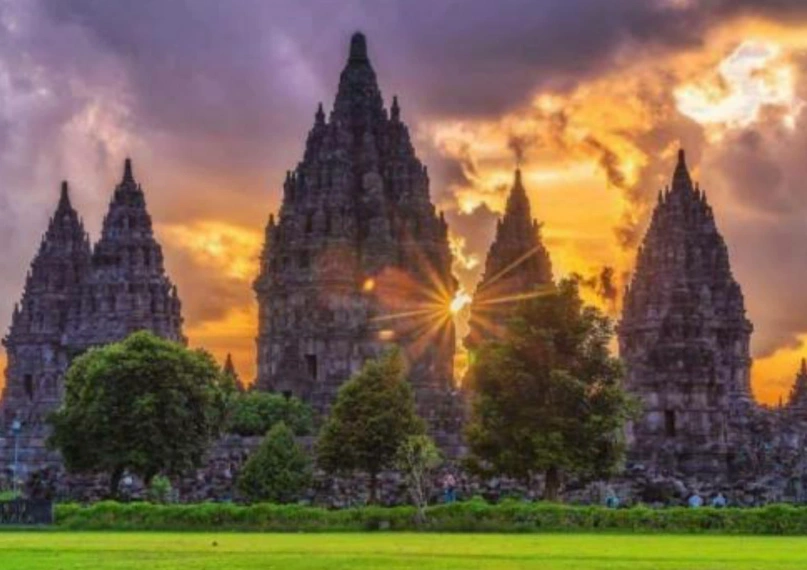
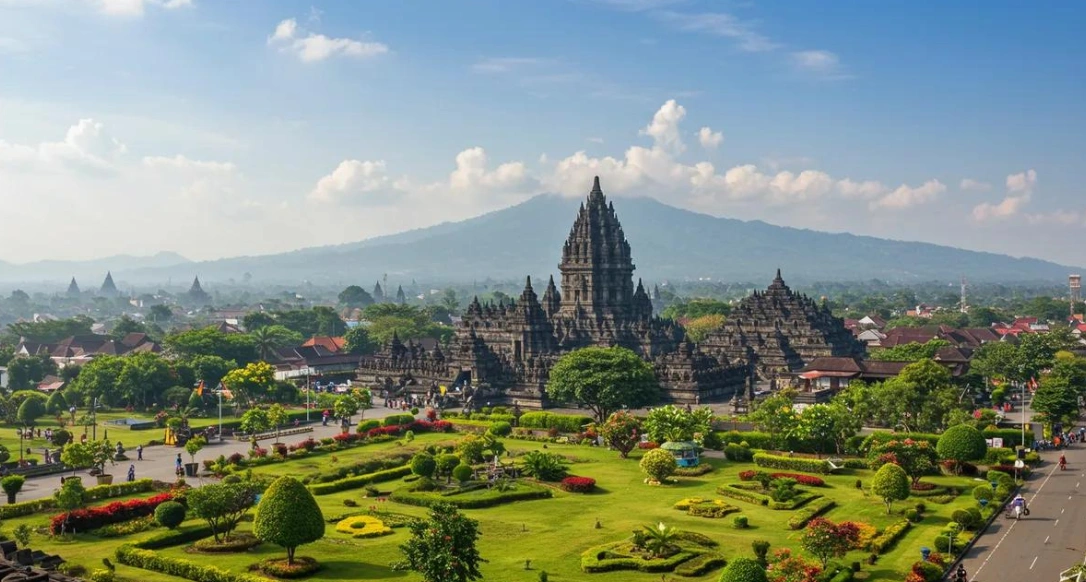
Prambanan gives you a completely different experience.
The tall Hindu temple towers dominate the complex and create a much more vertical appearance than Borobudur. The central temples are associated with Shiva, Vishnu, and Brahma, while carved details throughout the complex tell stories connected with Hindu traditions.
One reason Prambanan works so well in a Yogyakarta itinerary is that it is easy to combine with several other archaeological sites nearby.
If Borobudur shows the importance of Buddhist heritage in Java, Prambanan provides the other half of the story by showing the region's Hindu architectural tradition.
For most travelers, these two temples should form the foundation of a Yogyakarta temple itinerary.
Don't Stop at Prambanan
One of the easiest mistakes is to visit Prambanan and leave without exploring the smaller sites around it.
Sewu Temple is particularly convenient because it is located within the wider Prambanan archaeological area. The Buddhist complex has a large central structure surrounded by smaller temples and is substantially different from Prambanan despite being so close.
A short distance away, Plaosan Temple provides another interesting example of Buddhist architecture. The two main temples and surrounding structures make it a worthwhile stop for anyone interested in the history of Central Java.
These sites do not require the same amount of time as Borobudur or Prambanan, which makes them easy to add to a full-day eastern Yogyakarta itinerary.
Ratu Boko Is More Than a Temple Stop
Ratu Boko is worth treating differently.
It is an archaeological complex with gateways, terraces, courtyards, and the remains of an ancient settlement rather than a conventional temple complex.
Its location on higher ground is one of the main reasons travelers visit. The views across the surrounding landscape give Ratu Boko a completely different atmosphere from the enclosed spaces of many temple sites.
Late afternoon is particularly attractive if you want to combine sightseeing with sunset views.
It also makes sense geographically to combine Ratu Boko with Prambanan rather than making a separate trip just for this site.
Look Beyond the Famous Temples
Travelers with more time can explore several smaller temples that receive less attention.
Sambisari Temple is particularly unusual because the temple sits below the surrounding ground level. The structure was buried for centuries before being excavated, and visitors now look down into the temple courtyard from above.
Kalasan Temple is another interesting option for travelers interested in older Buddhist architecture. It is much smaller than Borobudur, but its decorative details make it worthwhile as part of a wider temple route.
For an even quieter experience, Banyunibo Temple offers a small Buddhist site surrounded by countryside. It does not have the monumental scale of Borobudur, but the rural setting is part of its appeal.
These places are better suited to travelers who have already seen the major attractions or simply prefer archaeological sites away from the busiest tourist routes.
The Best Temple Combination for One Day
If your schedule is tight, trying to visit six or seven temples in one day is not the best approach.
A more realistic combination is:
Prambanan → Sewu → Plaosan → Ratu Boko
These locations can be arranged into an eastern Yogyakarta sightseeing day, giving you several different architectural and historical experiences without constantly crossing the city.
If Borobudur is also on your list, give it a separate day if possible.
That leaves enough time to actually explore rather than spending most of the day traveling between sites.
Which Temples Are Worth It for First-Time Visitors?
For someone visiting Yogyakarta for the first time, I would rank them in roughly this order:
Borobudur — essential for Buddhist heritage and monumental architecture.
Prambanan — essential for Hindu architecture and one of Java's most recognizable temple landscapes.
Sewu — the easiest major addition to a Prambanan visit.
Ratu Boko — especially good for views and sunset.
Plaosan — worthwhile for travelers interested in archaeology and quieter sites.
Sambisari — interesting because of its unusual sunken design.
Kalasan — a good historical stop when exploring the area around Prambanan.
Banyunibo — best suited to travelers who want a quieter countryside experience.
The ranking changes depending on your interests. Someone interested primarily in photography may prefer Ratu Boko, while a history enthusiast may want to spend more time at the smaller archaeological sites.
When Is the Best Time to Visit?
Morning is generally a comfortable choice for major temple visits because temperatures can become much higher later in the day.
Borobudur and Prambanan can also look very different depending on the weather and time of day. Clear mornings are particularly useful for views, while late afternoon can provide better light around Prambanan and Ratu Boko.
Avoid trying to squeeze every temple into the middle of the day. A slower schedule usually makes the experience more enjoyable, especially when temperatures are high.
Before visiting, check the current opening hours, ticket requirements, access restrictions, and any rules concerning specific areas of the monuments.
What Should You Wear?
These are important cultural and religious sites, so modest clothing is the safest choice.
Lightweight clothing that covers the shoulders and knees is practical in the heat while also being respectful.
Comfortable shoes are equally important. Some temple areas involve stairs, uneven stone surfaces, or considerable walking.
Bring water, sun protection, and a hat for outdoor sightseeing, particularly if you plan to visit several sites in one day.
Is Borobudur in Yogyakarta?
This is a common point of confusion.
Borobudur is not located inside Yogyakarta city. It is in Central Java, but Yogyakarta is one of the main bases used by travelers visiting the monument.
This is why Borobudur is commonly included in Yogyakarta travel guides even though reaching it requires a trip outside the city.
Prambanan, on the other hand, is much closer to Yogyakarta and can be combined with several attractions in the eastern part of the region.
Understanding this difference is useful when planning transportation and deciding where to stay.
A Better Way to Plan Your Temple Trip
Instead of selecting temples individually, divide them into areas.
For western and northwestern sightseeing, plan Borobudur as the main attraction and add nearby sites if your schedule allows.
For eastern Yogyakarta, combine Prambanan with Sewu and Plaosan, then consider Ratu Boko later in the day.
Smaller temples such as Sambisari and Kalasan can be added when you have extra time or a particular interest in archaeology.
This approach reduces unnecessary travel and gives each major site enough time.
So, Which Temples Should You Actually Visit?
For most visitors, the answer is simple: start with Borobudur and Prambanan.
If you have another day, explore Sewu, Plaosan, and Ratu Boko.
If you are staying longer or have a strong interest in Javanese archaeology, add Sambisari, Kalasan, and Banyunibo.
Yogyakarta's temples are not all competing for the same spot on your itinerary. Each one offers something different, and the smaller sites become much more interesting once you have experienced the two major monuments.
The best temple itinerary is therefore not the one with the most stops. It is the one that gives you enough time to appreciate the history, architecture, landscape, and cultural meaning behind each place.