
Eating healthy as a digital nomad sounds simple until you are tired, sweaty, behind on work, and standing between a night market, a delivery app, and a convenience store dinner. Southeast Asia gives you plenty of good food. The harder part is building a rhythm that still works after the first exciting week.
I am not a nutrition expert, and I do not travel with a perfect diet plan. I just learned that food affects my work, mood, sleep, and ability to enjoy a place. Eating well became less about rules and more about making the easy choice a little better.
Why Eating Well Gets Harder When You Travel Long Term
Short trips reward novelty. Long-term travel rewards stability. The problem is that food novelty can stretch for months.
Every city brings new dishes, new cafes, new markets, and new habits. Add deadlines, heat, different kitchens, and social meals, and the default becomes whatever is closest. I used to tell myself I would reset in the next city. Then the next city had its own temptations and the same tired version of me arrived there.
Eating well got easier when I stopped waiting for a clean restart and started improving the ordinary day.
Stop Trying to Eat "Perfectly" While Traveling
Perfect eating made me boring, tense, and weirdly more likely to give up. Southeast Asia is full of food worth enjoying. Refusing every local dish because it does not match an app target misses part of the reason I travel.
My better rule is flexible: eat enough real food most of the time, enjoy local meals without guilt, and notice what leaves me sluggish. That means I still eat khao soi, banh mi, mango sticky rice, and late noodles. I just do not make every meal a festival.
This mindset also works well with healthy street food habits because the goal is awareness, not fear.
What I Look for When Choosing Local Food
I look for busy stalls, visible cooking, fresh herbs, soups, grilled proteins, vegetables, and meals that do not leave me useless for the afternoon.
In Vietnam, pho, bun bowls, grilled fish, rice plates, and fresh rolls can be easy anchors. In Thailand, soups, stir-fries with vegetables, omelets over rice, papaya salad, and grilled chicken are practical defaults.
I also watch timing. A heavy spicy lunch before a video call rarely helps me. The same meal after work might be perfect.
How to Build a Simple Healthy Meal in Southeast Asia
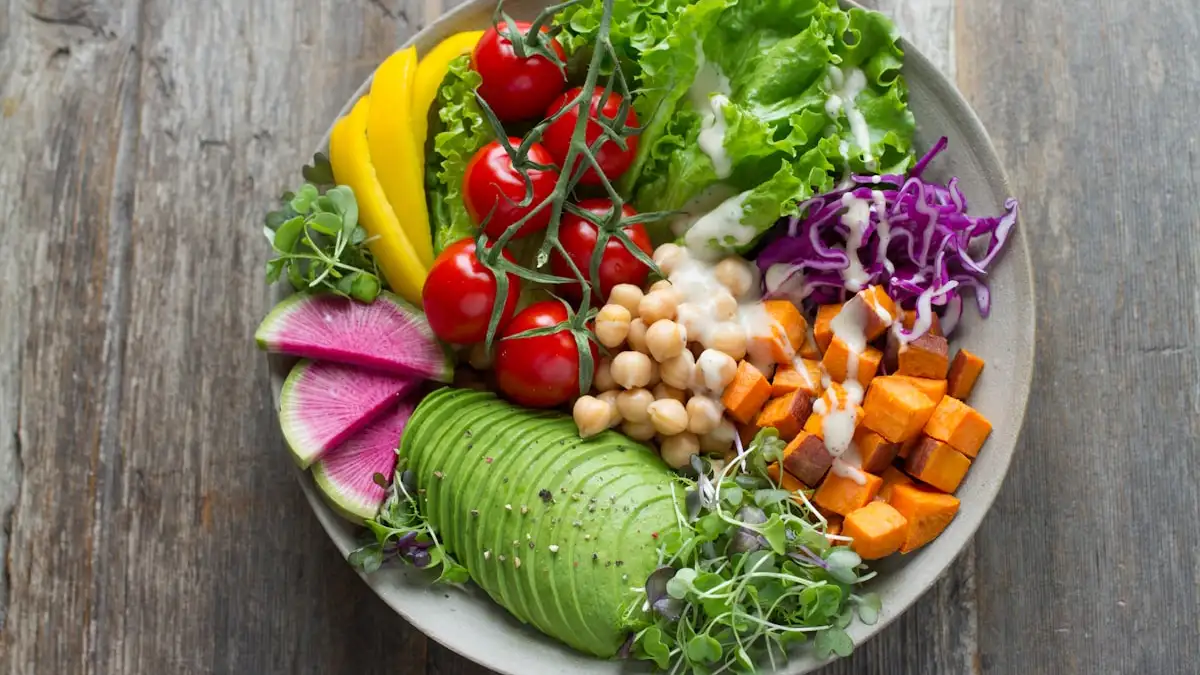
My simple plate is not scientific. It is just reliable: one filling base, one protein, one vegetable or herb-heavy side, fruit later, and enough water.
That might be rice with grilled chicken and morning glory, noodle soup with extra herbs, tofu and vegetables, eggs with rice, or a market bowl I assemble at home. If the meal is rich, I make the next one lighter instead of turning the day into a moral argument.
The best travel food routine is one I can repeat without thinking too hard.
Grocery Shopping When You Live in One Place for a While
Grocery shopping changes everything after the first week. I do not cook elaborate meals, but I like having fruit, yogurt, eggs, nuts, greens, oats, instant rice, or simple sandwich ingredients at home.
The point is not becoming a home chef. It is having one decent option when work runs late or rain makes going out annoying.
In monthly bases like Chiang Mai, I usually find one supermarket and one local market early. That small map makes the city feel easier.
Eating Healthy Without Giving Up Local Food
I never want food discipline to turn into avoiding the place I came to experience. Local food is part of the life, not a problem to solve.
What helps is choosing when to be indulgent. If friends invite me to a night market, I go and enjoy it. If I have a heavy workday, I choose a simpler lunch. If breakfast was sweet coffee and pastry, dinner gets vegetables.
Balance works better across a week than inside one perfect meal.
What to Do About Snacks, Coffee and Late-Night Meals
Snacks are where my routine usually drifts. Convenience stores are everywhere, coffee is excellent, and late-night food can feel like a reward after work.
I keep easy snacks around so I do not reach for only sugar when I am tired. Bananas, peanuts, yogurt, boiled eggs, and coconut water are not glamorous, but they work.
Coffee needs a boundary too. In hot climates I can accidentally replace water with iced coffee. My rule is water before the second coffee and no caffeine after late afternoon unless I have accepted the sleep cost.
How I Handle Food When Moving Between Cities
Moving days are where healthy eating often disappears. Airports, buses, and check-ins create long gaps, then I arrive hungry enough to order anything.
Now I pack one boring meal or snack before travel: fruit, nuts, a sandwich, or rice crackers. I also choose the first meal near my accommodation before I arrive. That tiny plan saves me from the tired delivery spiral.
Arrival night is not the moment for an ambitious wellness reset. It is the moment to eat something simple and sleep.
A Simple Eating Routine for Long-Term Travelers
My routine is practical: buy fruit when I arrive, find two reliable local meals, keep breakfast simple, drink more water than feels necessary, cook or assemble a few meals each week, and leave room for food I actually want.
This also supports the bigger wellness routine in a new city. Food is often the first habit that makes a place feel manageable.
Healthy eating on the road is not a separate project. It is part of making travel sustainable.
FAQ
Is Southeast Asian food healthy for digital nomads? It can be. Choose simple local dishes often, add fruit and vegetables, and avoid making fried or sweet foods the default meal every day.
How do I eat well without a kitchen? Use markets, grocery stores, fruit stands, soups, rice plates, and simple cafe meals. A full kitchen helps, but it is not required.
What should I do after several unhealthy days? Do not overcorrect. Drink water, eat one simple meal with vegetables and protein, buy groceries, and restart with the next meal.