British travelers have it fairly easy when visiting Vietnam, but the rules are still worth understanding before you book a flight.
For a short trip, most British citizen passport holders do not need a visa for Vietnam. The usual visa-free allowance is up to 45 days, which is enough for a relaxed north-to-south route, a food-heavy city break, or a few weeks working quietly from cafes in Da Nang.
But if you want to stay longer, enter more than once, or build Vietnam into a bigger Southeast Asia trip, the visa question becomes more important.
This guide explains the practical difference between Vietnam's visa exemption and the Vietnam eVisa, what UK passport holders should prepare before arrival, and the mistakes that can turn a simple entry into an annoying airport problem.
Do UK Passport Holders Need a Visa for Vietnam?
For most short tourist trips, British citizen passport holders can enter Vietnam without applying for a visa in advance.
The visa exemption is meant for temporary visits. It works well if you are:
- visiting Vietnam for a holiday
- coming for a short business trip
- joining friends or family
- passing through Vietnam as part of a longer Asia route
- staying less than the exemption period
Immigration officers still decide entry at the border. Visa-free does not mean document-free. You still need a valid passport, a reason for your visit, and enough evidence that you will leave before your allowed stay ends.
How Long Can British Citizens Stay in Vietnam?
British citizens can usually stay in Vietnam visa-free for up to 45 days.
That is a generous amount of time for most visitors. You could spend a week in Hanoi, take the train down the coast, work from Da Nang for a while, and finish in Ho Chi Minh City without feeling rushed.
The date that matters most is the exit date written or stamped by immigration when you arrive. Do not count casually in your head. Check the entry stamp before leaving the airport or land border. If something looks wrong, ask immediately while you are still at immigration.
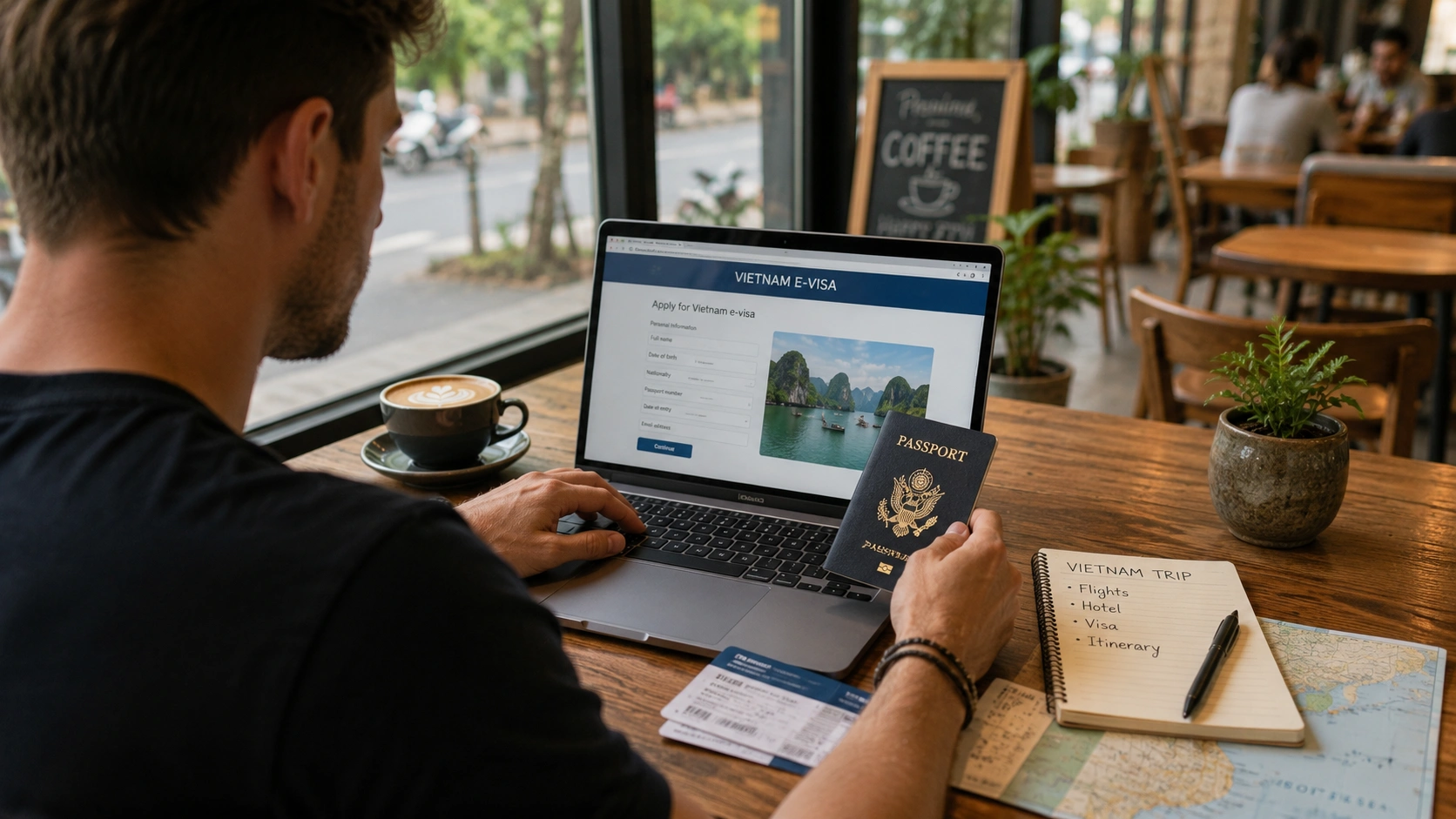
If you want to stay longer than 45 days, the common route is to apply for a Vietnam eVisa before travel. The eVisa can allow stays of up to 90 days and may be issued for single or multiple entry depending on what you apply for.
The 90-day option is especially useful if Vietnam is not just a holiday stop but a temporary base. Remote workers often use it for a slower stay in Da Nang, Hanoi, or Ho Chi Minh City. Just remember that a tourist eVisa is still not a local work permit.
Vietnam eVisa vs Visa Exemption
The visa exemption is simple. You arrive, immigration checks your passport, and you are allowed in for the exemption period if everything is in order.
The eVisa takes more planning, but gives you more structure.
| Option | Best for | Typical stay |
|---|---|---|
| Visa exemption | Short trips, simple holidays, first visits | Up to 45 days |
| Vietnam eVisa | Longer trips, multi-city stays, repeated entries | Up to 90 days |
The eVisa is better if:
- your trip is longer than 45 days
- you may leave and return to Vietnam
- you want a clearer written entry permission
- your airline wants to see proof before boarding
- you are planning around fixed work or accommodation dates
For a full walkthrough of the eVisa route, see our Vietnam eVisa guide for remote workers.
Documents You'll Need Before Traveling
For a smooth arrival, prepare more than just your passport.
British travelers should usually have:
- passport valid for at least six months from arrival
- at least two blank passport pages
- return or onward ticket
- accommodation details for the first part of the trip
- travel insurance
- eVisa approval PDF if using an eVisa
- a copy of your itinerary
If you are entering on an eVisa, check the details carefully:
- passport number
- full name
- date of birth
- nationality
- entry date
- exit date
- entry and exit ports
- single or multiple entry
Entry Requirements for British Travelers
Most British visitors experience Vietnam immigration as quick and direct, especially at major airports. Still, you should be ready for the normal entry checks.
Immigration may want to know:
- how long you are staying
- where you are staying first
- how you will leave Vietnam
- whether your visa or exemption matches your plan
Digital arrival and health declaration systems can also change quickly. In 2026, Vietnam has been testing and encouraging digital arrival processes at certain airports, with the possibility of broader rollout. Check official guidance shortly before travel, especially if you are flying into Ho Chi Minh City.
Can You Extend Your Stay?
This is where I would be careful.
Travelers often ask whether they can extend a Vietnam visa exemption after arriving. In practice, extensions can be limited, case-specific, and less predictable than people expect.
If you know you want more than 45 days, apply for the right permission before you go. The eVisa is usually cleaner than trying to fix the problem later.
If you are already in Vietnam and your plans change, speak with a reputable local visa agent or the Vietnam Immigration Department before your permission expires. Do not wait until the final day. Vietnam can take overstays seriously, and overstaying may lead to fines, delays leaving the country, or future entry issues.
Tips for Visiting Vietnam
Vietnam is easier when you give yourself a little buffer.
Arrive with your first hotel address saved offline. Keep a PDF of your eVisa if you use one. Take a photo of your entry stamp after arrival so you always know your exit deadline.
If you plan to work remotely, choose your base around your rhythm. Hanoi is great for culture and food, Ho Chi Minh City is better for energy and business, and Da Nang is the easiest choice for a calmer beach-and-laptop lifestyle.
For longer stays, do not build your whole plan around a last-minute visa run. Flights, public holidays, and policy changes can make that more stressful than it looks online.
Final Thoughts
For British citizens, Vietnam is one of the easier countries in Southeast Asia to enter for a short trip. The 45-day visa exemption covers most holidays comfortably.
The main decision is whether your trip fits inside that window. If it does, keep your documents tidy and enjoy the simplicity. If it does not, apply for the eVisa early and make sure every detail matches your passport.
Vietnam rewards slow travel, but the immigration side works best when you plan before you land.