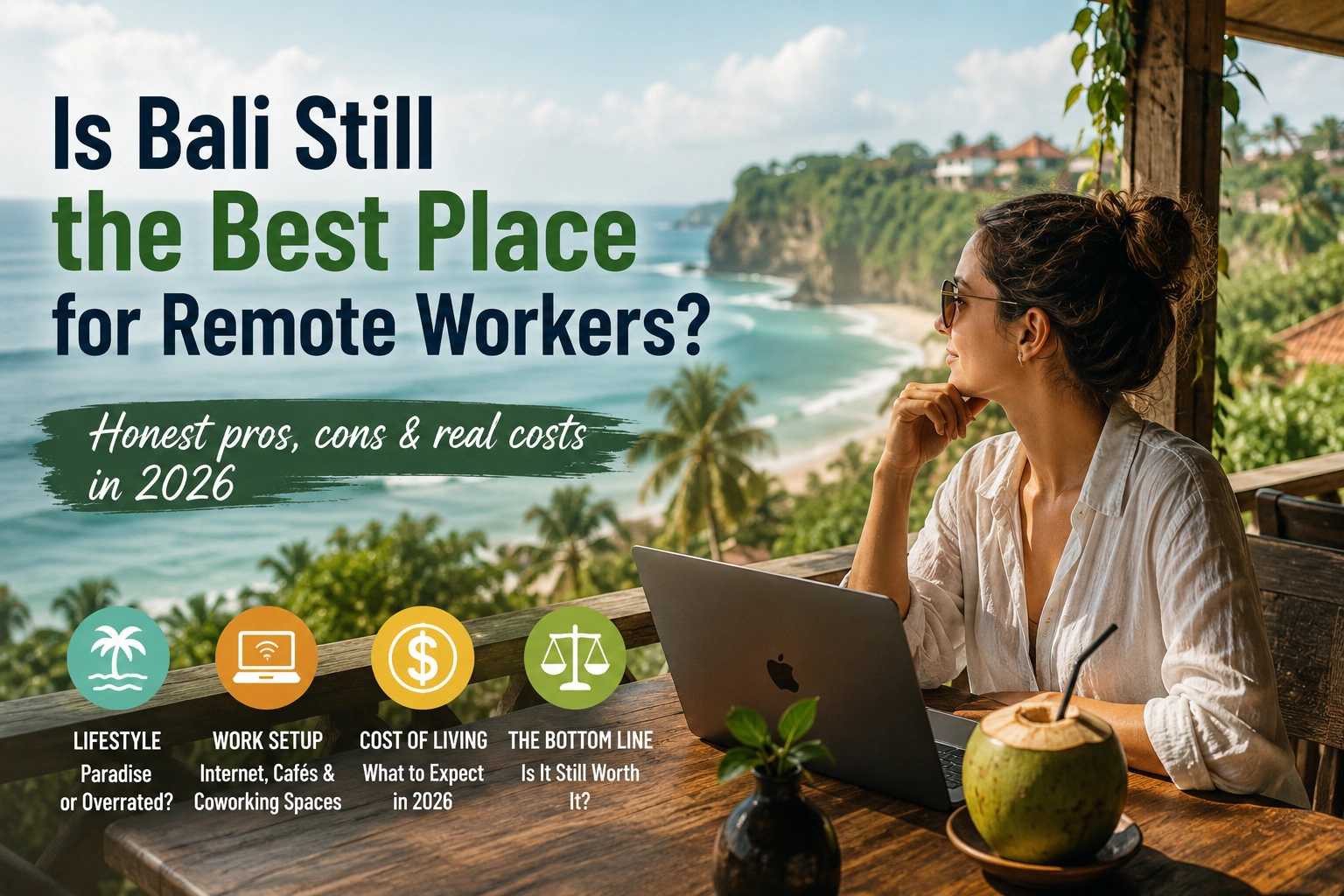
Yes, Bali is still one of the best places in the world for remote workers, but it's no longer the hidden bargain it once was. Rent has increased in popular areas, cafés are busier, and competition for the best coworking spaces is stronger than before. Even so, Bali continues to attract thousands of digital nomads thanks to its relaxed lifestyle, reliable internet, warm climate, and active international community.
Why Bali Became a Remote Work Hotspot
A few years ago, Bali was mostly known as a holiday destination. Today, it's just as well known for laptops as it is for beaches.
Remote workers began arriving because the island offered something many cities couldn't: affordable living, beautiful surroundings, plenty of cafés with Wi-Fi, and a growing number of coworking spaces.
As more people shared their experiences online, Bali quickly became one of the world's most talked-about remote work destinations.
What Has Changed in Recent Years?
Bali is different from what it was five or six years ago.
Popular areas like Canggu are much busier, accommodation prices have risen, and traffic has become part of daily life in some neighborhoods.
That doesn't mean Bali has become a bad place to work remotely—it simply means expectations need to be more realistic.
Many remote workers now choose quieter areas or stay longer to avoid moving around too often.
The Best Areas for Remote Workers
Every part of Bali has a different atmosphere.
| Area | Best For |
|---|---|
| Canggu | Coworking spaces, cafés, networking |
| Ubud | Quiet lifestyle and wellness |
| Sanur | Slower pace and long-term stays |
| Uluwatu | Surfing and relaxed living |
Can You Actually Be Productive Here?
This depends more on where you stay than on Bali itself.
Many cafés welcome people working on laptops, and coworking spaces are easy to find in the most popular areas. Internet speeds are generally good enough for video calls and everyday work, although occasional outages still happen.
One thing many newcomers underestimate is how easy it is to get distracted. Beaches, day trips, cafés, and social events are everywhere, so creating a routine makes a big difference.
What Does It Cost to Work Remotely in Bali?
Your monthly budget depends on your lifestyle.
A simple apartment outside the busiest neighborhoods costs much less than a villa in Canggu. Eating at local restaurants is affordable, while imported food and trendy cafés can quickly increase your expenses.
Besides accommodation, most remote workers should budget for:
- Coworking membership (optional)
- Mobile data
- Scooter rental
- Health insurance
- Weekend trips around the island
Is Bali Better Than Other Southeast Asian Destinations?
Bali isn't the only good option anymore.
Cities like Da Nang, Chiang Mai, Kuala Lumpur, and even parts of the Philippines have become popular among remote workers.
Bali still stands out because of its community. It's easy to meet other freelancers, entrepreneurs, and remote employees, whether at coworking spaces, cafés, or local events.
If building connections matters to you, Bali remains one of the easiest places in Southeast Asia to do it.
A Few Final Thoughts
Bali is no longer the cheapest destination for remote workers, but it continues to offer something that's difficult to find elsewhere—a balance between work and lifestyle.
If you value sunshine, a strong remote work community, and the freedom to finish work before heading to the beach, Bali still deserves its reputation. Just don't expect it to be as quiet or as inexpensive as it once was.