Thailand is one of the easiest countries in Southeast Asia for travelers and digital nomads, but managing money can still be confusing when you first arrive. Between card payments, ATM withdrawals, currency exchange, and small local purchases, fees can quietly add up over a long stay.
A few small charges may not seem important during a short holiday, but for digital nomads or slow travelers staying in Thailand for weeks or months, avoiding unnecessary fees can make a noticeable difference.
The good news is that with the right payment methods and a little preparation, you can reduce most foreign transaction costs while enjoying daily life in Thailand.
Understand Where Foreign Transaction Fees Come From
Before trying to avoid fees, it helps to understand where they usually appear.
When you use a foreign bank card in Thailand, costs may come from several places:
- Your home bank's foreign transaction fee
- ATM withdrawal fees
- Currency conversion charges
- Unfavorable exchange rates
- Extra charges from payment providers
The goal is not to avoid every possible charge, but to choose payment methods that keep costs predictable.
Use a Card With Low Foreign Transaction Fees
One of the easiest ways to reduce costs in Thailand is using a card designed for international travel.
Many traditional bank cards add a foreign transaction fee every time you pay in another currency. For frequent travelers, these small percentages can become expensive over time.
Before traveling to Thailand, check:
- Does your card charge foreign transaction fees?
- What exchange rate does your bank use?
- Are there limits for overseas payments?
- Are ATM withdrawals included?
Choose the Right Payment Method in Thailand
Thailand uses a mix of payment methods. While digital payments are becoming more common, cash is still important in many situations.
Cards
Credit and debit cards work well in:
- Hotels
- Shopping malls
- International restaurants
- Large supermarkets
- Modern cafes
Cash
Cash is useful for:
- Street food
- Local markets
- Small restaurants
- Motorbike rentals
- Local transportation
Mobile Payments
Thailand has many convenient mobile payment systems, but some options are mainly designed for local residents with Thai bank accounts.
For most international visitors, a combination of cards and cash is usually the simplest approach.
Be Careful When Using ATMs in Thailand
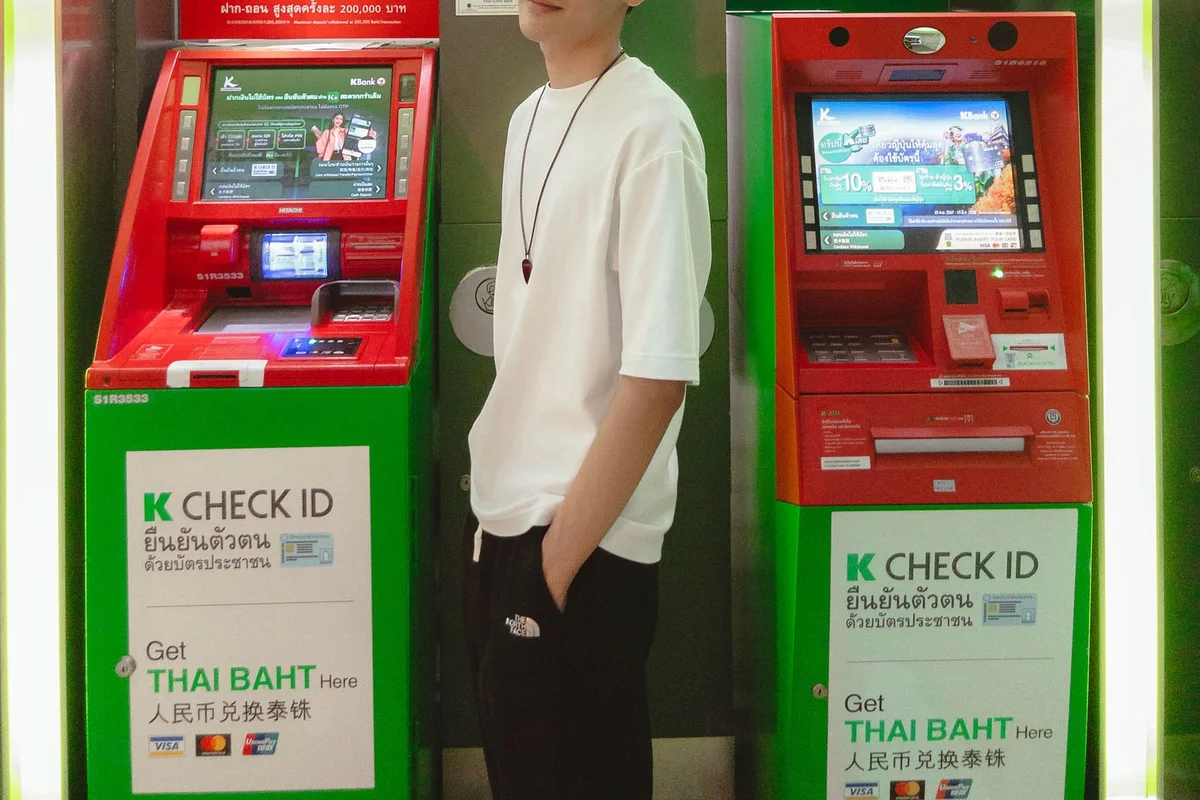
ATM fees are one of the most common costs travelers notice.
Many Thai ATMs charge a withdrawal fee for foreign cards. Your own bank may also add another international withdrawal charge.
To reduce ATM costs:
- Withdraw larger amounts less frequently
- Use ATMs from reliable banks
- Avoid many small withdrawals
- Check your bank's international withdrawal policy
Remember to choose Thai Baht when an ATM asks whether you want to be charged in your home currency or local currency.
Always Pay in Thai Baht Instead of Your Home Currency
One common mistake travelers make is accepting currency conversion at payment terminals or ATMs.
You may see an option like:
"Pay in USD" or "Pay in THB"
Although paying in your home currency may seem convenient, the exchange rate offered by the machine or merchant is often less favorable.
In most cases, choosing Thai Baht (THB) allows your bank or card provider to handle the conversion, which is usually the better option.
Carry Some Cash for Everyday Spending
Thailand is becoming more digital, especially in major cities like Bangkok and Chiang Mai. However, cash remains an important part of everyday life.
You will likely need cash for:
- Local food stalls
- Small cafes
- Markets
- Temple visits
- Small shops
- Local transport
This balance works well for both short-term travelers and long-term digital nomads.
Money Tips for Digital Nomads Staying in Thailand
Digital nomads usually have different needs compared with short-term tourists. If you plan to stay in Thailand for several months, consider creating a simple money system.
Many long-term travelers use:
One main international card
- Daily spending
- Online payments
- Accommodation bookings
- Emergency situations
- Lost card replacement
- Daily expenses
- Small purchases
Avoid Exchanging Too Much Money at Airports
Airport currency exchange counters are convenient, but they often do not offer the best rates.
If you need Thai Baht immediately after arrival, exchanging a small amount at the airport is fine. For larger amounts, many travelers prefer comparing exchange rates in the city.
Popular areas in Bangkok, Chiang Mai, and other tourist destinations usually have multiple exchange options.
Always compare rates before exchanging large amounts.
Best Way to Manage Money in Thailand
For most travelers and digital nomads, the easiest approach is a combination:
- Use a low-fee international card for larger payments
- Withdraw cash less frequently
- Choose Thai Baht when paying
- Keep emergency cash available
- Track your spending monthly
Final Thoughts
Avoiding foreign transaction fees in Thailand does not require complicated financial planning. The biggest savings usually come from choosing the right card, avoiding unnecessary ATM withdrawals, and understanding how currency conversion works.
For digital nomads and slow travelers, these small decisions can help create a smoother experience while staying in Thailand. With a simple payment strategy, you can spend less time worrying about fees and more time enjoying places like Chiang Mai, Bangkok, and Thailand's many coastal destinations.