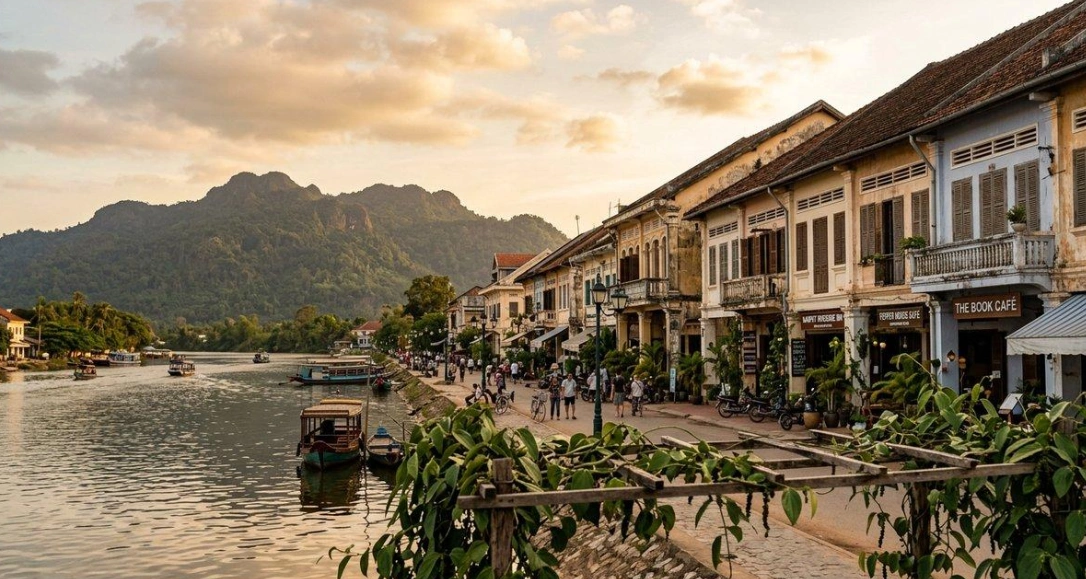
Phnom Chhngok feels like the kind of place you find because a scooter rental guy circled it on a hand-drawn map — limestone outcrop, rice fields, one cow, no tour buses. Inside the cave: a small brick temple older than Angkor's headline act, incense still lit, bats overhead, your voice too loud. It is not grand. It is specific — and after crowded temple cities, specific is medicine.
What Phnom Chhngok Is
Phnom Chhngok (Phnom Chhngok Cave Temple) is a pre-Angkorian brick shrine set inside a limestone cave near Kampot countryside — dating roughly to the 7th century in scholarly estimates. The combination of active worship, rural setting, and geology makes it different from open-air monument complexes. You climb, enter cave mouth, adjust eyes to dim light, see the brick structure, maybe meet a caretaker family.
Getting There from Kampot
Scooter is the flexible option — 30–40 minutes from riverside depending on stops, roads mostly rural. Tuk-tuk hire for half-day works if you do not ride — negotiate wait time at cave.
GPS and maps help but local confirmation at guesthouse prevents wrong turns on unmarked lanes. Fuel up before leaving town.
Parking is informal near village paths. Short walk uphill to cave entrance — not wheelchair accessible.
Dress and Behavior
Modest clothing — shoulders and knees covered inside worship areas. Remove shoes where indicated. Speak quietly; people still pray here. Photography is usually allowed but flash may disturb bats and worshippers — ask if unsure.
Bring headlamp or phone light — cave interior is dim beyond entrance glow.
The Visit Experience
Allow 45–90 minutes on site including climb and cave time. A local guide (small fee) adds history — brick construction, legends, harvest-season rituals. Without guide, you still feel atmosphere; with guide, names attach to stones.
Bats live overhead — normal, not horror-movie if you do not shout. Stalactites and rough footing — watch head clearance.
Combine lightly — this is half-morning, not full day alone unless you picnic countryside after.
History Without a Lecture Hall
Scholars date the brick shrine to roughly the 7th century — pre-Angkorian, smaller in ambition than later empire temples but remarkable inside a cave. The geology came first: limestone hill, natural chamber, human devotion filling the dark. Angkor teaches scale; Phnom Chhngok teaches intimacy — one shrine, one cave mouth, rice fields rolling away outside.
A good on-site guide explains brick techniques and local legends without turning it into a textbook. Without a guide, read a short summary the night before so the stones have names when you arrive.
Scooter and Road Notes
Rural lanes narrow; dogs and children appear without warning. Ride slow and predictable. If rain fell overnight, mud sections before the climb need caution — walking the last hundred meters beats dropping a scooter.
Fuel in Kampot before leaving; no station at the cave. Phone maps work until they do not — screenshot directions at guesthouse WiFi.
Village Courtesy
This is working farmland, not a theme park. Ask before photographing people at work. Buy a drink or snack from a local stall if one serves the path — small money keeps access friendly.
Best Timing
Morning for cooler climb and softer light at cave mouth. Avoid midday heat on exposed limestone. Rain makes paths slick — postpone if storm active.
Pairing With Kampot Days
- Cave morning + pepper farm afternoon — culture and taste without Bokor driving fatigue.
- Before Koh Rong — inland history then island jungle viewpoints — Cambodia variety pack.
- Contrast with island scale at Long Set Beach later in the week — inland shrine one day, horizontal beach the next.
Who Should Skip
Claustrophobic travelers, anyone who cannot climb uneven steps, or visitors needing polished interpretive centers. This is rural shrine reality — bats, dust, gratitude.
Half-Morning Timeline (Scooter From Riverside)
- 7:30 AM — Quick breakfast; modest clothes packed; headlamp in bag.
- 8:00 AM — Depart Kampot; rice fields and cow traffic; ride slow.
- 8:35 AM — Park village; pay small fee if collected; stretch legs.
- 8:45 AM — Climb to cave mouth; heat still tolerable.
- 9:00 AM — Cave interior; guide optional but worth $5–10 USD tip if good.
- 9:30 AM — Terrace outside; photos with soft light.
- 10:00 AM — Descend; drink from stall if available; ride back.
- 10:45 AM — Riverside; lunch; afternoon free for pepper farm or hammock.
Cost and Logistics (Cash)
- Entrance — often $1–3 USD equivalent; carry riel small notes too.
- Guide tip — $5–10 USD if local historian adds context; not mandatory but supports community.
- Scooter fuel — negligible from town; tuk-tuk half-day $15–25 USD negotiated.
- Donations — optional incense merit; small bills.
Inside the Cave — Sensory Detail
Your eyes adjust slowly; the brick shrine emerges from dark like a held breath. Incense smoke layers the air; bats shift overhead without diving at you if you stay quiet. Footing is uneven — watch head clearance on low stalactite zones.
Sound carries strangely; whisper conversations feel loud. Photography without flash respects worshippers and wildlife; phone light enough for careful steps.
Outside again, the rice horizon hits bright — bring sunglasses for the exit moment.
Rural Road Reality (Second Visit Lessons)
Dogs nap on warm pavement; children wave; tractors appear around blind corners. Horn gently, ride predictably. After rain, mud before the final walk may mean parking earlier and walking — better than dropping a rental scooter.
Phone signal drops; screenshot directions at guesthouse. Tell someone your return time — standard rural travel hygiene.
Pairing Cave With Coast Later
Inland 7th-century brick in a limestone chamber one morning; a week later horizontal sand at Long Set Beach — Cambodia's scale swings wide. Some travelers book cave before Bokor mist to alternate history and climate; order matters less than not rushing both before lunch.
Common Mistakes
- Shorts at shrine — sarong saves the climb back down to change.
- No light — phone battery dies; cave interior becomes guesswork.
- Shouting for echoes — bats, prayers, and other visitors suffer.
- Rushed 20-minute stop — the site rewards 45–90 minutes minimum.
- Ignoring afternoon heat — climb at noon punishes; morning wins.
Who Should Still Go (Even If Angkor Burned You Out)
Travelers tired of ticket queues and tour flags who want one sacred place at walking speed. Photographers who love contrast — dark cave mouth, bright fields. Slow couples building a Kampot week before island ferry — cave is the inland soul before bioluminescence nights.
Tuk-Tuk vs Scooter for Cave Day
Tuk-tuk half-day — shade, no fuel worry, driver waits; $15–25 USD negotiated. Best for two travelers sharing cost who do not ride.
Scooter — solo flexibility, stop for rice-field photos; requires confidence on rural dogs-and-kids roads. I prefer scooter second visit after I know turnoffs.
Neither option is comfortable in midday heat — morning departure non-negotiable.
What to Wear in the Cave (Beyond Modesty)
Closed shoes with grip for climb; head covering optional but shoulders/knees covered at shrine. Light long pants beat shorts for bat zones psychologically if that matters to you.
Small backpack for water and sarong — hands free on uneven steps.
Combining With Pepper Same Day (Tight But Possible)
Cave 7:30–10:30 AM, pepper farm 11:30 AM–1 PM, riverside lunch — doable if you accept a full morning without Bokor drive. I prefer pepper on a separate day so tastings get full attention, but time-crunched travelers can stack without insanity if heat cooperates.
Children and Cave Visit
Kids who handle uneven steps and dim light fine often love bats overhead — treat as adventure, not horror. Strollers useless; baby carriers risky on climb — one adult hands-free recommended.
No railings at cave mouth — hold hands near edges.
Rain Postpone Rule
Active rain slickens limestone climb — postpone two hours or next morning. Cave interior wetter but walkable; exposed approach is where slips happen.
Guesthouses refund scooter day if weather wins; cave will exist tomorrow.
Angkor Comparison (Expectation Reset)
After Angkor ticket queues, Phnom Chhngok feels refreshingly small — one shrine, one cave, no tuk-tuk temple hopping. Come for intimacy, not scale.
Pair mentally with Bokor ruins another day — French abandonment vs brick devotion — different centuries, same Kampot radius.
One More Practical Note on Guides
If a caretaker offers a ten-minute history without fixed price, $5 USD equivalent in riel is fair. Longer tours deserve more. No guide still works — read one paragraph of pre-Angkorian context night before and the bricks speak anyway.
Phnom Chhngok will not dominate your Cambodia highlight reel like a famous wat. It will sit quietly as the moment you realized not every sacred place needs a parking lot — and that Kampot's hinterland still holds secrets at walking speed.