Is Batu Caves Worth Visiting?
Yes, Batu Caves is worth visiting, especially if you want a half-day trip from Kuala Lumpur that feels different from malls, towers, and city viewpoints. It is close, inexpensive, visually memorable, and easy to do independently.
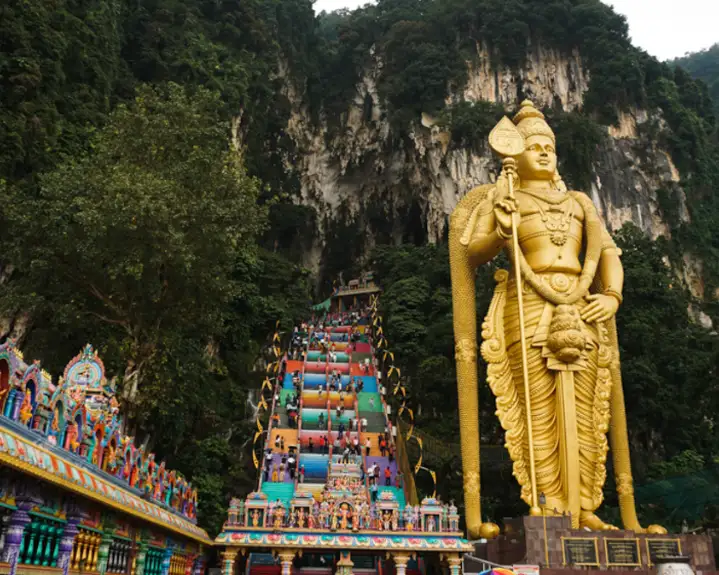
The mistake is treating Batu Caves as only a photo stop. The golden Murugan statue and rainbow stairs are the obvious image, but the visit works better when you give yourself time to climb slowly, watch temple life unfold, and sit inside the cave for a few minutes instead of racing back down.
Batu Caves is also not a polished theme-park attraction. It is an active Hindu religious site with tourists moving through it. You will see worshippers carrying offerings, children counting steps, vendors selling coconuts, pigeons scattering across the forecourt, and monkeys watching every plastic bag like it might contain breakfast. That mix is exactly what makes the place interesting.
If you dislike heat, stairs, crowds, or animal encounters, go early and keep the visit simple. If you enjoy temples and rough-edged local energy, Batu Caves can be one of your strongest Kuala Lumpur memories. For a Malaysia trip with contrast, it pairs well with slower heritage days in Ipoh or street-level wandering around George Town Street Art in Penang.
What Makes Batu Caves Special?
The Giant Golden Murugan Statue
The Murugan statue is the first thing that stops most visitors. It rises at the base of the limestone hill, bright gold against gray rock and often a hard blue sky. Photos make it look impressive; standing below it feels bigger and louder because the whole forecourt is moving around you.
This is the best spot for your first photos before you climb. Step back toward the open area to fit the statue and stairs together. Morning light is usually kinder. At midday, the statue can become almost blinding in the sun, and everyone looks slightly melted.
The Rainbow Stairs
The rainbow stairs are the practical challenge and the visual hook. There are 272 steps up to the main Temple Cave. They are not dangerous in normal conditions, but they are steep enough that you will feel them, especially if you arrive after a heavy meal or in the wet heat of late morning.
Go at your own pace. Nobody is awarding medals at the top. Stop on the side, let faster people pass, and keep water for after the climb rather than carrying an open bottle that attracts unwanted attention from monkeys.
The stairs are also where the visit becomes most chaotic. People stop suddenly for photos. Families move in groups. Monkeys cross the railings. The best approach is patient, steady, and hands-free.
Inside the Temple Cave
Inside the Temple Cave, the sound changes. The traffic noise drops away, voices echo, and the air feels cooler but still damp. Light falls through openings in the limestone, catching incense smoke, painted shrines, and birds moving high above.
This is where Batu Caves feels least like an Instagram location and most like a living religious site. Walk respectfully, keep your voice low, and give worshippers space. You do not need to understand every ritual to behave well around it.
There are more steps inside the cave leading toward the upper temple area. Take them if you have energy. The view back through the cave mouth is worth a pause.
How Long Do You Need at Batu Caves?
Quick Visit (1-2 Hours)
A quick visit works if you only want the main statue, stairs, Temple Cave, and a few photos. Arrive early, climb directly, spend 15-20 minutes inside, then return to the base for a drink.
This is enough for travelers with limited time, but it can feel rushed if you arrive during crowd peaks. The climb, photos, and heat all take more energy than the map suggests.
Standard Visit (2-4 Hours)
A standard visit gives you breathing room. You can photograph the forecourt, climb without rushing, spend time inside the cave, explore the base area, and take a proper break before heading back to KL.
This is the version I recommend for most first-time visitors. Two to three hours is comfortable. Four hours makes sense if you are visiting smaller caves, taking lots of photos, or moving slowly in the heat.
Why Batu Caves Is One of the Best Half-Day Trips from Kuala Lumpur
Batu Caves works as a half-day trip because it is close enough to reach without a tour and distinctive enough to feel like you left central KL. You can go in the morning, return for lunch, and still have an afternoon for KLCC, Chinatown, or a hotel rest.
It is also budget-friendly. Compared with ticketed viewpoints or organized excursions, Batu Caves gives a strong sense of place for very little cost.
What to Expect During Your Visit
Arrive at the base area and you will immediately see the statue, stairs, vendors, and temple activity. If you come by train, the walk from Batu Caves station is short and obvious. If you come by Grab, check your pickup/drop-off point because the area can get busy.
Start with photos at ground level before climbing. Once you go up, you may not want to come back down and stage the same shot in full sun.
The climb is the main physical part. The steps are exposed, so the heat matters more than the distance. I saw people in sandals doing fine and people in expensive sneakers struggling because they started too fast. The climb rewards humility.
At the top, enter the cave slowly. Let your eyes adjust. There may be prayer activity, construction or maintenance work, wet patches on the floor, and people moving in all directions. This is not a silent cathedral; it is alive, echoing, and a little messy.
Coming down can be harder on the knees than going up. Hold the rail if needed, but watch for monkeys sitting along it. Back at the base, a cold coconut or bottled drink tastes better than it should.
Essential Tips Before Visiting Batu Caves
Dress Code
Batu Caves is a temple site, so dress modestly. Cover shoulders and knees. Lightweight trousers, a long skirt, or shorts paired with a sarong can work. Some visitors rent or buy coverings near the entrance, but it is easier to arrive prepared.
Avoid clothing that becomes transparent when sweaty or wet. KL humidity is not subtle.
Beware of the Monkeys
The monkeys are bold because visitors keep making food easy. Do not carry visible snacks, loose plastic bags, or open drinks. Keep sunglasses, phones, and small items secure.
Do not tease them, feed them, or try for close selfies. They are fast and unpredictable. Watching from a respectful distance is enough. If one approaches, stay calm and do not wave food around.
Climbing the 272 Steps
The climb is manageable for most reasonably mobile travelers, but it is still 272 steps in tropical weather. Start slow. Use the sides for breaks. Avoid the hottest part of the day if fitness, knees, or heat tolerance are concerns.
After rain, steps can be slick. Shoes with grip are better than smooth sandals. Bring water, but keep it closed in your bag.
What to Bring
Bring small cash, water, a scarf or sarong, sunscreen, tissues, hand sanitizer, and a charged phone. A small crossbody bag or backpack is better than a dangling tote.
Do not bring big luggage. Do not bring food unless it is sealed and hidden. If you are going by train, a transit card or small notes make the day smoother.
Best Time to Visit Batu Caves
Early morning is the best time for comfort. Arrive around 7:00 to 9:00 if you want cooler air, softer light, and fewer tour groups. The forecourt feels calmer, and the climb is much easier before the heat settles into the stairs.
Late afternoon can be pleasant for light, but traffic back to the city may be slower, and afternoon rain is possible. Midday is the least comfortable time. The sun hits the stairs hard, and the open base area offers little relief.
Thaipusam is the major festival period, when Batu Caves becomes intensely crowded and spiritually powerful. It can be unforgettable, but it is not the best choice for a casual first visit unless you are prepared for huge crowds, blocked roads, and a completely different rhythm.
How to Get to Batu Caves from Kuala Lumpur
The easiest independent route is KTM Komuter from KL Sentral to Batu Caves station. The ride is straightforward and drops you close to the entrance. Check train frequency before leaving because waiting time can stretch the journey.
Grab is more convenient if you are traveling with two or more people, staying far from KL Sentral, or visiting early. The drive can take around 25-45 minutes depending on traffic. Going there is usually easier than getting back during peak times, so be patient when booking the return ride.
Tours are not necessary for most visitors. A guide can add context if you are deeply interested in Hindu culture, but for a standard visit, transport plus respectful observation is enough.
If you are planning a fuller Malaysia route, Batu Caves is a good urban-nature contrast before heading north to Kek Lok Si Temple in Penang or limestone scenery around Kek Lok Tong Cave Temple in Ipoh.
FAQ About Batu Caves
Is Batu Caves difficult to climb? The climb is moderate, not technical. Heat makes it harder than the number of steps suggests.
Can you visit Batu Caves in shorts? Very short shorts are not appropriate. Cover knees or bring a sarong.
Are the monkeys dangerous? They are usually more opportunistic than aggressive, but they can grab food, bags, or loose items. Keep distance and do not feed them.
Is Batu Caves good in the rain? Light rain is manageable, but stairs can become slippery. Heavy rain makes the visit less pleasant.
Can you combine Batu Caves with other sights? Yes. Do Batu Caves in the morning, then return to KL for KLCC, Kampung Baru, Chinatown, or a food-focused afternoon.
What is the biggest mistake first-timers make? Arriving too late, dressing for photos instead of a temple, and carrying visible food near the monkeys.