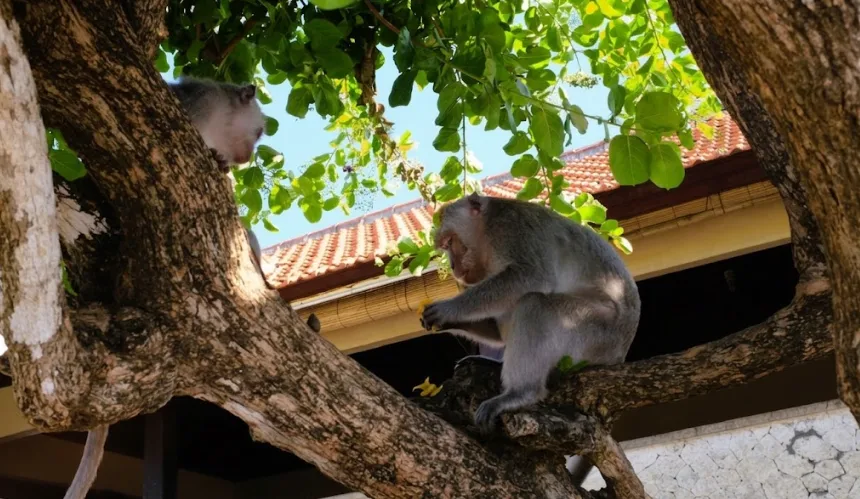
Ubud Monkey Forest is one of the easiest attractions in Bali to underestimate. Many visitors imagine a quick stop to see monkeys, take a few photos, and leave. In reality, it feels more like a shaded forest walk with temples, stone paths, mossy walls, banyan roots, and hundreds of macaques moving around you with total confidence.
It is worth visiting, but it is not a petting zoo and not a casual snack walk. The monkeys are wild animals used to people, which makes them fascinating and occasionally bold.
Go with the right expectations and it can be one of the most memorable stops in Ubud.
Why Visit Ubud Monkey Forest
Visit Ubud Monkey Forest because it gives you a concentrated version of Ubud's atmosphere: green shade, temple architecture, damp stone, and animal life right in the middle of town.
It is also practical. You do not need a long drive, a guide, or a complicated plan. If you are staying in central Ubud, you can often walk there, visit for one to two hours, and continue to lunch, a spa, or a cafe afterward.
The forest is especially useful when the sun is too strong for open viewpoints. Under the trees, the air feels cooler, though still humid. You hear leaves, tourists whispering when monkeys come close, and the occasional sharp sound of a macaque jumping onto a railing.
More Than Just Monkeys
The monkeys are the headline, but the setting is the reason the visit works. The forest has old stone bridges, temple gates, statues wrapped in cloth, and giant roots that make the paths feel older than the town outside.
For photographers, the best images are often wider scenes rather than close monkey portraits: a monkey sitting on a mossy wall, light falling through leaves, or people pausing on a bridge while macaques cross in front of them.
It also gives a good break from traffic and shopping streets. Ubud can feel busy around Monkey Forest Road, but inside the sanctuary the pace slows down.
Who Will Enjoy It
Ubud Monkey Forest is best for first-time Bali visitors, families with older children, animal lovers, photographers, and travelers staying in Ubud who want an easy attraction without a long transfer.
You may not enjoy it if you are nervous around animals, carrying expensive loose accessories, or traveling with very young children who may panic if monkeys come close.
If you like slow mornings in Bali, visit early and combine it with a relaxed breakfast. The same low-pressure pacing that works for morning routines in Bali works well here too.
Where to Stay in Ubud for Monkey Forest
For easiest access, stay in central Ubud near Monkey Forest Road, Jalan Hanoman, or the area between Ubud Palace and the forest. You can walk to the entrance, which avoids parking and traffic.
This area is convenient if you want restaurants, yoga studios, shops, massage places, and short taxi rides. It can be busy, but for a first Ubud stay, convenience often matters more than total quiet.
If you prefer calm, stay slightly outside the center in Penestanan, Nyuh Kuning, or north of Ubud. You will need transport, but the evenings are softer and less crowded.
Nyuh Kuning is especially convenient because it sits near the southern side of the forest and feels more village-like than central Ubud.
What to Know Before You Go
Plan for one to two hours. Wear comfortable shoes because paths can be uneven or damp. Bring water, but keep it inside a closed bag.
Do not arrive with food in your hands. Do not carry loose sunglasses on your head, dangling jewelry, or open plastic bags. The monkeys are curious and fast.
The sanctuary has rules for a reason. Follow them and the visit is usually smooth.
What Not to Bring
Do not bring bananas, snacks, open drinks, loose plastic bags, or anything you would be upset to lose.
Avoid wearing sunglasses on top of your head. Keep phones secure, especially when taking close photos. A wrist strap or firm grip helps, but the better rule is distance.
If you have a small backpack, close every zipper. If you carry a tote bag, keep it tight against your body or skip it.
Can You Touch or Feed the Monkeys?
No, you should not touch or feed the monkeys. Even if a monkey comes close, let it move on its own terms.
Feeding changes behavior and can make monkeys more aggressive around tourists. Touching is risky because macaques can bite or scratch if startled.
If a monkey climbs on you, stay calm, do not grab it, and ask staff for help if needed. Most situations pass quickly when visitors do not panic.
Best Places Inside the Monkey Forest
The best areas are the shaded main paths, the bridge sections, and the temple surroundings where monkeys naturally gather.
Start with the main walking route rather than rushing toward the busiest monkey clusters. This lets you adjust to the environment. After ten minutes, you will get better at reading monkey behavior: which ones are relaxed, which ones are focused on food, and which areas feel too crowded.
The bridge and ravine area is one of the most atmospheric parts. The stone, roots, and greenery make it feel like a small jungle pocket inside town.
The temple areas are beautiful, but be respectful. Some spaces are not meant for casual wandering, and signs will usually make this clear.
Ubud Monkey Forest vs Uluwatu Monkeys
Ubud Monkey Forest and Uluwatu Temple both have famous monkeys, but the experience is different.
Ubud feels more controlled and forested. There are staff around, defined paths, and a sanctuary setting. The monkeys can still be bold, but the environment is designed around visitors walking through.
Uluwatu feels more exposed and unpredictable. The monkeys are famous for stealing glasses, phones, and loose items near cliff paths. The reward there is the ocean view and sunset, not the monkey experience itself.
If you are nervous around monkeys, Ubud is the easier place to start. If you only want one monkey-related stop and are staying in Ubud, choose Ubud Monkey Forest. If you are going to Uluwatu anyway for sunset, be extra careful with belongings there.
Tips for a Better Visit
Go early in the day if you want fewer crowds and cooler air. Late afternoon can also be pleasant, but central Ubud traffic may be heavier.
Keep your hands empty. Monkeys notice objects quickly, especially food-shaped or shiny things.
Watch body language. If a monkey stares, approaches directly, or seems focused on your bag, create space calmly.
Do not crouch too close for selfies. A zoomed photo is better than a stressful close encounter.
Move slowly on damp paths. It is easy to focus on monkeys and forget the ground under you.
Pair the forest with a simple Ubud day: breakfast, Monkey Forest, lunch, massage, then an easy evening. Ubud rewards this kind of pacing more than a checklist.
Final Verdict
Ubud Monkey Forest is worth visiting if you want a convenient, atmospheric Ubud attraction and understand that the monkeys are wild animals, not props.
It is more than a quick animal stop. The forest setting, stone paths, and temple details make the visit feel layered, especially if you go early and avoid rushing.
Bring less, secure everything, follow the rules, and give the monkeys space. Do that, and the visit is memorable for the right reasons.