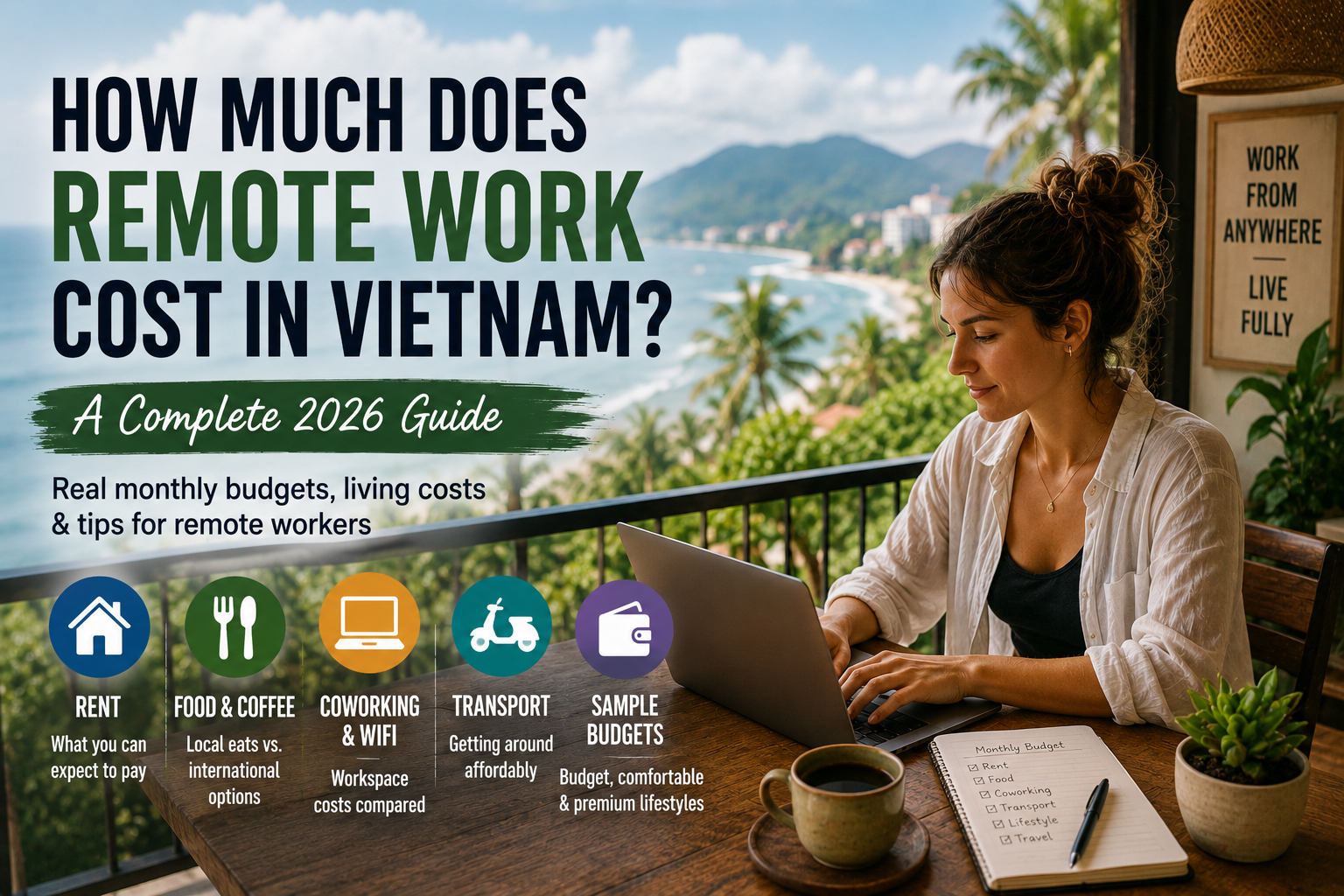
Remote work in Vietnam can be surprisingly affordable, but your monthly budget depends on where you live and the lifestyle you want. Someone who rents a simple apartment, eats mostly local food, and works from cafés can spend much less than someone living in a modern apartment, using coworking spaces every day, and dining at international restaurants.
For many remote workers, Vietnam offers a good balance between cost and quality of life. Cities like Da Nang remain relatively affordable, while Ho Chi Minh City provides more business opportunities but usually comes with higher living expenses.
The good news is that you don't need an enormous budget to live comfortably. Knowing where your money goes—and where you can save—makes a much bigger difference than simply choosing the cheapest city.
Is Vietnam Still Affordable for Remote Workers?
A few years ago, Vietnam was often described as one of the cheapest places in Southeast Asia for digital nomads. While prices have increased since then, it's still considered good value compared with many countries in Europe, North America, or Australia.
Accommodation has seen the biggest change. Apartments in popular neighborhoods cost more than they did before, especially in areas popular with foreigners. Cafés and coworking memberships have also become slightly more expensive.
Even so, everyday costs are still reasonable. A local meal, a cup of Vietnamese coffee, or a short ride across town won't have the same impact on your budget as they would in many Western cities.
Another advantage is flexibility. You can keep your costs low by living like a local, or spend more for extra comfort without reaching the prices you'd pay in places like Singapore, Tokyo, or London.
Your Biggest Monthly Expense: Accommodation
If there's one thing that will shape your budget more than anything else, it's where you choose to live.
Some remote workers are happy renting a studio apartment and working from nearby cafés. Others prefer modern serviced apartments with a swimming pool, gym, weekly cleaning, and dedicated workspaces.
Neither choice is wrong. It simply depends on how long you're staying and how important comfort is to your daily routine.
Generally speaking, you'll spend more if you choose neighborhoods that are popular with tourists or digital nomads. Living just a little farther away often gives you much better value without adding much travel time.
When searching for accommodation, think beyond the monthly rent. Ask whether utilities, internet, cleaning, or parking are included. A cheaper apartment isn't always the better deal once those extra costs are added.
One thing many first-time visitors discover is that it's often worth booking short-term accommodation for the first week or two. Seeing apartments in person makes it much easier to judge the neighborhood, internet quality, and noise levels before committing to a longer stay.
Food, Coffee, and Everyday Living
Food is one of the reasons many remote workers enjoy living in Vietnam. You can eat well without spending a fortune, especially if you mix local restaurants with the occasional international meal.
A typical day might start with Vietnamese coffee at a neighborhood café, followed by lunch at a local restaurant and dinner with friends at a casual Western-style café. That kind of lifestyle is still affordable for many people.
If you prefer imported groceries, international supermarkets, or dining out every night, your monthly spending will naturally increase. It's not difficult to double your food budget simply by choosing imported products over local ones.
Here's a simple way to think about your monthly expenses.
| Expense | Budget Lifestyle | Comfortable Lifestyle |
|---|---|---|
| Rent | Lower-cost apartment | Modern apartment or serviced apartment |
| Food | Mostly local restaurants | Mix of local and international restaurants |
| Coffee | Local cafés | Specialty cafés every day |
| Transport | Walking & scooter | Ride-hailing apps and occasional taxis |
| Workspace | Cafés | Coworking membership |
Do You Really Need a Coworking Space?
Not necessarily.
One thing I noticed after spending time around remote workers in Vietnam is that many people don't use coworking spaces every day. Instead, they mix different places depending on the type of work they're doing.
For example:
- Home for focused work
- Cafés for writing or emails
- Coworking spaces for meetings
- Hotel lounges for a change of scenery
If your job involves frequent video calls, however, having access to a quiet workspace can make life much easier.
Transportation Is Usually One of the Smallest Costs
Compared with accommodation, transport rarely has a huge impact on your monthly budget.
Many remote workers rent a scooter because it offers the most freedom, especially in cities like Da Nang where distances are relatively short.
Others prefer using ride-hailing apps instead of driving themselves. If you mostly work from home or a nearby café, you may only need transportation a few times each week.
Walking is also more practical than many newcomers expect, particularly if you choose accommodation close to cafés, supermarkets, and coworking spaces.
The important thing isn't finding the cheapest option—it's choosing somewhere to live that reduces the need to travel every day.
Which City Gives You the Best Value?
Vietnam doesn't have one "best" city for remote work. Each offers something different.
Da Nang
Da Nang is often the first recommendation for remote workers who want a relaxed lifestyle. It's generally easier to find affordable apartments, beaches are close by, and daily life feels less hectic.
It's a good fit if you value work-life balance more than networking.
Ho Chi Minh City
Ho Chi Minh City is usually more expensive, but it also offers the widest range of cafés, coworking spaces, business events, and career opportunities.
If you're building a startup, meeting clients, or simply enjoy living in a large city, the extra cost may be worth it.
Hanoi
Hanoi has its own charm. The city is rich in history, local culture, and amazing food. While it isn't always the first choice for digital nomads, many long-term remote workers enjoy its unique atmosphere and slower-changing neighborhoods.
Each city has a different personality, so choosing based only on cost doesn't always lead to the best experience.
Sample Monthly Budgets
Every remote worker spends time differently, but these examples show how your lifestyle affects your overall budget.
Budget-Friendly
A remote worker who rents a simple apartment, eats mostly local food, works from cafés, and keeps entertainment modest can live comfortably on a relatively modest monthly budget.
This lifestyle suits freelancers, solo travelers, and people planning a longer stay.
Comfortable
Someone renting a modern apartment, using coworking spaces several days a week, eating at a mix of local and international restaurants, and taking weekend trips will naturally spend more.
Many full-time remote employees choose this balance because it offers both comfort and flexibility.
Premium
A premium lifestyle usually includes a serviced apartment, regular coworking access, imported groceries, frequent dining out, and more travel around Vietnam.
Even then, many people still find the overall cost lower than living in major cities such as Singapore, Sydney, or London.
Ways to Save Money Without Sacrificing Comfort
Living well doesn't always mean spending less—it often means spending smarter.
Some easy ways to reduce monthly costs include:
- Stay for at least one month instead of booking at night.
- Eat at local restaurants more often.
- Choose accommodation outside the busiest tourist streets.
- Walk whenever possible instead of taking transport.
- Mix cafés and home working instead of paying for coworking every day.
- Compare apartment prices before committing to a long-term rental.
Is Vietnam Worth It for Remote Workers?
For many people, the answer is yes.
Vietnam offers something that's becoming harder to find elsewhere in Southeast Asia—a combination of affordable living, good internet, excellent food, welcoming cafés, and cities that suit different lifestyles.
It isn't the cheapest destination anymore, and prices have certainly risen in recent years. But compared with many other popular remote work hubs, Vietnam still provides excellent value.
If your goal is to keep living costs reasonable while enjoying a high quality of life, it's easy to understand why so many remote workers continue to choose Vietnam.
A Few Final Thoughts
It's easy to focus only on monthly expenses when comparing destinations, but cost is only one part of the decision.
A city that's slightly more expensive but helps you stay productive, make friends, and enjoy your daily routine may actually offer better value than the cheapest option available.
That's one of Vietnam's biggest strengths. Whether you choose Da Nang, Ho Chi Minh City, or Hanoi, you can build a lifestyle that fits both your work and your budget.
Rather than asking, "How little can I spend?" a better question might be, "What kind of life do I want while working remotely?" For many people, Vietnam makes that balance surprisingly easy to achieve.