A slow weekend in Chiang Mai is less about covering ground than about settling into a rhythm. The city rewards repetition: the same soi walked twice, the same cafe visited on both mornings, the same bowl of noodles ordered again because it was good the first time. With only a Saturday and a Sunday, you can still build a weekend that feels unhurried. The trick is to keep the plan to a few anchors and leave the space between them open.
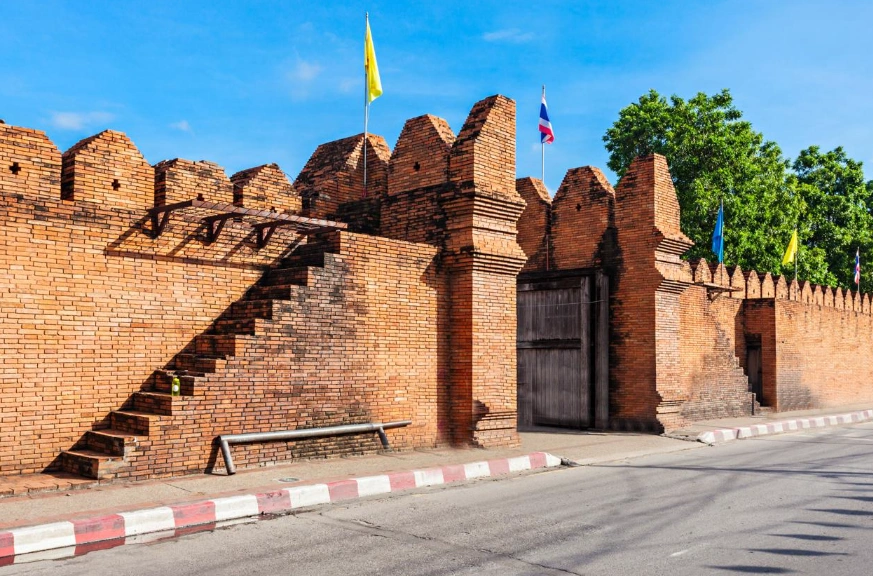
Chiang Mai makes this easy because the interesting parts sit close together. The Old City fills a square inside a moat, Nimmanhaemin spills to the northwest, and the Ping River runs along the eastern edge. Almost everything worth doing over a weekend happens inside that rough triangle, so you rarely need more than a short songthaew ride or a twenty minute walk to get from one place to the next.
Saturday Morning: Market Breakfast
Start with food, and start early. Chiang Mai's morning markets open well before the heat arrives, and the difference between a seven o'clock visit and a ten o'clock visit is the difference between a calm breakfast and a queue in full sun. Chang Phueak Gate on the north side of the Old City is a reliable place to begin, and the smaller neighborhood markets inside the moat are even quieter.
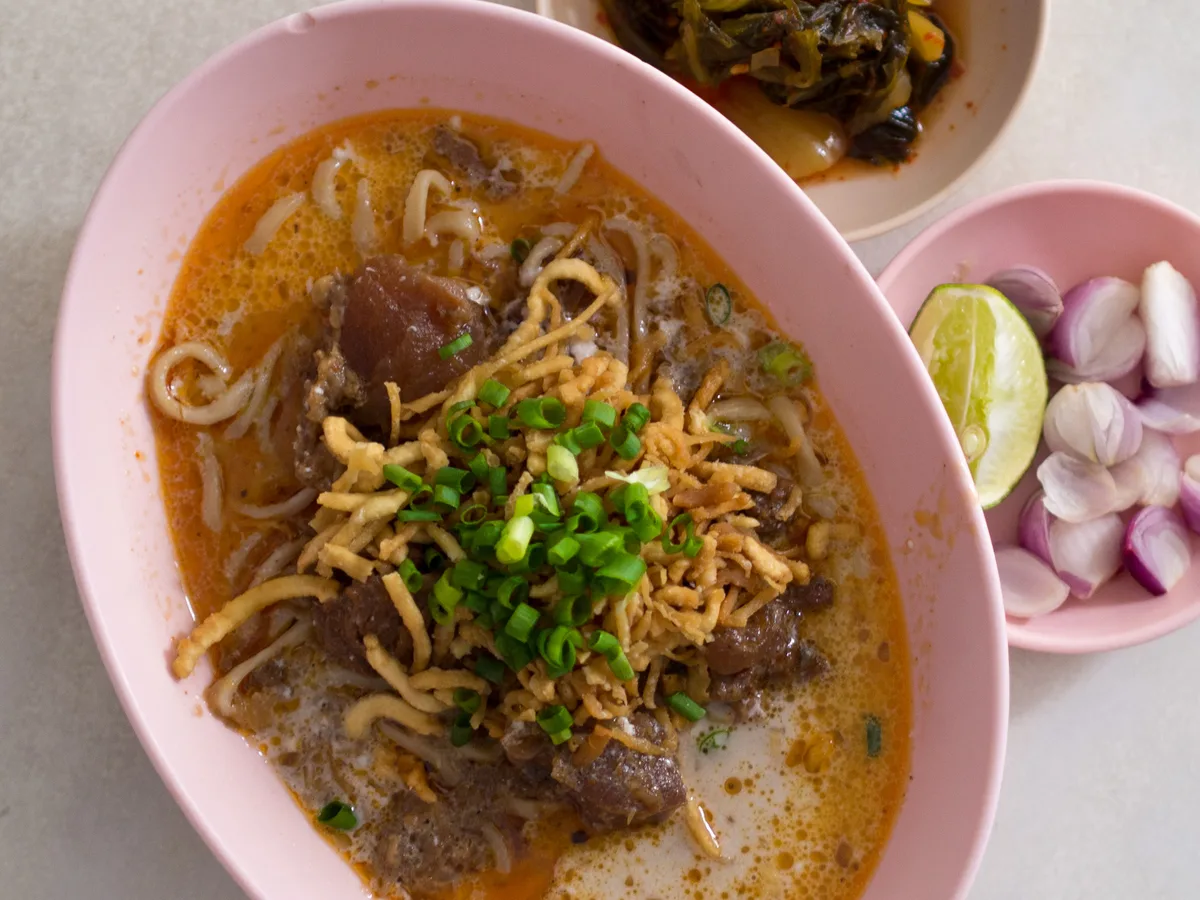
Northern Thai breakfast is not a single dish. Khao soi, a coconut curry noodle soup served with pickled mustard greens and lime, sai ua, a herb-heavy grilled sausage, and sticky rice with grilled pork skewers are all normal morning food. Portions are small, so ordering two or three things is expected. Eat where the tables are full of people who clearly eat there every day rather than where a menu is printed in four languages.
If you want a slower version, buy fruit and coffee and sit on a bench near the moat wall. The point of the morning is not to tick off dishes. It is to watch the city wake up at its own speed.
Saturday Afternoon: One Cafe, One Book
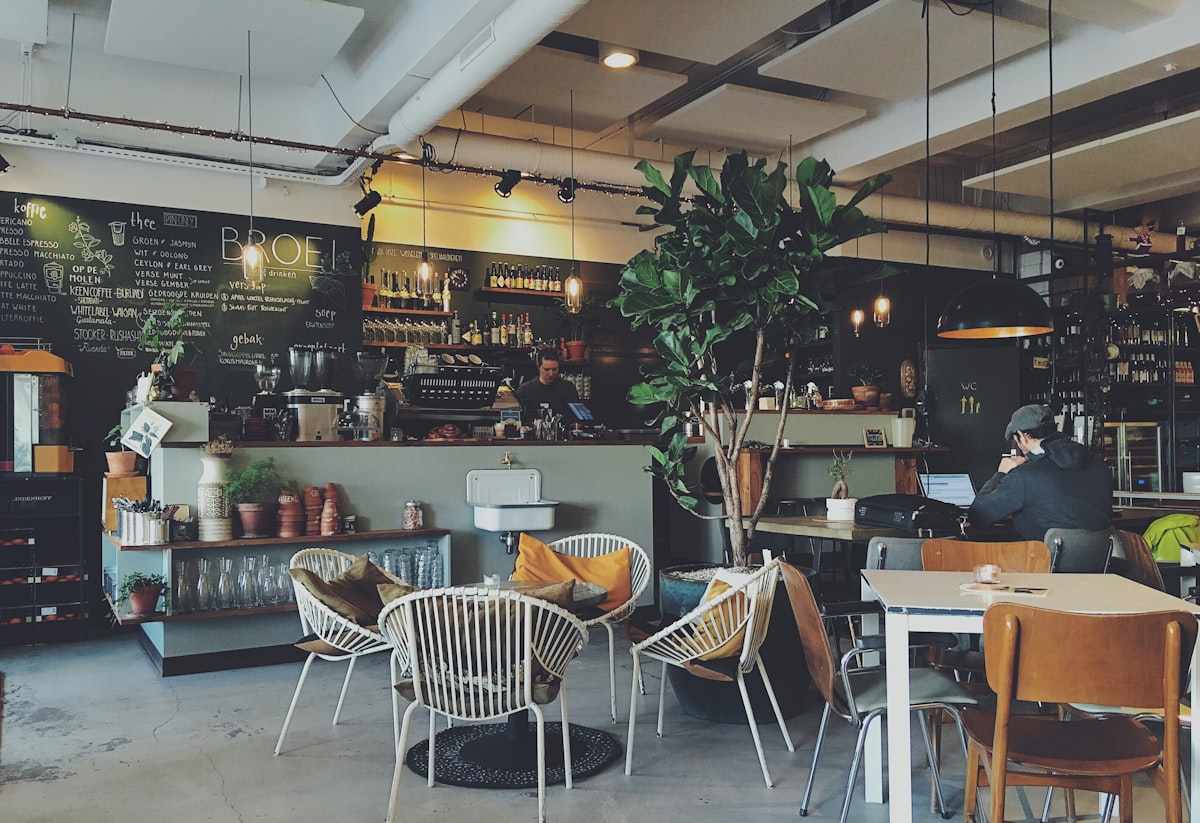
By midday the sun is strong enough that most sensible plans move indoors. This is where Chiang Mai's cafe culture earns its reputation. Nimmanhaemin has the densest cluster of specialty coffee shops, while the lanes inside the Old City hide smaller places with courtyards and garden seating.
Choose one and stay for two hours. A slow weekend is built out of long, single stops rather than short visits to many places. Order a Thai-style coffee if you want something sweet and iced, or a filter or espresso drink if you want the beans to show through. Most cafes have wifi and power, which is why so many remote workers end up here, but you do not have to open a laptop to justify the seat.

If you would rather keep moving, the shaded stretch along the moat and the small temples inside the Old City give you a low-effort walk. The Old City is compact enough to wander without a map and still find your way out.
Saturday Evening: Walking Street and a Massage
Saturday evening belongs to Wualai, the old silver-working street south of the Old City, which closes to traffic for its weekly walking street market. It is the smaller and, for many people, the more relaxed of Chiang Mai's two big weekend markets. Stalls sell food, crafts and handmade goods that are often produced in the surrounding province.
Eat your way along the street rather than sitting down for a full meal. Northern snacks, grilled meats and sweets are all cheap and portions are small on purpose. When the crowd thickens, step into a side soi to breathe.
Finish with a foot or shoulder massage. Chiang Mai has more massage shops than almost any city in the region, and an hour of traditional Thai massage remains inexpensive by international standards. A massage at the end of the day, rather than in the middle, leaves you ready to sleep instead of ready to keep going.
Sunday: One Temple, One Long Lunch
Sunday should be even slower than Saturday. Pick a single temple and go in the morning, before tour groups arrive and before the sun turns the stone hot. Wat Chedi Luang, with its enormous ruined chedi, and Wat Phra Singh, with its polished Lanna halls, are both central and both worth the entry fee. Whichever you choose, dress conservatively: shoulders and knees covered, shoes off before you step inside a hall.
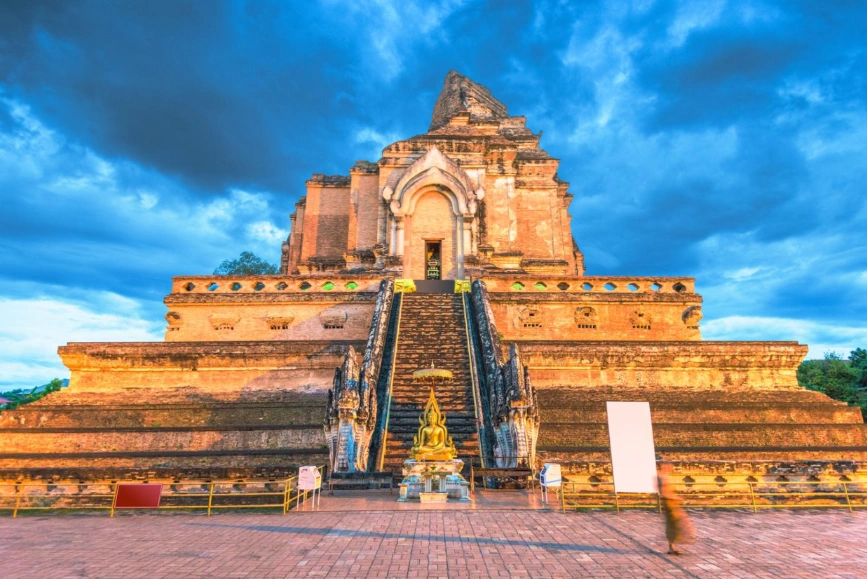
Temples in Thailand are working places of worship, not museums. Keep your voice low, do not point your feet toward a Buddha image, and ask before photographing anyone who is praying. Women should not touch monks or hand them objects directly.
Lunch is the second anchor of the day. Choose one place and take your time. Northern Thai restaurants inside and just outside the moat serve dishes you will not find in the south, and many of them fill up around one o'clock, so arriving slightly before or after that window is easier.
Sunday Evening: The Walking Street
As the afternoon cools, Ratchadamnoen Road inside the Old City closes for the Sunday Walking Street, Chiang Mai's largest weekly market. It runs from Tha Phae Gate toward the center of the Old City and fills with food stalls, crafts, musicians and a slow-moving crowd.
Come with an appetite, because there is more to eat than you can manage. Work from one end to the other, then decide what to buy on the way back. Prices are fixed at most food stalls but negotiable at craft stalls, and a smile goes further than hard bargaining.
The market is also the natural end of the weekend. By nine or ten in the evening the crowd thins, the temples inside the Old City light up, and the streets return to something closer to normal.
Where to Stay for a Slow Weekend
Where you sleep decides how much of the weekend you spend in transit. The Old City's moat makes a natural boundary, and a room inside it puts the Saturday morning market, the Sunday Walking Street and most of the temples within a walk. The trade-off is that the same narrow sois can be noisy at night, so a room set back from the street is worth more than a balcony.
Nimmanhaemin suits a different kind of weekend. It is quieter and more residential, and it is packed with cafes and restaurants, which makes it a good base if coffee and food matter more to you than temples. It is a short songthaew ride from the Old City, so you can still reach the markets without much effort.
Riverside rooms on the east bank of the Ping give you the calmest evenings and the best light, but you will need transport for almost everything else. For two nights, most people are happiest inside the moat or just outside it, close enough to walk and far enough from the centre of the crowd.
Book in advance if your weekend falls on a public holiday or during the cool season from November to February, when the city is at its busiest and the best rooms go first.
Getting Around Without Rushing
Songthaews, the red trucks that work as shared taxis, still cover most routes for a small fare, and ride-hailing apps are cheap and reliable for short trips. Renting a scooter gives you more freedom but also more risk: traffic is unpredictable, insurance is often limited, and handing over your passport as a deposit is a bad idea. For a weekend, walking plus the occasional songthaew is usually enough.
Distances in Chiang Mai are deceptive. On a map everything looks close. In the afternoon heat a fifteen minute walk can feel like an hour, so plan around the temperature rather than around the map.
What to Leave Out
The most common mistake on a short visit is adding a day trip to an already full weekend. Doi Suthep, the elephant sanctuaries and the cooking schools are all worthwhile, but each can consume half a day once you count the drive and the waiting. Booking three of them into two days produces a weekend that feels like work.
Two anchors a day is plenty. Keep one evening free, keep one morning free, and let the city fill the gaps. The weekend you remember will not be the one with the most stops. It will be the one where you had time to sit still, order a second coffee and watch Chiang Mai get on with its day.